


When shopping for an exercise mat, have you ever been confused by the various thickness parameters? Ranging from paper-thin 2mm to mattress-like 12mm, the thickness of an exercise mat not only affects comfort but also directly relates to workout effectiveness and safety. Understanding the nuances of mat thickness can significantly enhance your exercise experience, preventing injuries and ensuring you get the most out of your workouts.
This article will take you through the secrets of exercise mat thickness to help you find the perfect one for your needs.
The Basic Range of Exercise Mat Thickness
Exercise mat thickness is usually measured in millimeters (mm) or inches ("). Based on products available on the market, mat thickness can generally be categorized into the following ranges:
· Ultra-Thin Mats (1-3mm): These mats are typically used for professional yoga practice, providing maximum ground connection and stability. They are highly portable but unsuitable for high-impact exercises.They are a great choice for yogis who prioritize a close connection to the ground and don't engage in activities that put a lot of stress on their joints.
· Standard Thickness (4-6mm): This is the most common range for exercise mat thickness, balancing cushioning, stability, and portability. It's suitable for various low-impact activities like Hatha yoga, Pilates, and general fitness.This thickness range is versatile enough to meet the needs of most people who engage in regular exercise routines.
· Extra Thick Mats (7-10mm): These provide additional joint protection, ideal for people with sensitive knees or spines, and for those engaging in high-intensity interval training (HIIT).For individuals with joint issues or those who want extra support during intense workouts, these mats are a great investment.
· Specialty Thick Mats (10mm+): These mats are usually designed for rehabilitation training or specific sports, offering the highest degree of cushioning.They are often used in physical therapy settings or by athletes who need maximum protection during their training.
Ideal Mat Thickness for Different Activities
Yoga Practice
The ideal yoga mat thickness depends on the type of yoga and the practitioner's personal needs:
· Vinyasa / Ashtanga Yoga: A thin to medium mat of 3-5mm is ideal. It provides sufficient grounding feel, helps maintain balance, and allows for stable standing postures.This thickness allows for a good flow of movement while still providing enough support for the body.
· Yin Yoga / Restorative Yoga: A thicker mat of 6-8mm is better, as it provides more adequate cushioning for joints during long-held poses. In these types of yoga, where poses are held for extended periods, extra cushioning can prevent discomfort and strain on the joints.
· Hot Yoga: A thickness of 4-6mm is the ideal choice, paired with a high-quality non-slip surface to maintain stability even when sweating heavily.The non-slip surface is crucial in hot yoga to prevent slipping and potential injuries due to the increased moisture.
Fitness & High-Intensity Interval Training (HIIT)
For HIIT, core training, or fitness activities using free weights, a thickness of 6-10mm is recommended. This thickness effectively cushions the impact of jumps, planks, and sit-ups on the spine and protects floors from equipment damage.The extra cushioning can reduce the risk of injury to the spine and joints during high-impact exercises.
Rehabilitation Training & Use by Older Adults
For users with joint issues, undergoing rehabilitation, or older adults, a thickness of 8-12mm is most appropriate. The extra cushioning minimizes joint pressure, making exercise more comfortable and safer.This thickness can help older adults or those with joint problems engage in exercise without causing excessive pain or discomfort.
Children's Activities & Gymnastics
According to recommendations in the Chinese market, the ideal thickness for children's exercise mats is 3-5cm (30-50mm), approximately 1-2 inches. This thickness provides ample protection to prevent injuries from falls.Children are more prone to falls during activities, so a thicker mat can provide a safer environment for them to play and exercise.
The Relationship Between Thickness and Material
The cushioning effect of an exercise mat depends not only on thickness but is also closely related to the material. Different materials offer varying cushioning performance at the same thickness:
- PVC: High density, strong durability, usually with good cushioning.PVC mats are a popular choice due to their durability and ability to provide good support.

- TPE: An eco-friendly material with good elasticity and moderate cushioning.TPE mats are a great option for those who are environmentally conscious and want a mat with good elasticity.
- EVA: Lightweight and low-cost, but may compress and deform over time.EVA mats are budget-friendly but may not last as long as other materials due to their tendency to compress.
- Natural Rubber: Provides excellent grip and durability but is heavier.Natural rubber mats offer great traction and are very durable, but their weight can be a drawback for some users.

It's important to note that thicker isn't always better. Overly thick mats (exceeding 10mm) can affect stability during exercise, especially in poses requiring balance.A mat that is too thick can make it difficult to maintain balance, increasing the risk of falls during certain exercises.
Balancing Thickness and Portability
When choosing mat thickness, also consider storage and portability needs:
- Home Use: If the mat is primarily used at home and storage space is ample, you can opt for a thicker model.A thicker mat at home can provide more comfort during workouts without the need to worry about portability.
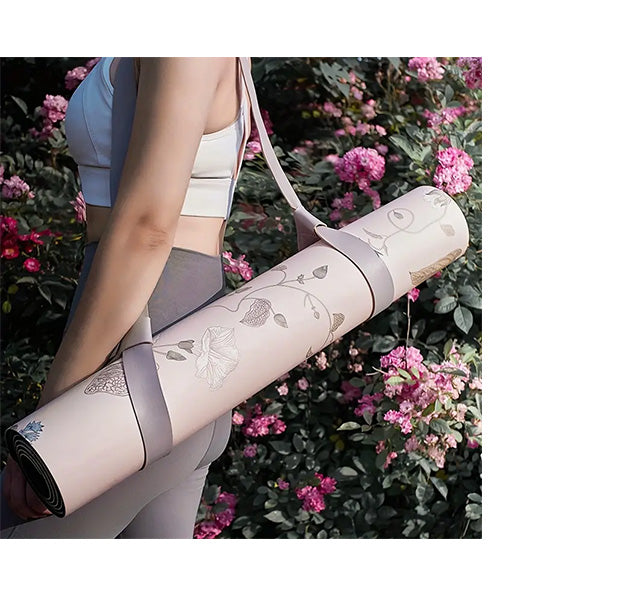
- Studio or Gym Use: If you need to carry the mat back and forth frequently, choose a medium-thickness product, ideally with a carrying strap.A medium-thickness mat with a carrying strap is convenient for those who need to transport their mat regularly.
- Travel Use: For frequent travel or outdoor practice, a lightweight, thin mat (2-4mm) is more convenient.A thin mat is easy to pack and carry, making it ideal for travel or outdoor workouts.
Frequently Asked Questions
Q: As a beginner, what thickness should I choose for my exercise mat?
A: Beginners are generally recommended to choose a mat with a thickness of 4-6mm. This thickness strikes a good balance between cushioning and stability, suitable for most forms of yoga and fitness. For those with particularly sensitive joints, a thickness of 6-8mm can be considered.As a beginner, you may not know exactly what your needs are, so a 4-6mm mat is a safe and versatile choice.
Q: Does the thickness of an exercise mat affect its slip resistance?
A: Thickness itself does not directly affect slip resistance, but thicker mats often use higher-density materials, which might enhance overall grip. Slip resistance primarily depends on the mat's surface texture and material properties, not its thickness.The surface texture and material of the mat are more important factors in determining its slip resistance than its thickness.
Q: Can I do weight training on a yoga mat?
A: Yes, but you need to choose a mat of appropriate thickness. For training with free weights like dumbbells and kettlebells, a thickness of at least 6mm is recommended to provide sufficient protection and shock absorption.Using a mat that is too thin for weight training can lead to damage to the floor and potential injuries to yourself.
Q: Do thick mats or thin mats last longer?
A: Lifespan depends primarily on material quality and maintenance, not thickness. However, very thin mats (below 3mm) might show signs of wear faster under frequent use. Medium-thickness, high-quality mats usually have the longest lifespan.Investing in a high-quality mat, regardless of its thickness, can save you money in the long run by lasting longer.
Q: How can I tell if my mat is too thin?
A: If you feel significant discomfort or pain in your knees, hips, elbows, or spine during exercise, or if you can directly feel the hardness of the floor, your mat might be too thin. It's advisable to choose a thicker model or a mat specifically designed for joint protection. Pay attention to how your body feels during exercise; if you experience pain, it may be time to upgrade to a thicker mat.
Buying Guide: Matching Thickness to Your Needs
To simplify the selection process, you can refer to the following guide:
| Usage Scenario | Recommended Thickness | Ideal Material |
| Professional Yoga/Vinyasa | 3-5mm | Rubber, TPE |
| General Fitness/Multi-use | 5-7mm | TPE, PVC |
| High-Intensity Interval Training (HIIT) | 7-10mm | PVC, High-Density Foam |
| Rehabilitation/Older Adults | 8-12mm | High-Density Foam |
| Children's Activities/Gymnastics | 30-50mm | EVA, TPE |
Exercise Mat Care Tips
Regardless of the thickness you choose, proper care can extend its lifespan:
- Clean regularly with a mild soap solution.Regular cleaning helps prevent the buildup of dirt and bacteria on the mat.
- Avoid prolonged exposure to direct sunlight to prevent material degradation.Sunlight can cause the mat to fade and deteriorate over time.
- Store rolled up or flat; avoid folding to prevent permanent creases.Folding the mat can lead to permanent damage and affect its performance.
- Use dedicated cleaning agents; avoid strong acids or alkalis.Strong chemicals can damage the mat's material and reduce its lifespan.
Conclusion
Choosing the right exercise mat thickness is an art of balance—finding the sweet spot between comfort and stability, cushioning and portability. There is no one-size-fits-all "perfect" thickness, only the choice that best suits your personal needs.
We hope this article provides the necessary guidance to help you make an informed decision among the many options, making your exercise experience safer, more comfortable, and more effective. Ready to find your perfect exercise mat? Explore Mowin's wide selection of high-quality mats in all thicknesses and materials, and enjoy expert guidance to match your needs!