


If you’ve been keeping up with fitness trends lately, you’ve probably heard of Reformer Pilates. This unique training method has moved beyond specialized studios and into the mainstream, becoming the workout of choice for many fitness enthusiasts. So, what makes Reformer Pilates so special? This article will provide a comprehensive breakdown of this highly effective training method.

What Is Reformer Pilates?
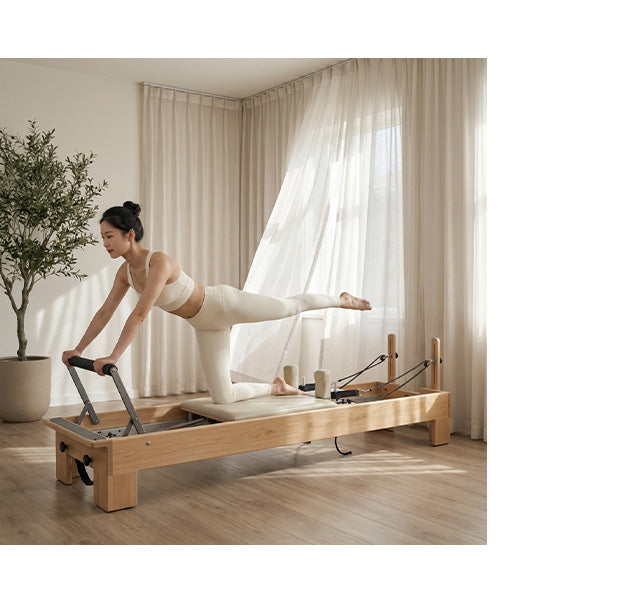
Reformer Pilates is a full-body training method that uses specially designed equipment—the Pilates Reformer. This apparatus consists of a sliding carriage, springs, straps, and ropes, allowing users to adjust the spring resistance to increase or decrease the difficulty of movements.
Reformer Pilates was invented by Joseph H. Pilates and has evolved through continuous innovation into the training method we know today. Initially used for rehabilitation, it has now become a comprehensive form of physical exercise that combines strength, flexibility, and control.
How Reformer Pilates Works
The core of Reformer Pilates lies in its unique equipment design:
- Sliding Carriage: Trains balance, as users must perform movements while controlling the carriage’s stability, increasing the challenge.
- Springs: Provide adjustable resistance, making muscle training and sculpting more effective.
- Straps and Ropes: Enable users to perform movements that are difficult to achieve with mat Pilates, improving movement precision.
These components work together to deliver a full-body, low-impact workout through Reformer Pilates.
Six Benefits of Reformer Pilates
1. Strengthens Core Muscles
Reformer Pilates focuses on strengthening deep stabilizing muscles, particularly the core muscles (including the transverse abdominis, internal and external obliques, rectus abdominis, and erector spinae), helping to build a strong physical core.
2. Improves Posture and Balance
By emphasizing body alignment and control, Reformer Pilates effectively addresses posture issues and reduces related discomfort. Many exercises involve pushing or stabilizing the carriage, requiring high levels of concentration and control.
3. Enhances Flexibility and Joint Mobility
The spring-based training in Reformer Pilates significantly improves muscle elasticity, increasing joint mobility and stretching targeted muscle groups.
4. Rehabilitation and Injury Prevention
Reformer Pilates is highly suitable for individuals with cervical, spinal, or pelvic issues, as well as those needing postpartum rehabilitation. It helps alleviate chronic pain, such as back and joint pain.
5. Creates Long, Lean Muscles
Unlike traditional weight training, Reformer Pilates uses spring resistance to train muscles, resulting in more graceful muscle definition without excessive bulk. This is why many Korean celebrities, such as Son Ye-jin, BLACKPINK’s Jennie, and Taeyeon, are avid Reformer enthusiasts.
6. Boosts Body Awareness
Reformer Pilates emphasizes principles of concentration, control, precision, breath, and flow, helping practitioners develop a deeper connection with their bodies and improve physical awareness and movement efficiency.
Is Pilates Suitable for Practicing During Weight Loss?
Yes, Pilates is suitable for practicing during weight loss, but it is generally more effective as part of a comprehensive weight loss plan. Here are some key points to consider:
- Calorie burn varies by intensity: Reformer Pilates burns 200-400 kcal/hour (similar to moderate cardio), while mat Pilates burns 150-250 kcal/hour. For weight loss, aim for 30-60 minute sessions at 60-70% of max heart rate.
- Emphasizes toning and definition: Activates deep core muscles to improve posture and create a slimmer appearance. Each 1kg of muscle gained increases daily metabolic rate by 50 kcal.
- Requires diet combination: Create a 500 kcal/day deficit through high-quality protein (chicken breast) and fiber (broccoli), while avoiding refined carbs.
- Pair with cardio for best results: Those with higher body fat (>28%) should prioritize cardio (swimming, jogging) supplemented by Pilates.
- Precision matters: Improper form can reduce effectiveness by 60%. Seek professional guidance to master techniques like pelvic neutrality and ribcage depression.
Who Is Reformer Pilates For?
Reformer Pilates is suitable for people of almost all ages and fitness levels:
- Fitness Enthusiasts: Seeking variety and challenging workouts
-
Office Workers: Needing to alleviate shoulder, neck, or lower back pain from long hours at a desk
-
Athletes: Looking to enhance performance, build strength, and prevent injuries
-
Rehabilitation Patients: Recovering from injuries or managing chronic conditions
-
Pregnant Women: Prenatal and postnatal recovery
- Seniors: Needing low-impact exercises to maintain mobility
Which Is Harder: Yoga or Pilates?
"Difficulty" is subjective and depends on your fitness goals, physical condition, and exercise background. Both are challenging in different ways:
1. Different Training Focuses:
- Pilates emphasizes core strength, muscle endurance, and body control, requiring precision and stability with high engagement of deep muscles, particularly focusing on spinal neutrality and pelvic stability.
- Yoga places greater emphasis on flexibility, balance, mental concentration, and relaxation. Many poses demand high joint mobility and flexibility.
2. Variations in Class Intensity:
- In Pilates, equipment-based classes (e.g., Cadillac, Reformer) are generally more intense than mat classes due to added resistance.
- In yoga, dynamic styles such as Flow Yoga and Ashtanga are faster-paced and require higher cardiovascular and muscular endurance, while styles like Hatha and Yin Yoga are gentler, focusing more on stretching and relaxation.
3. Different Experiences:
- Beginners with average flexibility but decent strength may find basic Pilates movements easier to learn, as they focus more on muscle engagement and control rather than extreme stretching.
- Beginners with weaker strength but better flexibility may feel more comfortable with some basic yoga poses.
What’s the Difference and Characteristics Between Reformer Pilates and Yoga?
| Feature | Pilates | Yoga |
| Main Focus | Core muscle strengthening, body control, stability, muscle strength | Mind-body balance, flexibility, mental focus, stress reduction |
| Weight Loss Effect | Equipment-based Pilates can burn 200-400 kcal per hour; requires diet control (recommended daily calorie deficit of 500 kcal) | Intensity varies by type; some dynamic styles (e.g., Ashtanga) require high physical stamina and endurance |
| Difficulty/Intensity | Emphasizes muscle control and precision, high endurance demands on core muscles | High flexibility requirements; some advanced poses may challenge beginners; certain styles (e.g., Ashtanga) are highly intense |
| Ideal Audience | Those seeking to improve posture, strengthen core muscles, or undergo rehabilitation training (e.g., postpartum recovery, office workers) | Those seeking to improve flexibility, reduce stress, or achieve mind-body balance |
| Equipment Needs | Often uses Reformers, Cadillacs, and other equipment with spring resistance for training | Mostly requires only a yoga mat; some styles use props like blocks or straps |
| How to Choose | Prioritize if seeking muscle toning, joint stability, and core strength | More suitable for reducing anxiety, improving flexibility, or achieving mind-body relaxation |
Reformer Pilates FAQ
1、Can I Do Reformer Pilates Without Prior Experience?
Yes, but it’s essential to have professional guidance to avoid potential risks during exercises.
2、How Often Should I Practice?
For beginners, 2-3 sessions per week are recommended to allow the body time to adapt and recover. Frequency can be increased as fitness levels improve.
Start Your Reformer Pilates Journey
Whether your goal is to improve health, reduce pain, build strength, or sculpt a more toned physique, Reformer Pilates offers an effective path.
Professional guidance is crucial, especially for beginners. A qualified instructor ensures safe and correct use of the equipment while tailoring the training plan to your individual needs and goals.
If you’re ready to experience the transformative effects of Reformer Pilates, we recommend starting your journey at a professional studio or fitness center. There, you can receive expert guidance and find the right training intensity for you.
Want to make Reformer Pilates part of your healthy lifestyle? Come to Mowin to experience professional Reformer to help you embark on this health journey safely and effectively.