


A compact yet powerful fitness tool that transforms your exercise routine
In today's booming home fitness trend, various exercise equipment continues to emerge. Among them, the Pilates Ring stands out with its compact, portable, and versatile characteristics, becoming the choice of more and more fitness enthusiasts. What exactly is the appeal of this training tool that resembles the Nintendo Switch Fitness Ring yet remains distinct? Today, we comprehensively analyze the secrets of Pilates ring training.
What is a Pilates Ring?
The Pilates ring, traditionally known as the "Magic Circle," is a versatile training tool. Certified Pilates instructor Diarra Cummings points out: "The Pilates ring offers endless possibilities for versatile training. It can be incorporated into any Pilates exercise to increase challenge, or serve as support and assistance during workouts."
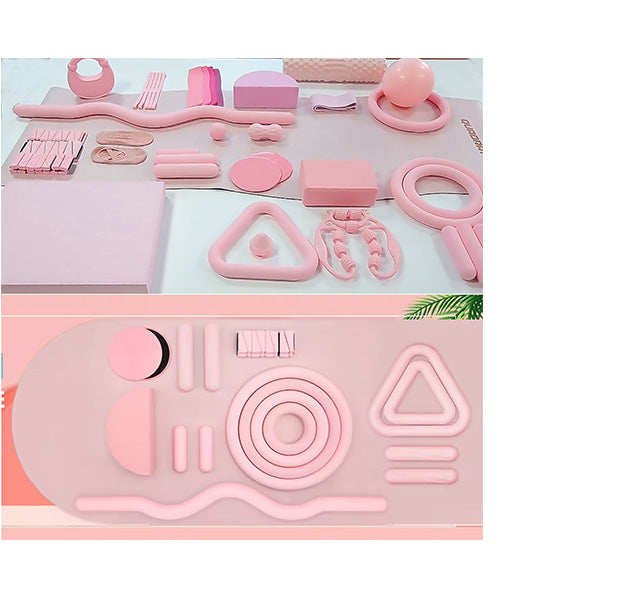
Unlike other large fitness equipment, the Pilates ring doesn't take up space, is easy to store and carry during travel, making it an ideal choice for home training. It's worth mentioning that Pilates training emphasizes movement precision and quality over quantity.

Advantages of Pilates Ring Training
Using the Pilates ring for training offers multiple benefits:
- Enhanced Core Training: The Pilates ring effectively strengthens core muscle training while also working the upper body, lower body, and many other areas.
- Improved Posture and Body Alignment: By training stabilizing muscles, the Pilates ring helps correct improper movement patterns in daily life, alleviating back pain issues.
- Increased Body Awareness: Pilates training emphasizes the coordination of breath and movement, enhancing body awareness.
- Suitable for All Levels: From beginners to advanced practitioners, everyone can find suitable training intensity with the Pilates ring.
Training Frequency and Duration: Finding Your Rhythm
Creating a reasonable training plan is key to achieving lasting results. Here are recommendations for practitioners at different levels:
Beginners (just starting with Pilates ring)
- Frequency: 2-3 times per week
- Duration: 15-20 minutes per session
- Recommendation: Start with basic movements, focus on mastering proper form rather than completing repetitions
Intermediate Practitioners (1-3 months experience)
- Frequency: 3-4 times per week
- Duration: 25-35 minutes per session
- Recommendation: Increase repetitions or sets, try more challenging variations
Advanced Practitioners (consistent training for 3+ months)
- Frequency: 4-5 times per week
- Duration: 40-50 minutes per session
- Recommendation: Combine multiple movement sequences, increase hold times and resistance intensity
Important Note: Regardless of level, it's recommended to schedule at least one day of rest between training sessions to allow muscles sufficient time to recover and grow. Listening to your body is crucial—if you experience unusual pain or excessive fatigue, appropriately reduce training frequency or intensity.
Target Muscle Groups in Pilates Ring Training
One significant advantage of Pilates ring training is its whole-body training effect. Here are the main muscle groups targeted:
Core Muscles
- Rectus abdominis (six-pack muscles)
- Transverse abdominis (deep core muscles)
- Internal and external obliques (side abdominal muscles)
- Erector spinae (back core muscles)
The Pilates ring enhances core stability and strength through resistance training. Almost all movements require core engagement, which is a unique advantage distinguishing it from other training methods.
Upper Body Muscles
- Pectoralis major (chest)
- Deltoids (shoulders)
- Biceps and triceps (arms)
- Latissimus dorsi and rhomboids (back)
Through squeezing and pressing actions, the Pilates ring effectively activates upper body muscle groups, helping to shape toned arms and improve upper body posture.
Lower Body Muscles
- Gluteus maximus, medius, and minimus (glutes)
- Quadriceps (front thighs)
- Hamstrings (back thighs)
- Adductors (inner thighs)
- Calf muscles
Leg squeezing and pressing actions can target the often-neglected adductor muscles while comprehensively activating lower body muscles.
Stabilizer Muscles Pilates ring training particularly focuses on activating and strengthening deep stabilizer muscles. These muscles often don't get adequate exercise in daily activities but are crucial for posture control and joint stability.
Beginner-Friendly Pilates Ring Exercises
Here are several Pilates ring exercises suitable for beginners:
1. Standing Leg Press (targeting inner thighs and glutes)
This is an excellent exercise for the inner thighs.
- Method: Place the Pilates ring above your ankles, transfer weight to one foot, squeeze the ring and slowly release 3 times, then switch legs.
- Tip: Keep your body upright, don't lean forward, to ensure effective engagement of glutes and inner thigh muscles.
- Main muscle groups: Adductors, gluteus medius
2. Supine Twist (targeting core muscles)
Core muscle training:
- Method: Lie supine on mat, place ring between inner ankles and press inward, knees bent at 90 degrees. Control hip rotation from side to side.
- Repetitions: Alternate 6-8 times
- Main muscle groups: Obliques, transverse abdominis
3. Side Kneeling Oblique Push (working side abs and upper body)
Training side abs and upper body:
- Method: Kneel on mat with knees hip-width apart, place palms on top of Pilates ring. Extend other arm upward, bend toward ring side, maintain stable center of gravity while pressing down on Pilates ring with hand.
- Repetitions: Complete 8 times per side
- Main muscle groups: Obliques, deltoids, pectoralis major
4. Swan Dive (targeting back and glutes)
Back and glute training:
- Method: Lie face down on mat with legs extended. Place hands several inches from head, press downward. Stabilize core and glutes and lift chest, keeping spine straight.
- Repetitions: Complete 3-5 sets
- Main muscle groups: Erector spinae, gluteus maximus, hamstrings
Avoiding Common Mistakes and Injuries
Maintaining proper form is crucial when using the Pilates ring. Improper use may lead to:
- Muscle strains: If force applied is too great or posture incorrect, may cause muscle strains
- Increased joint pressure: Improper use may create additional pressure on joints
- Impaired blood circulation: Prolonged ring compression may affect blood circulation
To avoid these risks, you should:
1. Learn the correct way to use it under professional guidance
2. Warm up adequately before use to reduce muscle strain risk
3. Maintain proper posture to avoid unnecessary joint pressure
4. Relax regularly, avoid maintaining fixed positions for prolonged periods
Incorporating Pilates Ring into Daily Life
To maximize Pilates ring training effects, integrate it into daily life:
- Consistency: One Pilates practitioner shared that after 3 sessions, they not only resolved breathing rhythm issues but also almost eliminated lower back soreness and tightness
- Focus on breathing: Many people hold their breath during exercises, especially in moments of explosive muscularity . Pilates requires coordinating movements with breathing rhythm—inhale to activate core muscles, exhale to stabilize core muscles while performing limb movements
- Combine with other exercises: Pilates ring training can combine with other exercise forms. Some have successfully lost weight by walking 15,000 steps in the afternoon and using the fitness ring in the evening
Common Questions About Pilates Ring Training
1. Why might weight increase after training?
Some may find that despite diligent Pilates ring exercise and diet control, weight increases. This is actually normal phenomenon because Pilates training mostly qualifies as muscular strength training, and muscle is much denser than fat (same weight下, fat volume is approximately 3 times muscle volume).
Muscle growth may cause weight increase, but this is absolutely not bad thing because more muscle means higher basal metabolic rate, leading to natural weight loss effects long-term.
2. How to choose a Pilates ring?
Various brands and models of Pilates rings (magic circles) exist on market. Best to understand different options' characteristics before purchasing, choosing product that suits you. Quality Pilates rings should have appropriate elasticity and durability, comfortable feel, and not easily deform.
Conclusion
The Pilates ring is a simple yet highly effective exercise tool suitable for all ages and fitness levels. By developing reasonable training frequency and understanding target muscle groups, you can more scientifically arrange your training plan for better results.
Remember, Pilates is about precision and high-quality movement—quality matters more than quantity. Start with small movements, focus on breathing and movement coordination, and you'll gradually notice physical changes.
Ready to start your Pilates Ring training journey? Shop Mowin now for your high-quality Pilates Ring, take advantage of exclusive limited-time offers, and let this magical little ring open up a new chapter of healthy living for you!