

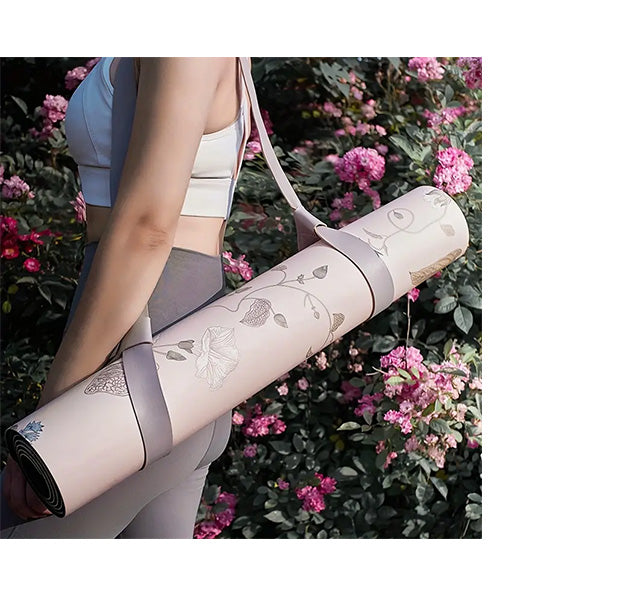

In the fast-paced modern world, home workouts have become a mainstream trend. No need for expensive equipment or complex venues—a single yoga mat can transform into your personal training ground. Whether you’re strengthening your core, improving flexibility, or sculpting your physique, a yoga mat provides safe and efficient support. This article combines scientific principles with practical experience to unlock 20+ yoga mat exercises, covering all major muscle groups to meet diverse fitness needs.
I. The Hidden Value of a Yoga Mat: Why It’s a Must-Have for Home Fitness
1. Injury Prevention: Safety First
The non-slip surface and cushioning of a yoga mat significantly reduce injury risks. For example, during a plank, friction between your palms and the mat prevents slipping, avoiding wrist sprains. When performing jumping exercises (like burpees), the mat’s shock absorption minimizes stress on your knees. Studies show that using a yoga mat for floor workouts reduces joint injury probability by 40%.
2. Enhanced Efficiency: Stability Meets Comfort
The mat’s firmness directly impacts exercise quality. A too-hard surface forces compensatory movements from core muscles, while a yoga mat’s moderate elasticity helps maintain neutral alignment. For instance, during leg raises, the mat supports your lumbar spine to prevent arching; in downward-facing dog, it cushions wrist pressure for longer holds.
3. Versatility: All-in-One Training Solution
From static stretching to dynamic strength training, a yoga mat excels. Use it for glute bridges to increase hip mobility or flow through yoga sequences with confidence, thanks to its grip. It even doubles as a comfortable base for meditation or breathing exercises.
II. Targeted Training Guide: Full-Body Workouts on One Mat
1. Core Strength: Flatten Your Abs & Stabilize Your Torso
-
Basic Move: Plank
- Key Points: Support your body on elbows and toes, forming a straight line. Avoid sagging hips or arching your back.
- Progressions: Side plank (targets obliques), dynamic plank (alternating leg/arm lifts).
- Benefits: Strengthens transverse abdominis and erector spinae, alleviates lower back pain.

-
Advanced Challenge: Leg Raises with Crunch
- Key Points: Lie on your back, lift legs to 45°, then crunch your upper body to touch ankles.
- Breathing: Exhale as you lift, inhale as you lower. Keep core engaged throughout.

2. Lower Body Power: Sculpt Toned Legs & a Perky Booty
-
Classic Move: Squat
- Key Points: Stand with feet shoulder-width apart, toes turned out 15°. Lower hips back as if sitting in a chair, knees behind toes.
- Variations: Bulgarian split squat (single-leg), sumo squat (wide stance).
-
Glute Activation: Single-Leg Bridge
- Key Points: Lie on your back, knees bent. Lift one leg straight off the ground and drive hips upward until your body forms a straight line.
- Benefits: Isolates gluteus maximus for better leg-to-hip ratio.
3. Upper Body & Back: Banish Arm Flab & Round Shoulders
-
Bodyweight Move: Knee Push-Up
- Key Points: Kneel on the mat, hands shoulder-width apart. Lower chest toward the ground while keeping your body straight.
- Progressions: Standard push-up, diamond push-up (narrow hands).

-
Back Sculpting: Inverted Row
- Key Points: Lie face-down, hands on the mat. Pull your upper body toward your hands using back muscles.
- Alternative: If too challenging, try “lying suspension” (lie on your back, mimic rowing by gripping a fixed object).
4. Flexibility & Balance: Improve Body Control
-
Yoga Classic: Downward-Facing Dog
- Key Points: Support your body on hands and feet, forming an inverted “V.” Keep back flat and neck relaxed.
- Benefits: Stretches hamstrings, shoulders, and back while improving spinal mobility.

-
Balance Challenge: Tree Pose
- Key Points: Stand on one leg, place the sole of the other foot against your inner thigh. Press palms together at your chest.
- Advanced Tip: Close your eyes or slowly raise arms to increase difficulty.
III. Efficient Workout Plans: Flexible Routines from 10 to 30 Minutes
1. Beginner’s 10-Minute Basic Circuit
- Plank (30s × 3 sets)
- Knee push-ups (10 reps × 3 sets)
- Glute bridges (15 reps × 3 sets)
- Downward-facing dog stretch (30s × 2 sets)
2. Intermediate 20-Minute Full-Body Burn
- Burpees (15 reps × 3 sets)
- Single-leg bridges (12 reps per side × 3 sets)
- Inverted rows (10 reps × 3 sets)
- Tree pose (30s per side × 2 sets)
3. Advanced 30-Minute Strength & Flexibility Fusion
- Dynamic plank (20 reps × 3 sets)
- Bulgarian split squats (10 reps per side × 3 sets)
- Leg raises with crunch (15 reps × 3 sets)
- Yoga flow sequence (cat-cow → downward-facing dog → warrior I, 3 cycles)
IV. Safety Tips: Golden Rules for Injury-Free Training
- Choose the Right Mat: Opt for 5–8mm thickness with TPE or natural rubber for optimal support. Avoid overly soft mats that lack stability.
- Maintain Proper Form: Avoid locking joints (e.g., keep knees slightly bent during squats, elbows tucked during push-ups).
- Progress Gradually: Start with low intensity and increase reps or difficulty over time to prevent muscle strains.
- Sync Breathing: Exhale during exertion (e.g., lifting in a crunch), inhale during relaxation (e.g., lowering in a push-up).
Conclusion: One Mat, A Healthier Lifestyle
A yoga mat is more than just equipment—it’s a bridge connecting your body and mind. Through scientifically designed workout plans, you’ll sculpt your ideal physique while boosting focus and self-awareness. Start today: Unroll your mat and let sweat fuel transformation—your body deserves this investment!
Call to Action: Start your healthy lifestyle by choosing the right yoga mat!