

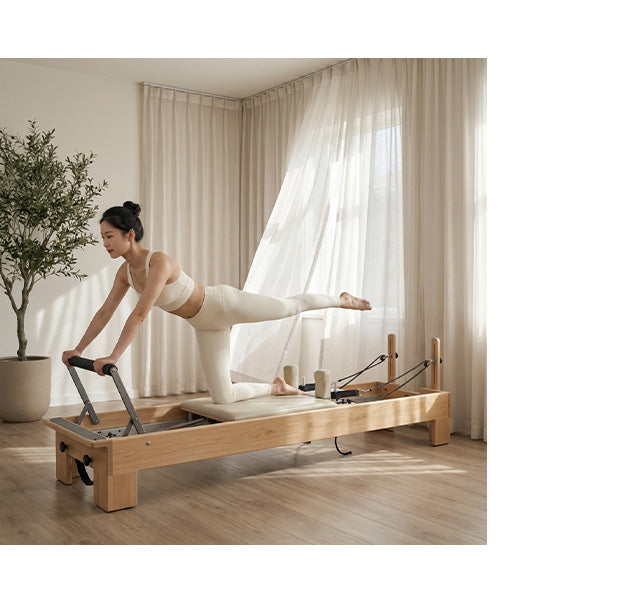

The Pilates reformer, with its sliding carriage, springs, and adjustable resistance, has long been celebrated as a powerful tool for physical transformation. For many, stepping onto the reformer for the first time marks the start of a journey that goes beyond mere exercise—it’s a path toward improved strength, flexibility, posture, and overall well-being. The “before and after” stories of those who commit to regular reformer practice are not just about physical changes; they’re about rediscovering how the body can move, feel, and thrive.

Before beginning reformer training, many individuals struggle with common physical complaints. Sarah, a 38-year-old office worker, is a typical example. “I spent eight hours a day hunched over a desk,” she recalls. “My shoulders were perpetually tight, my lower back ached, and I felt stiff when I tried to reach for something on a high shelf.” Like Sarah, many newcomers to the reformer often report poor posture, muscle imbalances, and limited mobility. Some may have tried other forms of exercise but found them too harsh on joints or ineffective at targeting specific problem areas. Others, like 52-year-old Mike, who had recovered from a knee injury, were hesitant to start any fitness routine for fear of re-injury. “I thought I’d never be able to exercise comfortably again,” he says. “The reformer seemed gentle, but I wasn’t sure if it would actually make a difference.”
The initial weeks of reformer training are often a learning process. The machine’s unique design requires focus on alignment and controlled movement—qualities that many people have lost due to modern sedentary lifestyles. Exercises like the “hundred” (a classic Pilates move adapted on the reformer) or “footwork” (pressing the feet against the footbar to slide the carriage) demand engagement of the core, the body’s natural stabilizer. Beginners often find themselves sweating not from intense cardio, but from the effort of maintaining proper form. “It was humbling at first,” Sarah laughs. “I thought I was in decent shape, but holding a plank on the reformer for 30 seconds felt impossible. My core was so weak I could barely keep my hips level.”
Yet as weeks turn into months, the changes begin to unfold. Physically, the most noticeable shifts often start with posture. The reformer’s emphasis on lengthening the spine and activating the muscles of the upper back gradually corrects slouching. Sarah noticed that after six weeks, she no longer felt the urge to hunch over her desk. “I catch myself sitting up straight without even thinking about it,” she says. “My 同事 even commented that I look taller!” For Mike, the benefits were more about functional strength. The reformer’s low-impact resistance allowed him to strengthen the muscles around his knee without strain. “I can now climb stairs without pain,” he says. “That’s something I never thought I’d take for granted again.”
Beyond posture and strength, regular reformer practice often leads to improved flexibility and balance. The machine’s sliding carriage creates opportunities for dynamic stretches that target tight muscles—like the hamstrings and hip flexors—that are often neglected in other workouts. Lisa, a 45-year-old dancer, turned to the reformer after struggling with tight calves that limited her range of motion. “After three months, I can finally do a full split again,” she says. “The reformer’s controlled movements let me stretch safely, and the resistance helps build the strength to support those stretches.” Balance, too, gets a boost. Many reformer exercises require stability—like standing on one leg while pushing the carriage away—which challenges the body’s proprioception (the ability to sense its position in space). This is especially beneficial for older adults; studies have shown that Pilates reformer training can reduce the risk of falls by improving balance and coordination.
The “after” phase of a reformer journey isn’t just physical—it’s mental, too. The focus required to perform reformer exercises—on breathing, alignment, and muscle engagement—creates a meditative-like state that reduces stress. “I leave each class feeling calm, not just tired,” Sarah says. “It’s like a moving meditation.” For many, the reformer becomes more than a workout tool; it’s a space to connect with their bodies. They learn to recognize tension before it turns into pain, and to move with intention rather than habit.
Of course, transformation doesn't happen overnight. Consistency is key—most experts recommend 2-3 reformer sessions per week for noticeable results. It’s also important to work with a certified instructor who can tailor exercises to individual needs, ensuring proper form and preventing injury. But for those who stick with it, the “before and after” is undeniable. Whether it’s standing taller, moving without pain, or simply feeling more connected to their bodies, the reformer offers a path to a stronger, healthier, and more vibrant self. As Mike puts it: “I didn’t just get physically stronger—I got my confidence back. That’s the best transformation of all.”
If you're seeking a suitable and cost-effective Pilates Reformers, do visit Mowin – you won't be disappointed!
