

)
Why These Yoga Mistakes Are Holding You Back
So you've decided to start yoga – congratulations! You're about to embark on a journey that will transform your body, mind, and spirit. But here's the truth: most yoga beginners make the same rookie mistakes that not only slow down their progress but can also lead to painful injuries.
In fact, studies show that over 60% of new yoga practitioners experience some form of discomfort or injury within their first six months, almost always due to avoidable form errors and bad habits. And shockingly, nearly half of these injuries are directly caused by using the wrong equipment – most commonly, a cheap, low-quality yoga mat.
The good news? These mistakes are easy to fix once you know what to look for. In this comprehensive guide, we'll break down the 10 most common yoga mistakes beginners make and give you simple, actionable solutions to correct them immediately.
Whether you're practicing at home with online videos or attending in-person classes, these tips will help you build a strong foundation, stay safe, and actually enjoy your yoga practice.
Mistake 1: Rushing Into Advanced Poses Too Soon
We've all been there. You see a seasoned yogi effortlessly flowing into a headstand or wheel pose and think, "I can do that too!" But trying advanced poses before your body is ready is the #1 cause of yoga injuries for beginners.
Why it's bad: Advanced poses require significant core strength, joint stability, and flexibility that takes months (or even years) to develop. Forcing yourself into poses like headstand, lotus pose, or deep backbends can lead to wrist sprains, knee injuries, and even herniated discs. A slippery mat will only make this worse, as you'll be constantly fighting to stay balanced instead of focusing on form.
How to fix it:
- Start with the basics: Master foundational poses like Mountain Pose (Tadasana), Cat-Cow (Marjaryasana-Bitilasana), and Downward-Facing Dog (Adho Mukha Svanasana) first

- Focus on quality over quantity: It's better to do 5 simple poses with perfect form than 20 advanced poses poorly
- Progress gradually: Add one new pose per week and only move to the next level when you feel completely comfortable and stable
- Invest in a non-slip yoga mat for beginners that gives you confidence even in sweaty downward dogs
Pro tip: If you're practicing at home, stick to beginner-specific yoga sequences for at least the first 3 months. This will build the strength and flexibility you need for more challenging poses later.
Mistake 2: Holding Your Breath (Or Breathing Incorrectly)
Yoga is just as much about breathing as it is about stretching. Yet holding your breath or breathing incorrectly is one of the most common mistakes new yogis make.
Why it's bad: When you hold your breath during yoga, you deprive your muscles of oxygen, which leads to fatigue, dizziness, and increased tension. Shallow chest breathing also activates your body's stress response, defeating the purpose of yoga's calming effects. And if you're constantly slipping on your mat, you'll naturally hold your breath out of fear of falling.
How to fix it:
- Practice diaphragmatic (belly) breathing: Place one hand on your chest and the other on your belly. Breathe in through your nose, filling your belly first, then your chest. Exhale slowly through your nose
- Sync your breath with movement: Inhale for movements that open the body (like lifting your arms), exhale for movements that fold or twist (like bending forward)
- If you find yourself holding your breath, pause and take 3 deep breaths before continuing
Remember: If you can't breathe comfortably in a pose, you're pushing too hard. Back off slightly until your breath returns to normal.
Mistake 3: Ignoring Proper Alignment
Proper alignment isn't just about looking "good" in yoga poses – it's about keeping your body safe and getting the maximum benefit from each movement. Unfortunately, many beginners focus on how a pose looks rather than how it feels.
Why it's bad: Incorrect alignment puts unnecessary strain on your joints, ligaments, and muscles. Over time, this can lead to chronic pain and long-term injuries. For example, rounding your spine in Forward Fold can cause back pain, while locking your knees in standing poses can damage your knee joints. Most beginners practicing at home don't have a mirror handy to check their form, making alignment errors even more likely.
How to fix it:
- Pay attention to your instructor's alignment cues
- Use a mirror to check your form when possible
- The easiest fix: Get a yoga mat with alignment lines that guides your feet, hands, and hips into perfect position automatically – no mirror required
- Focus on these key alignment principles:
- Keep your knees aligned with your toes in all standing poses
- Maintain a neutral spine (not arched or rounded)
- Keep your shoulders down and away from your ears
- Distribute your weight evenly between both feet
Common alignment mistakes to watch for:
- Cupping your hands when on the floor (spread your fingers wide for better stability)
- Hyperextending your elbows (keep a slight bend)
- Letting your hips sag in Plank Pose
- Turning your knee inward in Warrior Poses
Mistake 4: Skipping Warm-Up and Cool-Down
We get it – you're busy. You only have 20 minutes for yoga, so you jump right into the main sequence. But skipping your warm-up and cool-down is a recipe for disaster.
Why it's bad: Cold muscles and joints are much more prone to injury. A proper warm-up increases blood flow, raises your body temperature, and prepares your muscles and joints for more intense movement. Similarly, a cool-down helps your body return to its resting state and prevents muscle soreness. A hard, thin mat will make warm-up poses like cat-cow and child's pose uncomfortable, leading you to rush through them even faster.
How to fix it:
- Always start with 5-10 minutes of gentle warm-up: Try cat-cow, neck rolls, shoulder circles, and a few rounds of Sun Salutation A
- End every practice with 5-10 minutes of cool-down: Include gentle stretches for your hamstrings, hips, and shoulders
- Never skip Savasana (we'll talk more about this later!)
Pro tip: If you're really short on time, shorten the main sequence instead of skipping the warm-up or cool-down. Your body will thank you.
Mistake 5: Pushing Through Pain
"No pain, no gain" might work for some types of exercise, but it definitely doesn't apply to yoga. Pushing through pain is the fastest way to get injured and derail your yoga journey.
Why it's bad: Yoga should never hurt. The sensation you should be feeling is a gentle stretch or muscle engagement – not sharp, stabbing, or throbbing pain. Pushing through pain can cause muscle tears, joint damage, and other serious injuries. And here's a secret most beginners don't know: 90% of the knee and wrist pain new yogis experience isn't from bad form – it's from using a yoga mat that's too thin.
How to fix it:
- Learn to distinguish between "good" discomfort and "bad" pain:
- Good: A dull, achy sensation in the muscles that fades as you breathe
- Bad: Sharp, stabbing pain, pain in the joints, or pain that gets worse with movement
- If you feel pain, back off immediately. Modify the pose or come out of it completely
- Upgrade to a 6mm thick high-density yoga mat that cushions your knees, wrists, and elbows during all floor poses
- Honor your body's limits. Some days you'll be more flexible than others, and that's okay
Remember: Yoga is a practice of self-care, not self-punishment. Be kind to your body.
Mistake 6: Comparing Yourself to Others
It's easy to look around the yoga studio (or at Instagram) and think, "Why can't I touch my toes like her?" or "He's doing a perfect handstand and I can barely do a plank." But comparing yourself to others is one of the most destructive mistakes you can make in yoga.
Why it's bad: Yoga is a personal journey, not a competition. Everyone's body is different, and everyone progresses at their own pace. Comparing yourself to others leads to frustration, self-doubt, and the temptation to push yourself too hard to "keep up."
How to fix it:
- Close your eyes during practice and focus inward
- Remember that the person next to you might have been practicing for years
- Celebrate your own progress, no matter how small
- Remind yourself that yoga is about how you feel, not how you look
Pro tip: Unfollow any yoga accounts on social media that make you feel inadequate. Follow accounts that promote body positivity and realistic yoga practices instead.
Mistake 7: Not Using Yoga Props (Starting With The Most Important One)
Many beginners think that using yoga props is "cheating" or a sign of weakness. But nothing could be further from the truth. Yoga props are essential tools that help you achieve proper alignment, deepen your stretches, and make poses more accessible. And the most important prop of all? Your yoga mat.
Why it's bad: Trying to do poses without props when you need them forces your body to compensate, which leads to poor form and increased risk of injury. A cheap, thin, slippery mat is the worst "prop" you can have – it will sabotage every single pose you try. Props actually help you build strength and flexibility faster by allowing you to hold poses longer with correct alignment.
How to fix it:
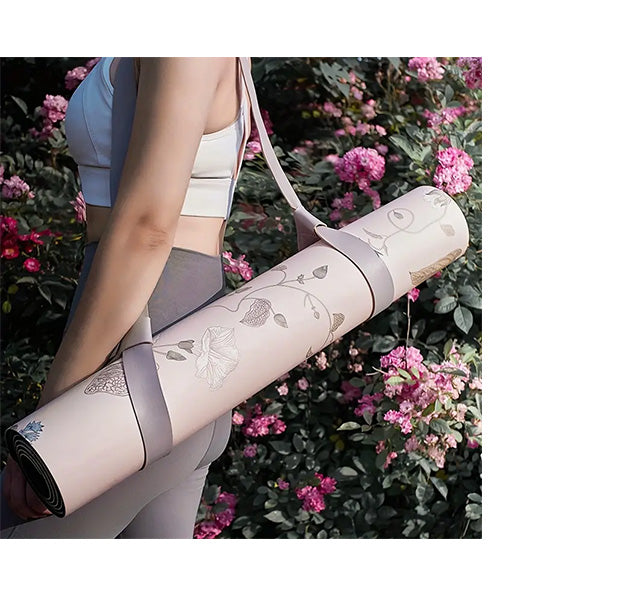
- First and foremost: Invest in a high-quality eco-friendly yoga mat for beginners that is non-slip, thick enough to protect your joints, and free of toxic chemicals
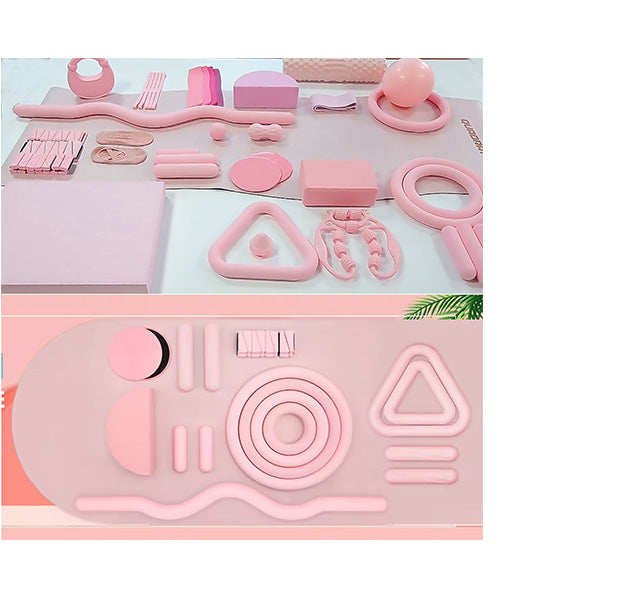
- Add a few basic props to your collection: A yoga block, a yoga strap, and a yoga blanket
- Don't be afraid to use them! Even advanced yogis use props regularly
- Here's how to use the most common props:
- Yoga mat: Your foundation for every pose. Look for one with alignment lines and 6mm thickness for optimal support
- Yoga blocks: Use them to bring the floor closer to you in poses like Forward Fold or Triangle Pose
- Yoga straps: Use them to extend your reach in poses like Seated Forward Fold or Shoulder Stretch
- Yoga blankets: Use them for support in seated poses or to cushion your knees
Remember: There's no shame in using props. They're there to help you, not to judge you.
Mistake 8: Skipping Savasana (Final Relaxation)
We've all done it: The class is almost over, you're in a hurry, and you skip Savasana to get dressed and leave. But skipping Savasana is like baking a cake and forgetting the frosting – it's the most important part of the entire practice.
Why it's bad: Savasana allows your body and mind to integrate the benefits of your practice. It lowers your heart rate, reduces stress hormones, and leaves you feeling calm and refreshed. Skipping Savasana can leave you feeling tense and anxious instead of relaxed. A hard, uncomfortable mat will make Savasana feel like a chore, leading you to skip it more often.
How to fix it:
- Always leave at least 5 minutes for Savasana at the end of every practice
- Lie flat on your back with your legs slightly apart and your arms relaxed at your sides
- Close your eyes and focus on your breath
- Try not to think about your to-do list or anything else – just be present in the moment
Pro tip: If you're really short on time, even 2 minutes of Savasana is better than nothing. A soft, supportive mat will make those 2 minutes feel like a mini vacation.
Mistake 9: Forgetting to Engage Your Core
Your core is the foundation of all yoga poses. Yet many beginners forget to engage their core muscles, which leads to poor alignment and increased risk of injury.
Why it's bad: A weak core puts extra strain on your lower back, which is the most common site of yoga injuries. Engaging your core helps stabilize your spine, improve your balance, and make every pose stronger and more effective. A slippery mat will make it harder to engage your core properly, as you'll be using your muscles just to stay upright.
How to fix it:
- Practice engaging your core throughout the day: Pull your belly button in toward your spine without holding your breath
- Engage your core before moving into any pose
- Focus on core-strengthening poses like Plank, Boat Pose (Navasana), and Chair Pose (Utkatasana)
- If you feel your lower back straining in any pose, engage your core more deeply or modify the pose
Remember: Your core isn't just your abs – it includes your lower back, hips, and glutes too.
Mistake 10: Being Inconsistent With Your Practice
It's easy to get excited about yoga and practice every day for a week, then not practice at all for a month. But inconsistency is the biggest barrier to progress in yoga.
Why it's bad: Yoga is a practice, not a one-time event. You build strength and flexibility gradually over time with regular practice. Taking long breaks means you'll have to start over from where you left off, which can be frustrating and demotivating. And one of the biggest reasons people stop practicing? They have a bad experience because of a cheap, uncomfortable yoga mat.
How to fix it:
- Aim for consistency over duration: It's better to practice for 10 minutes every day than for 2 hours once a week
- Schedule your yoga practice like you would any other important appointment
- Create a dedicated yoga space in your home with a comfortable home yoga mat that makes you excited to practice
- Keep your practice simple and enjoyable. If you're dreading it, you're less likely to do it
Pro tip: Set a small, achievable goal for yourself, like practicing 3 times a week for a month. Once you've achieved that, you can gradually increase your practice time.
Final Thoughts: Start Your Yoga Journey the Right Way
Yoga is a beautiful journey that will teach you so much about your body, your mind, and yourself. But it's important to start off on the right foot by avoiding these common rookie mistakes.
Remember:
- Be patient: Progress takes time. Celebrate the small wins.
- Be kind to yourself: Don't beat yourself up if you make a mistake. Everyone does.
- Listen to your body: It knows what's best for you.
- Invest in quality equipment: A good yoga mat is the best investment you can make in your yoga practice. It will keep you safe, comfortable, and motivated to practice consistently.
By correcting these mistakes and building a strong foundation, you'll be able to enjoy all the amazing benefits of yoga for years to come – increased flexibility, stronger muscles, reduced stress, and a greater sense of peace and well-being.
Over 15,000 beginners have chosen MOWIN‘s mat as their first yoga mat, and 98% say it has made their practice more enjoyable and helped them avoid injury.
