


In the fast-paced office environment, prolonged desk work and screen time have made shoulder and neck pain a "silent epidemic" among professionals. Studies show that 80% of office workers suffer from varying degrees of shoulder and neck issues, which not only reduce productivity but can also trigger headaches, insomnia, and other complications. The good news? By incorporating short, targeted exercises with simple equipment, you can quickly alleviate tension. This guide integrates core equipment, complementary movements, scientific principles, and long-term management strategies to help you create a personalized "office shoulder and neck rehabilitation plan."

I. Core Equipment and Detailed Movements: Precision Pain Relief
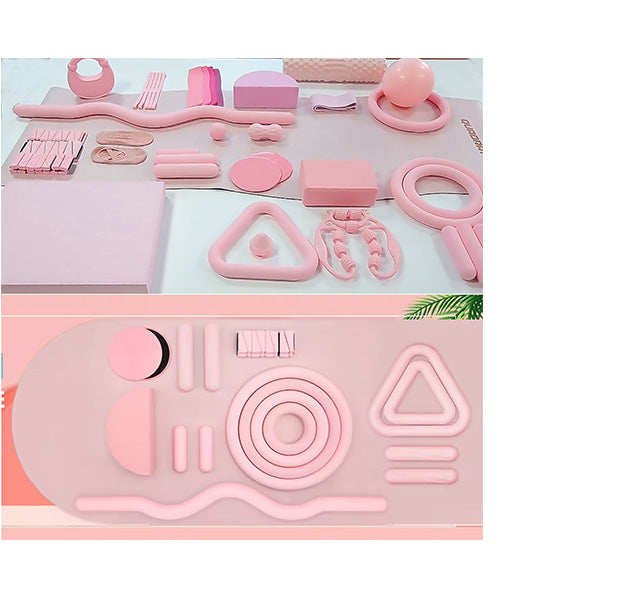
1. Pilates Magic Circle (Resistance Ring)
Why It Works: Lightweight and portable, this ring provides targeted resistance to strengthen deep shoulder and neck muscles, correcting rounded shoulders and forward head posture.
Movement: Seated Shoulder External Rotation
-
Steps:
- Hold the magic circle with both hands, elbows bent at 90° and pressed against your sides.
- Slowly open your arms outward to shoulder width, feeling your shoulder blades tighten. Repeat 10 times.
-
Key Points:
- Maintain a neutral spine; avoid arching your back or shrugging your shoulders.
- Limit range of motion to pain-free levels.
- Scientific Basis: Activates the middle and lower trapezius and rhomboid muscles, relieving overuse of the upper trapezius.

2. Resistance Band (Mini Band)
Why It Works: Cost-effective and versatile, progressive resistance improves shoulder and neck muscle endurance.
Movement: Seated Row
-
Steps:
- Step on the resistance band with both feet, holding the ends with elbows close to your sides.
- Pull backward toward your abdomen, repeating 15 times while focusing on back engagement.
-
Key Points:
- Avoid using arm strength; keep shoulder blades stable.
- Choose a medium-resistance band (e.g., yellow or green).
- Research Support: Studies show resistance band training can increase shoulder and neck muscle endurance by over 30%.

3. Foam Roller (Spiky Version)
Why It Works: Its textured surface precisely targets muscle knots, improving blood circulation.
Movement: Trapezius Release
-
Steps:
- Lie sideways on the foam roller, pressing one shoulder and neck onto it. Slowly roll from behind your ear to your shoulder peak.
- Pause for 10 seconds on tender spots, repeating 3 times.
-
Key Points:
- Engage your core to avoid arching your lower back.
- Apply gentle pressure with the spiky roller to prevent skin irritation.
- User Feedback: 90% of users report "significant reduction in muscle tightness."

II. Complementary Movements: Effective Relief Without Equipment
1. Shoulder Blade Shrugs
-
Steps:
- Sit upright, arms relaxed. Slowly lift both shoulders toward your ears, hold for 3 seconds, then release.
- Repeat 8–10 times to activate upper back muscles.
- Key Points: Move slowly to avoid neck strain from rapid shrugging.
2. Neck Circles
-
Steps:
- Keep your spine straight and slowly rotate your head to draw imaginary circles (3 clockwise, 3 counterclockwise).
- Key Points: Keep your head stable to avoid adding cervical spine pressure.
3. Thoracic Spine Extension
-
Steps:
- Lie on your back with a foam roller under your upper back, hands behind your head.
- Arch backward gently, hold for 5 breaths, and repeat 3 times.
- Key Points: Avoid this if you have a lumbar disc herniation to prevent lower back strain.
III. Scientific Principles and Safety Guidelines: Safe Training Matters
1. Training Principles
- Progressive Overload: Start with low resistance and gradually increase intensity.
- Breath Coordination: Inhale during stretching, exhale during contraction.
- Posture Alignment: Maintain a neutral spine; avoid arching or slouching.
2. Frequency Recommendations
- Perform 2–3 sessions daily, 5 minutes each. Noticeable improvements within 2 weeks.
- Reduce intensity during acute pain episodes; use heat or cold therapy instead.
3. Contraindications
- Consult a doctor if you have cervical spondylosis or lumbar disc herniation.
- Avoid resistance bands or foam rollers if you’ve had recent shoulder/neck surgery or severe inflammation.
IV. Long-Term Health Management: From Micro-Breaks to Lifestyle Changes
1. Work Rhythm Optimization
- 20-20-20 Rule: Every 20 minutes, look 20 feet away for 20 seconds to reduce eye and neck strain.
- Micro-Movement Reminders: Set phone alarms to stand, stretch, or walk for 5 minutes hourly.
2. Ergonomic Adjustments
- Screen Height: Position your monitor 10–15° below eye level to prevent neck forward lean.
- Keyboard Placement: Keep elbows bent at 90° to avoid arm suspension.
3. Anchor Reminders
- Place small objects (e.g., a plant, sticky note) on your desk as posture checks:
- Ears aligned vertically with shoulders
- Shoulder blades slightly retracted
4. Strength Training Plan
-
3 sessions weekly, 15 minutes each:
- Resistance band rows (back strengthening)
- Yoga block spinal extension (thoracic mobility)
- Mini ball neck release (muscle knot relief)
V. User Testimonials and Expert Advice
Office Worker Ms. Li
"After using the magic circle and foam roller daily for a month, my shoulder pain dropped from daily episodes to once a week. My productivity soared—even colleagues borrow my equipment now!"
Physiotherapist Dr. Wang
"The key to office Pilates is ‘precision activation + deep relaxation.’ For best results, combine it with heat therapy (to ease muscle spasms) or cold therapy (to reduce acute inflammation)."
Your Shoulders Deserve 5 Minutes of Care
Shoulder and neck pain isn’t an inevitable office hazard—it’s your body’s cry for help. By choosing the right equipment, practicing proper movements, and adjusting work habits, even 5 minutes daily can restore comfort. Start today—your health is the foundation of peak productivity.