

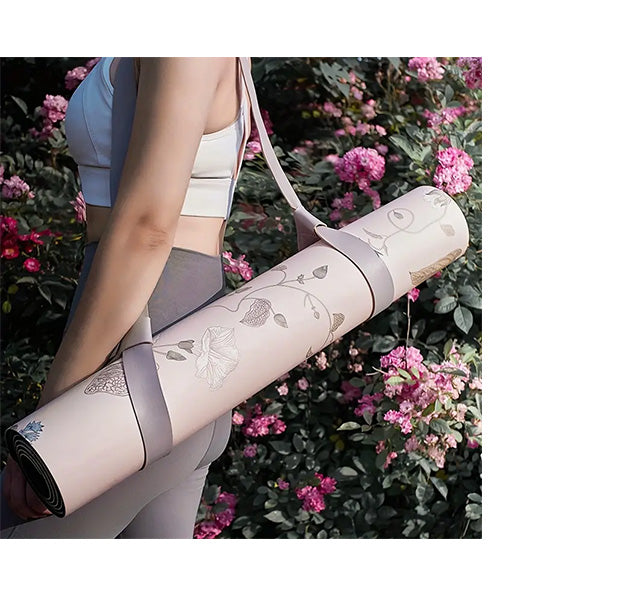

Choosing the right printing method for your PU rubber yoga mat can be tricky. Should you go for the precision of laser engraving or the vibrant colors of UV printing? This guide breaks down the pros and cons of each technology, helping you make an informed decision for your brand or manufacturing needs.
How Each Technology Works
Laser Printing (Engraving)

This process uses a high-powered laser beam to physically alter the surface of your PU rubber mat. The laser removes a microscopic layer of material, creating a permanent contrast that’s actually part of the mat itself. Think of it as a high-tech brand or tattoo for your product.
UV Printing
A modern digital printing method, UV printing sprays special ink onto the mat's surface. The ink is then instantly cured and hardened by ultraviolet (UV) light. This creates a thin, durable layer of ink on top of the rubber.

Head-to-Head: Advantages and Disadvantages
|
Feature |
Laser Printing (Engraving) |
UV Printing |
|
Durability |
Excellent. The mark becomes part of the material; won't peel, fade, or wash off from sweat. |
Good to Very Good. Resistant to abrasion, but the ink layer can potentially chip or degrade with extreme flexing over time. |
|
Print Quality |
Sharp lines & patterns. Best for logos, text, and alignment guides. Typically monochrome (logo color darker than PU surface, eg: pink PU surface---darker pink logo on PU with laser printing). |
Full-color & photorealistic. Can print any design, image, or gradient with high detail and color vibrancy. |
|
Material Feel |
Textured, tactile. Creates a slight indent or raised feel that can enhance grip. |
Smooth layer. Adds a thin, consistent coating that may slightly alter the mat's natural grip. |
|
Production Setup |
High initial machine cost. Perfect for high-volume, standardized designs. |
Lower setup costs per design. Ideal for small batches, customization, and prototyping. |
|
Environmental Impact |
Cleaner process. No inks or chemicals; only vaporizes a minuscule amount of material. |
Uses chemicals. Requires UV-curable inks; proper ventilation and disposal are needed. |
|
Operational Cost |
Higher upfront, lower long-term (no consumables like ink). |
Lower upfront, ongoing costs for inks, printhead maintenance, and potential replacements. |
|
Design Flexibility |
Limited to vector-based designs (lines/shapes). Changing designs requires reprogramming. |
High flexibility. Easy to switch between digital designs; great for personalization. |
Which Technology is Right for Your Yoga Mat?
The best choice depends entirely on your product vision, priorities, and production scale.
Choose Laser Engraving if:
Your top priority is lifelong durability.
Your designs are primarily logos, alignment guides, or patterns (not full-color photos).
You produce large batches of the same design.
You want a tactile, premium feel and a clean manufacturing process.
Choose UV Printing if:
Your designs are complex, colorful, or photorealistic.
You offer customization or short-run products.
Lower initial setup costs are important.
You can ensure the final product uses high-quality, flexible inks to prevent cracking.
Pro Tip: Some premium brands use a hybrid approach: laser engraving for durable alignment lines and UV printing for colorful artistic elements. This combines the strengths of both technologies.
Conclusion
There's no single "winner." Laser engraving wins on durability and feel for functional designs, while UV printing excels in color and flexibility for artistic ones. Assess your core needs—whether it's a mat that lasts through years of practice or one that stands out with stunning visuals—and let that guide your investment in the right printing technology.