


Five years ago, when I stood in front of the mirror, looking at my bloated body and tired eyes, I was filled with a sense of powerlessness and confusion. At that time, due to long-term sedentary behavior and irregular eating habits, my weight soared to 90 kilograms. My health was in jeopardy, and I even got out of breath after climbing just a few flights of stairs. Yoga? The word was both unfamiliar and distant to me, as if it was a patent for those who were "in good shape and highly flexible."
But fate often takes an unexpected turn. On a random occasion, I stepped into a yoga studio. Watching those figures in the mirror stretching their bodies and focusing on their breath, a thought suddenly struck me: "If they can do it, why can't I?"
So, I embarked on this challenging yet surprising yoga journey. Five years have passed, and not only have I lost 40 kilograms, but I've also become a certified yoga instructor, helping hundreds of people regain their health and confidence through yoga. Today, I want to share this transformation story along with seven yoga props that have kept me going and completely changed my life—they are not just tools but witnesses to this journey.
I. My Transformation Story: From "Resistance" to "Love" over 5 Years
1. The Starting Point: Physical and Mental Dilemmas Caused by Obesity
Five years ago, because of high work pressure and uncontrolled eating, my weight once reached 90 kilograms. The "fatty liver" and "high blood pressure" on my medical report scared me, but attempts at running and dieting all ended in failure—knee pain, binge eating, and self-denial... I was trapped in a vicious cycle.
2. The Turning Point: The "Shock" of My First Yoga Class
At a friend's recommendation, I reluctantly entered a yoga studio. In the first class, I couldn't even stand steadily in the "Mountain Pose," let alone the "Downward-Facing Dog Pose." But when the teacher guided me to close my eyes and focus on my breath, I felt an unprecedented sense of calm—it turned out that the body could be so "obedient," and stress could be released in this way.
3. Persistence: From "Completing a Task" to "Enjoying the Process"
In the first six months, I practiced for one hour every day by "gritting my teeth." I lost 10 kilograms, but what surprised me even more was that my sleep improved, my anxiety eased, and I even started to look forward to my daily yoga time. A year later, I obtained my Junior Yoga Instructor Certificate and resolved to pursue yoga as my lifelong vocation.
4. Transformation: Becoming an Instructor and Helping Others
Now, not only do I have a healthy body, but I also help others through teaching yoga. Among my students, there are postpartum depressed mothers, office workers who sit for long hours, and students who want to improve their posture... Yoga has made me realize that true change begins with accepting oneself and ends with persistent action.
II. Seven Yoga Props That Changed My Life: From Beginner to Advanced
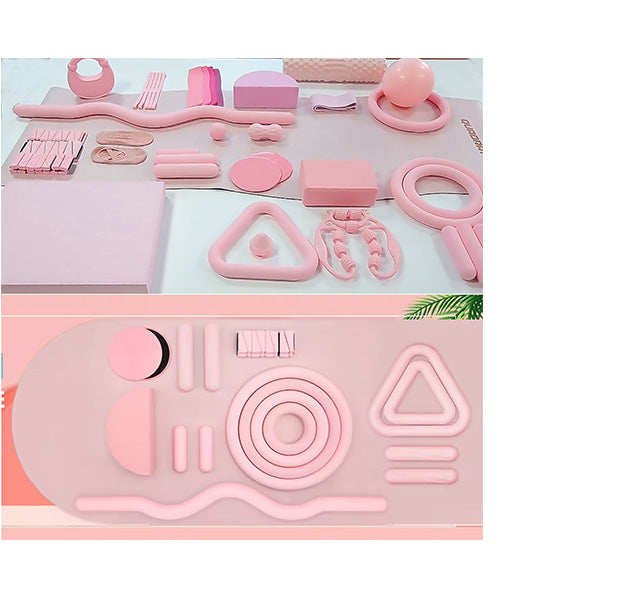
Over these five years, I've tried countless yoga tools, but the following seven are the truly essential ones that have "accompanied me to this day." They are suitable for practitioners at different stages and with different needs, and can even solve common problems (such as joint pain, poor balance, and limited space).
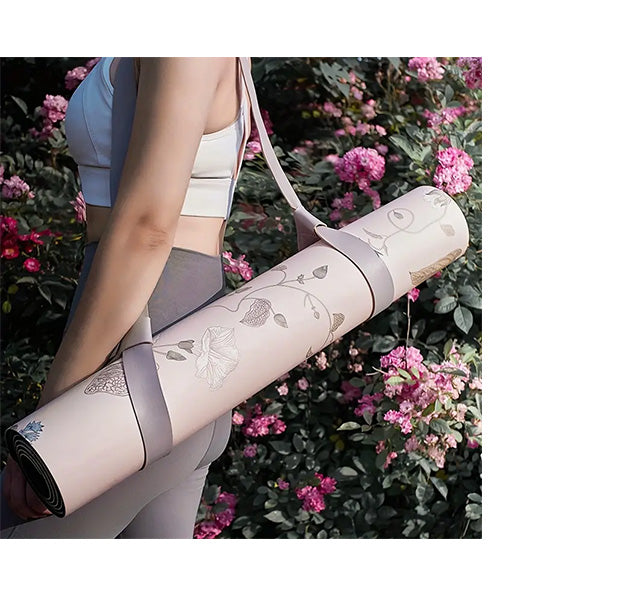
1. Basic Essential: TPE Yoga Mat (Non-slip, Lightweight, and Eco-friendly)
Problem Solved: Beginners are prone to slipping, traditional PVC mats have an odor, and they are inconvenient to carry.
My Choice: A 6mm-thick TPE yoga mat (made of natural rubber + eco-friendly materials). It has strong non-slip properties, good resilience, and can be folded to the size of a book, making it suitable for home use or travel.
Usage Scenarios: Daily morning practice, Vinyasa yoga, and meditation.
Tips: Avoid exposing it to the sun. Clean it with a damp cloth.

2. Assistance Tool: Yoga Blocks (For Balance and Deep Stretching)
Problem Solved: Poor flexibility, weak balance, and inability to perform standard poses.
My Choice: High-density EVA yoga blocks (lightweight and with strong load-bearing capacity). Two blocks can be combined to adjust the height.
Classic Uses:
- Place it under your feet in the Tree Pose to help with stability.
- Put it under your palms in the Forward Bend to reduce pressure on the waist.
- Place it under your elbow in the Side Angle Stretch Pose to deepen the stretch.
Advanced Play: Use the blocks to assist in opening the shoulders and backbends, safely pushing the body's limits.
3. Relaxation Tool: Yoga Foam Roller (Relieving Muscle Tension)
Problem Solved: Stiff shoulders and neck due to long-term sitting and muscle soreness after exercise.
My Choice: A wolf's tooth foam roller with protrusions (providing a deeper massage effect), available in different densities (soft/hard) to suit different body parts.
How to Use:
- Roll it along the back of your thighs and your back before going to bed to relax the fascia.
- Massage sore areas (such as calves and buttocks) for 10 minutes after exercise.
- Combine it with breathing, and the pain will gradually subside.
Effect: After using it consistently, my "mouse hand" and "office back" have significantly improved.
4. Balance Challenge: Yoga Balance Pad (Activating the Core and Preventing Injuries)
Problem Solved: Weak core strength, prone to spraining ankles, and unstable poses.
My Choice: An inflatable PVC balance pad (with protrusions on the surface to increase friction), about 5cm thick.
Training Methods:
- Stand on one foot (Mountain Pose) for 1 minute to exercise ankle stability.
- Place it under your hands during the Plank Pose to strengthen the core.
- Put it under your feet during squats to improve knee valgus.
Advanced Suggestions: Use it in combination with resistance bands to increase resistance training.
5. Meditation Companion: Yoga Meditation Cushion (Improving Concentration)
Problem Solved: Hip pain during meditation and inability to maintain a sitting position for a long time.
My Choice: A round cushion filled with buckwheat hulls (about 10cm high), providing strong support and good breathability.
Usage Tips:
- Sit on the edge of the cushion to make the pelvis tilt slightly forward and keep the spine in a neutral position.
- Use a timer, starting from 5 minutes and gradually extending to 30 minutes.
- Combine it with an eye mask and aromatherapy to create an immersive meditation environment.
Effect: My concentration has improved from "getting distracted in 5 minutes" to "entering a state of flow for 20 minutes."
6. Portable Stretching: Yoga Resistance Bands (Whole-body Training at Home)
Problem Solved: Limited space, inability to go to the gym, and the need for low-intensity resistance training.
My Choice: Natural latex resistance bands (available in light/medium/heavy resistance levels), about 1.2 meters long.
Training Programs:
- Good Morning Forward Bend (exercising the buttocks and legs).
- Side-lying Leg Lifts (strengthening the outer thighs).
- Seated Rowing (improving rounded shoulders and hunchback).
Advantages: Lightweight and easy to store, they can be carried with you on business trips.
7. Deep Hip Opening: Yoga Stretching Strap (Breaking Through Flexibility Bottlenecks)
Problem Solved: Tight hips and inability to perform the "Bound Angle Pose" and "Pigeon Pose."
My Choice: A cotton stretching strap with a buckle design (about 2.5 meters long), soft and not irritating to the skin.
How to Use:
- In the Supine Bound Angle Pose, use the strap to fix your feet to help open the hips.
- In the Seated Forward Bend, put it around the soles of your feet and use your arm strength to deepen the stretch.
- In the Warrior II Pose, tie it around the outer thighs to correct knee valgus.
Note: Keep breathing while stretching and avoid excessive force.
III. Advice for Yoga Beginners: Persistence Is More Important than Perfection
Looking back on these five years, what I most want to tell beginners is: "Don't pursue 'standard poses.' Instead, focus on 'how your body feels.'"
- Use props for assistance in the early stages to avoid injuries.
- Practicing for 15 minutes every day is more effective than practicing for 2 hours once a week.
- Record your progress (such as taking photos or writing a diary) to boost your motivation.
- Accept your "imperfections"—yoga is not a competition but a journey of self-exploration.
Yoga has taught me that true transformation is not merely a shift from 'fat to thin', but a journey of inner growth – from resistance to acceptance, from fragility to resilience. These seven pieces of equipment have been indispensable companions on my path of change. Though simple in appearance, each bears the imprint of my sweat and perseverance. If you too yearn to embark on your own journey of change, why not begin today? Click MOWIN, select a piece of equipment that speaks to you, roll out your mat, take a deep breath—and you'll discover your body is far more resilient than you ever imagined.