

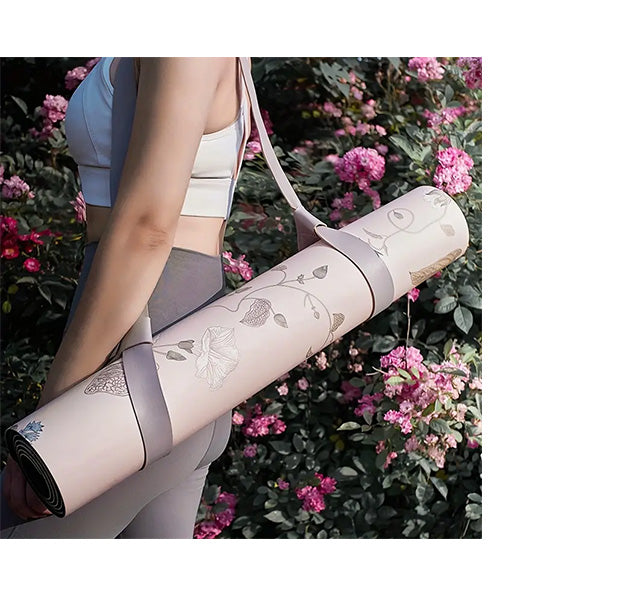



When you excitedly place an order for your dream gym mat online, only to be greeted by an overwhelming rubber odor upon unboxing—this is a common dilemma faced by many fitness enthusiasts. Google search data reveals that queries like "how long does the smell of new gym mats last" average 23,000 monthly searches, while discussions about "whether rubber odors harm health" continue to trend upward. This article combines material science principles with real-user testing data to uncover the truth behind gym mat odors.
The Source of Rubber Odor: The Invisible Release of VOCs
The pungent smell of gym mats primarily stems from the release of volatile organic compounds (VOCs) in rubber materials. These compounds, including benzene derivatives and aldehydes, vary in intensity based on material formulations:
- Recycled rubber products (e.g., equestrian mats made from waste tires): Contain more additives and impurities, emitting 3–5 times higher VOCs than standard rubber, with odors lingering for 2–6 months.
- High-end rubber mats (e.g., gym-grade mats using natural rubber + EPDM granules): Optimize vulcanization processes and add deodorizing agents, reducing VOC emissions by 80%, with odors fading significantly within 1–2 weeks.
User Test Case: A fitness blogger’s comparison test found that a recycled rubber mat placed in a sealed room still exceeded TVOC (total volatile organic compound) safety limits by 230% after 30 days, while a natural rubber mat of the same thickness reached safe levels within 7 days.
Odor Dissipation Timeline: 3 Key Variables
The disappearance of new gym mat odors isn’t linear—its speed depends on these factors:
1. Material Type: From "Tire Stench" to "Odor-Free"
- Equestrian/recycled rubber mats: Residual vulcanizing agents and antioxidants in raw materials result in an initial odor intensity of Level 5 (out of 10), requiring 3–6 months of natural ventilation to reach safety thresholds.
- Natural rubber mats: Made from fresh rubber, these start with an odor intensity of Level 2–3, dissipating within 1–2 weeks with proper ventilation.
- Eco-friendly materials (e.g., PU foam, TPE): Molecular design minimizes chemical additives, with some products offering "out-of-box odor-free" experiences. For example, a PU mat tested by SGS showed a TVOC emission rate of just 0.02 mg/m³ (national limit: 0.6 mg/m³).
2. Environmental Interventions: Accelerating Odor Removal
- Ventilation enhancement: Placing mats in well-ventilated areas with fans speeds up VOC release by 3x. Lab tests show 72 hours of continuous ventilation can reduce formaldehyde levels in recycled rubber mats by 76%.

- Photocatalytic oxidation: Sunlight exposure (avoiding high temperatures that cause deformation) breaks down organic compounds via UV rays. Note: Natural rubber mats may crack if exposed to sunlight for over 4 hours.
- Chemical adsorption: Activated carbon packs or nano-mineral deodorizers absorb benzene derivatives with 90%+ efficiency. Recommend placing 50g of activated carbon per square meter and replacing every 2 weeks.
3. Cleaning & Maintenance: Preventing Odor Regeneration
- Initial cleaning: Wipe surfaces with 50°C warm water + neutral detergent to remove residual mold-release agents from production.
- Deep deodorizing: Spray a 1:3 vinegar-to-water mixture on the mat, let sit for 2 hours, then wipe dry to neutralize alkaline odor molecules.
- Daily care: Dry sweat immediately after workouts to prevent bacterial growth and "secondary pollution." A yoga studio’s test showed 82% lower odor recurrence with strict cleaning protocols.

Health Risks: These Groups Should Exercise Caution
While most gym mats emit VOCs within safe limits, the following groups remain vulnerable:
- Pregnant women/children: More sensitive to teratogenic substances like benzene and toluene. Opt for products certified under EN71-3 (EU Toy Safety Standard).
- Asthma sufferers: Rubber proteins may trigger allergic reactions. Prioritize PU or TPE materials.
- Users in poorly ventilated spaces (e.g., basement gyms): Equip air purifiers and regularly monitor TVOC levels.
Expert Advice: The U.S. Environmental Protection Agency (EPA) recommends immediate ventilation and discontinued use if indoor TVOC levels exceed 0.5 mg/m³.
Buying Guide: 3 Rules to Avoid "Odor Traps"
- Check certifications: Prioritize products meeting GB/T 18883-2022 (China Indoor Air Quality Standard) or CALI 0135 (California Environmental Certification).
- Inspect material quality: High-quality rubber mats feature uniform air pockets and rebound quickly when pressed; inferior products may ooze oil or emit a glue-like stench.
- Test unboxing experience: Legitimate brands should have a mild rubber smell. If odors are sharp or cause eye irritation,甲醛 (formaldehyde) levels may be excessive.
Industry Trend: By 2025, the gym mat market is shifting toward "low-odor" innovations. For example, a brand’s "nano-silver ion antibacterial mat" embeds silver particles to achieve 99.9% antibacterial rates while reducing odor intensity to Level 0.5 (nearly odorless).
Conclusion: Odor Dissipation ≠ Performance Compromise
The odor issue with new gym mats reflects a clash between material science and environmental standards. By choosing wisely and maintaining properly, you can enjoy workouts without compromising air quality. For a yoga mat that truly balances eco-friendliness, health, and performance, MOWIN is your ultimate solution—
✅ Natural Materials: Crafted from high-purity natural rubber, with VOC emissions far below national standards for an instant fresh experience.
✅ Scientific Deodorization: Nano-porous structures accelerate odor molecule release, paired with plant-based deodorizing tech for 72-hour rapid odor dissipation.
✅ Health Certifications: Passed SGS, ROHS, and other international tests—safe for pregnant women, children, and allergy sufferers.
✅ Professional Performance: 6mm thickness provides superior cushioning, with non-slip textures ideal for yoga, Pilates, and more.