

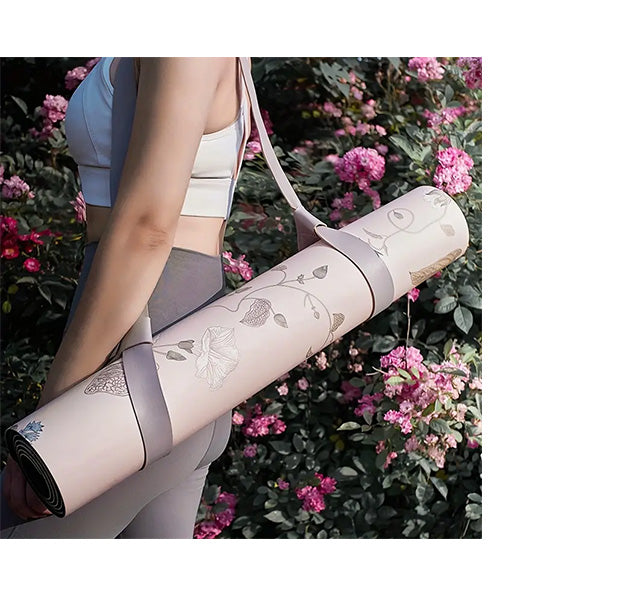

Have you ever wondered if the widely available PVC yoga mats are truly right for you?
In yoga practice, a suitable yoga mat not only enhances the experience but also serves as essential protection for the body. Among various materials, PVC (Polyvinyl Chloride) yoga mats are one of the most common choices on the market due to their affordability and durability.However, popularity does not automatically mean suitability—understanding the material’s strengths and limitations is key before making a decision.
According to statistics, the global PVC yoga mat market reached $959 million in sales in 2024 and is projected to grow to $1.342 billion by 2031, with a compound annual growth rate of approximately 5.0%. So, what are the characteristics of this widely used material, and is it suitable for you?Let’s take a closer look at its performance, safety, and environmental impact.

Key Features of PVC Yoga Mats
PVC is a general-purpose plastic that was once the most produced plastic globally and is used in a wide range of applications. In yoga mat manufacturing, PVC material must undergo a foaming process to achieve a soft, porous texture that provides cushioning and slip resistance.The density and quality of this foaming process largely determine the mat’s durability and comfort level.
A typical PVC yoga mat (such as the Mukasa PVC Yoga Mat) usually has the following specifications:
- Material: PVC
- Dimensions: 183 x 61cm (±1cm)
- Thickness: 6mm
- Weight: 1.7kg (±5%)
These specifications make it suitable for standard studio use, offering a balance between portability and cushioning.
Pros and Cons of PVC Yoga Mats
Pros:
- Affordable: PVC yoga mats are cost-effective, offering great value for budget-conscious consumers.
- Durable: PVC material is highly durable and has a long lifespan.
- Moderate Slip Resistance: The surface provides adequate friction for most yoga poses. Some products even feature an exclusive non-slip formula for better grip than standard PVC mats.
- Easy to Clean: PVC yoga mats are simple to maintain and resistant to deformation.
Cons:
- Poor Eco-Friendliness: PVC material does not decompose naturally and releases toxic substances when burned, making it one of the more environmentally polluting yoga mat materials. Even in landfills, it may take centuries to break down completely.
- Potential Harmful Substances: Some low-quality PVC yoga mats may contain harmful chemicals. The World Health Organization's International Agency for Research on Cancer classifies polyvinyl chloride (PVC) as a Group 3 carcinogen.This classification means it is “not classifiable as to its carcinogenicity to humans,” but consumers should still prioritize certified, non-toxic products.
- Poor Resilience: Foamed PVC has weak rebound properties—press a finger into it, and it may take four to five seconds to return to its original shape.
- Limited Comfort: It is less soft, provides weaker joint protection, and has poor breathability, making it prone to slipping during sweaty sessions.
How to Identify a High-Quality PVC Yoga Mat?
Since the quality of PVC yoga mats varies widely in the market, it’s important to know how to distinguish good ones:
- Smell Test: While odors from new TPE mats dissipate, low-quality PVC mats may retain unpleasant smells.
- Check Foaming Uniformity: Lay the mat flat and observe its foam consistency. Uneven foaming can lead to quicker wear and tear.
- Test Elasticity: Press the mat with your hand—choose one with good elasticity and medium firmness. Too soft or too hard is not ideal.
- Avoid "Recycled Materials": Steer clear of PVC mats made from recycled materials, as they can pose significant health risks.Instead, look for products labeled phthalate-free and certified by recognized safety standards.
PVC vs Other Yoga Mat Materials
To help you better understand where PVC stands among other options, here’s a comparison table:
| Feature | PVC | TPE | Natural Rubber | PU |
| Price | Budget-friendly | Mid-range | Premium | Premium |
| Eco-Friendliness | Poor, non-biodegradable | Good, recyclable | Good, natural & eco-friendly | Good, non-toxic & odorless |
| Slip Resistance | Moderate | Good | Excellent | Excellent, dry & wet |
| Weight | Medium (1.7kg) | Lightweight | Heavy | Heavy |
| Durability | High | Medium | High | High, wear-resistant |
| Ideal For | Beginners, budget users | Eco-conscious users | Advanced users, needs high grip | Sweaty users, intense practice |
This comparison shows that while PVC excels in affordability and durability, it falls behind in sustainability and high-performance grip.
Who Are PVC Yoga Mats Best For?
Based on the above analysis, PVC yoga mats are particularly suitable for:
- Budget-conscious consumers
- Yoga beginners just starting their practice
- Users with low practice frequency
- Those who primarily practice gentle or static yoga
They are less ideal for hot yoga practitioners or environmentally conscious consumers seeking biodegradable materials.
How to Choose the Right Thickness for a PVC Yoga Mat?
The thickness of a yoga mat directly impacts comfort:
- Beginners: Opt for 6mm or thicker mats for extra cushioning and joint protection during prolonged poses.
- Intermediate Practitioners: 4-5mm mats are suitable for various yoga styles.
- Advanced Practitioners: Choose 3mm or thinner mats for better stability and ground feel.
Remember: thicker mats provide comfort, while thinner mats enhance balance and control.
Maintenance and Cleaning of PVC Yoga Mats
Proper care can extend the life of your PVC yoga mat:
- Wipe with a damp cloth and air dry naturally.
- Avoid direct sunlight, as it accelerates oxidation and cracking.
- Do not scrub with a brush, as it may damage the mat surface.
- For hygiene, clean lightly after each use.
- Keep nails trimmed to avoid scratching the mat.
Deep cleaning once every 2–4 weeks can further prevent odor buildup and material degradation.
Environmental Considerations and Future Trends
With growing environmental awareness, PVC yoga mat manufacturers are adopting greener materials and processes, reducing the use of harmful substances. Future PVC mats will focus more on eco-friendly materials and innovative designs, incorporating recyclable and sustainable PVC alternatives to minimize environmental impact.
Some newer PVC yoga mats also include antimicrobial components and enhanced slip resistance. For example, recent patents have shown that the addition of polystyrene foam particles doped with halogen-containing polyglutamate fibres as water-absorbent antimicrobial particles can create PVC yoga mats with excellent water-absorbent properties, antibacterial properties, and slip resistance.
Despite these innovations, fully biodegradable materials such as natural rubber and cork are gaining popularity as long-term sustainable solutions.
Conclusion: How to Make an Informed Choice?
When selecting a yoga mat, consider the following factors:
- Practice Intensity: High-intensity practices may require natural rubber or TPE; daily use may suit PVC or hybrid materials.
- Eco-Friendliness & Health: Choose non-toxic, odorless, and recyclable materials where possible.
- Try Before You Buy: Test the mat in person to assess thickness, elasticity, and grip.
- Brand & Reputation: Opt for reputable brands to avoid low-quality products.
For those on a budget or beginners, PVC yoga mats are a great starting point. However, if you practice regularly or are concerned about environmental and health impacts, you may want to invest in more sustainable, high-performance materials like TPE or natural rubber.
Ultimately, the best yoga mat is one that fits your needs, budget, and values.
Ready to Find Your Perfect Yoga Mat? Explore Mowin's Collection!
At Mowin, we understand that every yogi's journey is unique. That's why we offer a wide range of high-quality yoga mats, including eco-friendly options and advanced performance designs, to support your practice at every level.Discover the mat that aligns with your lifestyle and elevate your yoga experience today.