


Adho Mukha Svanasana (Downward-Facing Dog), Sanskrit for "downward-facing dog pose," is one of the most iconic asanas in yoga practice. The body forms an inverted "V" shape, with hands and feet rooted to the earth and the spine extending toward the sky—this seemingly simple posture is actually a dynamic art of balance integrating strength, flexibility, and awareness. As a core pose in Sun Salutations, Adho Mukha Svanasana appears repeatedly in Vinyasa, Hatha, and even restorative yoga, serving as a soulful hub linking breath and movement.
Why Are Yogis Worldwide Obsessed with Adho Mukha Svanasana?
The popularity of Adho Mukha Svanasana surpasses other poses, thanks to its threefold universality:
- Functional Versatility: It simultaneously combines stretching, strengthening, inversion, and rest, earning it the title of "dynamic restorative pose." In fast-paced flows, Adho Mukha Svanasana offers a window for breath adjustment; for beginners, it is a gentle preparation for inversions.
- Mind-Body Synchronicity: As a mild inversion, the heart positioned above the head promotes blood flow to the brain, calming the nervous system and alleviating anxiety. Studies confirm it improves insomnia, mild depression, and stress hormone levels.
- High Adaptability: From pregnant women (modified for second trimester) to athletes, Adho Mukha Svanasana can be tailored using props or variations. A yoga block under the forehead or hands instantly transforms pressure into support.
Traditional yoga texts regard Adho Mukha Svanasana as a symbol of "grounding"—palms connecting to the earth, spine resonating with cosmic energy, embodying the philosophy that "rooting brings liberation."
Anatomy of Adho Mukha Svanasana: The Scientific Code of Muscular Synergy
This pose is a symphony of full-body muscle engagement:
- Upper Body Kinetic Chain: When pressing the arms down, deltoids and triceps bear weight; rhomboids stabilize scapulae to avoid neck compression. Forearms rotate inward (index finger roots press down), while upper arms rotate outward (shoulder blades hug the back), creating a "double-helix mechanics" that releases cervical space.
- Core and Spine: Transverse abdominis draws in like a corset; multifidus muscles lengthen the spine vertebra by vertebra, countering gravity. Imagine pulling the thoracic spine toward the pelvis to prevent lumbar arching.
- Lower Body Integration: Glutes contract to lift sit bones; hamstrings stretch eccentrically. Tibialis anterior activates to sink heels. If heels don’t reach the mat, slightly bend knees and internally rotate thighs to protect knees and deepen back extension.
Muscle imbalances trigger chain reactions: overcompensation by latissimus dorsi stiffens the thoracic spine, or foot pronation stresses sacroiliac joints—precise activation is key to healing.
Four-Step Alignment Protocol
1. Foundation Activation
- Hands: Spread fingers maximally, press *tiger’s mouth* (thumb-index webbing) and knuckles down ("suction effect"), align wrist creases parallel to mat edge.
- Feet: Extend toes, lift arches, center weight between ball of big toe and heel.
2. Kinetic Chain Engagement
- Upper Body: Pronate forearms (elbow creases face each other), externally rotate upper arms (scapulae glue to back) → create "smiling collarbone curve."
- Torso: Draw lower ribs in to avoid flaring, actively push tailbone toward ceiling, gently curl pubic bone up.
- Lower Body: Spiral inner thighs backward, microbend knees to protect hamstrings, press heels vertically down.
3. Breath Integration
- Inhale → lengthen spine by lifting sit bones higher;
- Exhale → sink shoulders toward hips, draw heels toward mat.
4. Progressive Refinement
- If heels lift: Maintain bent knees, prioritize spinal extension.
- If neck/shoulders strain: Bend elbows 45° outward, lower head below heart level.

7 Scientifically Proven Benefits for Body and Mind
Long-term practice of Adho Mukha Svanasana rewards the body with remarkable transformation:
- Musculoskeletal Revolution: Axial spinal extension improves disc nutrition; shoulder and ankle mobility increases, preventing osteoporosis.
- Metabolic Activation: Inversion stimulates liver-spleen circulation, accelerates detoxification, and relieves bloating/constipation.
- Pain Management: Stretches lumbar fascia, alleviates sciatica; heel pressure rebuilds foot arches, aiding flat feet.
- Women’s Wellness: Regulates pelvic blood flow, reduces heavy menstruation; significantly decreases menopausal hot flashes.
>Neuroscience Perspective: Blood flow to the hypothalamus regulates the autonomic nervous system, instantly switching from "fight-or-flight" to "rest-and-digest."
Solving Four Common Practice Challenges: From Compensation to Alignment
90% of practitioners encounter these pitfalls—solutions below:
| Challenge | Root Cause | Solution |
| Wrist pain | Hollow palm, weight on wrists | Spread fingers wide, root knuckles down; switch to Dolphin Pose (forearms down) |
| Neck/shoulder tension |
Arm internal rotation, trapezius overuse |
Activate "scapulae wrapping ribs" awareness, broaden collarbones |
| Raised heels + arched back | Tight hamstrings or forward weight shift | Bend knees, shift weight back; press heels against wall |
| Short breath | Collapsed ribs compress diaphragm | Gently draw lower ribs in, gaze at navel to guide diaphragmatic breath |
Advanced Refinement: Practice "spiral awareness" against a wall—press index knuckles into the wall to induce forearm pronation while retracting/depressing scapulae, feeling micro-currents of arm external rotation.

Scientific Practice Frequency & Progressive Cycling
The benefits of Adho Mukha Svanasana correlate strongly with frequency, tailored to individual recovery capacity:
| Group | Duration per Hold | Weekly Frequency | Progression Signal |
| Beginners | 3-5 breaths (~20 sec) | 3-4 sessions | Heels descend 1cm naturally |
| Rehab (shoulder/wrist) | 2 breaths + dynamic flow | Every other day | No joint pain |
| Advanced | 1-3 minutes | Daily morning | Zero spinal tremor (eyes closed) |
| Mid-pregnancy | 30 sec (wall-supported elevated hips) | 2 sessions | No pelvic floor pressure |
Golden Rules:
- Recovery Phase: Total daily duration ≤90 sec (e.g., 3 sets × 30 sec)
- Strengthening Phase: Holds ≥1 minute trigger fascial remodeling
-
Contraindication: Glaucoma/retinopathy patients ≤15 sec per hold
Adho Mukha Svanasana vs. Parvatasana: The Dialectics of Twin Inverted-V Poses
Though sharing an inverted-V base, these asanas form mirrored complements in biomechanical focus and energetic effects:
| Dimension | Adho Mukha Svanasana (Downward Dog) | Parvatasana (Mountain Pose) |
| Foundation | Hand-foot distance ≈45% height(diagonal spine extension) | Feet/hands together/stacked(vertical spine lift) |
| Load Distribution | Wrists/shoulders/hips share load equally | Ankles/knees bear primary load |
| Muscle Target | Eccentric latissimus/hamstring engagement | Concentric gastrocnemius/erector spinae contraction |
| Breath Mechanism | Diaphragmatic breathing (belly expansion) | Thoracic breathing (ribcage elevation) |
| Energetic Effect | Activates Muladhara (root lock) for grounding | Stimulates Anahata (heart chakra) |
| Functional Role | Dynamic sequencing hub + full-body integration | Static meditation + leg alignment tool |
Typical Applications:
- Adho Mukha Svanasana sequences flows in Vinyasa;
- Iyengar uses Parvatasana with heel wedges to correct knock-knees/bowlegs;
- Wrist-injured practitioners substitute with Parvatasana to reduce upper-body stress.
Synergistic Protocol:
Morning: Activate with Adho Mukha Svanasana (3-min dynamic cycles) → Evening: Restore with Parvatasana (2-min static hold), creating a circadian balance cycle.
Personalizing Your Adho Mukha Svanasana: From Standard to Sacred
There is no universal template for a "perfect" Downward Dog. Customize in three steps:
1. Length Calibration: From Plank Pose, align wrists under shoulders, heels over balls of feet. Keeping hand/foot positions fixed, push hips back—this is your **golden-ratio spacing.
2. Joint-Smart Protection: Elevate head with block for hypertension; fist support for carpal tunnel; switch to Child’s Pose in late pregnancy.
3. Function-Driven Variations:
- Single-leg lift to strengthen glutes;
- Three-Legged Dog (bent knee, hip lift) to open groins;
- Restorative version (forehead on block) for 3-minute deep release.
> Yogi’s Wisdom: When Adho Mukha Svanasana shifts from "enduring" to "enjoying," it signals true mind-body connection.
Stage-by-Stage Guide: Evolving Adho Mukha Svanasana from Novice to Master
Yoga is not a cookie-cutter mold, but a tailored art. Adapt Adho Mukha Svanasana to your practice stage—let the pose mirror your growth:
| Stage | Primary Goal | Tailored Strategies | Red Flag |
| Beginner(0-6 mos) | Build neuromuscular connection |
1、Bent knees + lifted heels (prioritize spine extension) 2、Hands on yoga block (slanted to reduce wrist pressure) 3、Shorten hand-foot distance (15cm/5.9in less than standard) |
Neck/shoulder strain, breath holding |
| Intermediate(6 mos-2 yrs) | Unlock biomechanical chains |
1、Slowly sink heels to tremoring edge 2、Activate "scapulae embedding back" awareness 3、Try 3-sec inhale + 5-sec exhale rhythm |
Wrist tendon pain, rib flaring |
| Advanced(2+ yrs) | Refine micro-circulation & energy flow |
1、Practice eyes closed to sense micro-adjustments 2、Keep pelvis zero-rotation in single-leg float 3、Hold 2+ mins to activate fascial hydration |
Elbow hyperextension, lumbar overarch |
| Special Populations(Pregnancy/injury) | Safety-first intelligent modifications |
1、Pregnancy: Wide-grip hands + wall-supported high hips (reduce abdominal pressure) 2、Shoulder injury: Forearm variation (Dolphin Pose) 3、Hypertension: Forehead elevated to heart level |
Abdominal tension, joint pain |
Refinement Philosophy:
Beginners remember:"Bent knees are closer to truth than a bent spine."
Advanced practitioners beware:When Adho Mukha Svanasana feels easy, compensation may be creeping in.
Epilogue: The Philosophical Metaphor of Downward Dog
Adho Mukha Svanasana builds balance between strength and flexibility on the physical level; spiritually, it teaches life wisdom—"relax within support," like the earth effortlessly upholding all things. Each time palms press down and sit bones rise skyward, we explore inner space: When bones align, energy flows freely; when the mind releases control, healing unfolds naturally.
Further Exploration
- Progressive tutorial for tight hamstrings → [Case Study]
- Prenatal yoga modifications → [Safe Variations]
- 3D muscle activation interactive guide → [Deepen anatomical understanding]
Epilogue: The Philosophical Metaphor of Downward Dog
Adho Mukha Svanasana builds balance between strength and flexibility on the physical level; spiritually, it teaches life wisdom—"relax within support,"like the earth effortlessly upholding all things. Each time palms press down and sit bones rise skyward, we explore inner space: When bones align, energy flows freely; when the mind releases control, healing unfolds naturally.
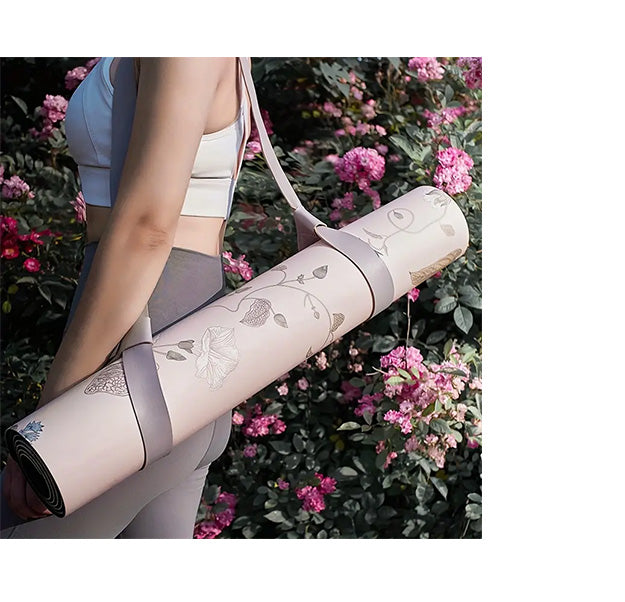
True transformation begins where your hands meet the earth. For those seeking to deepen their practice, a premium natural rubber mat like MOWIN’s mat becomes an extension of your intention—transforming pressure into presence, one breath-aligned Adho Mukha Svanasana at a time. Explore how terrain shapes your flow!