


If you are sourcing Pilates products for a fitness brand, studio, distributor, retailer, or e-commerce business, the first message you send to a supplier can have a major impact on the quotation you receive.
A simple message such as “Please send me your best price for Pilates products” usually isn't enough. The supplier may need to come back with several questions about materials, sizes, colors, quantities, packaging, branding, and delivery.
That back-and-forth slows down the sourcing process and makes supplier comparisons difficult.
A well-prepared Request for Quotation (RFQ) gives the manufacturer a clear picture of what you actually need. More importantly, it creates a specification that can later be used to compare samples, confirm production details, and check the finished order.
For Pilates products, a useful RFQ should cover product specifications, quantity, customization, quality requirements, packaging, commercial terms, and delivery information.

1. Start With the Exact Pilates Product
The first part of an RFQ should identify exactly what you want to source.
Instead of writing:Pilates accessories
provide a more specific description, such as:
-
Pilates ring
-
Pilates ball
-
Fabric resistance band
-
Ankle weights
-
Silicone dumbbells
-
Massage ball
-
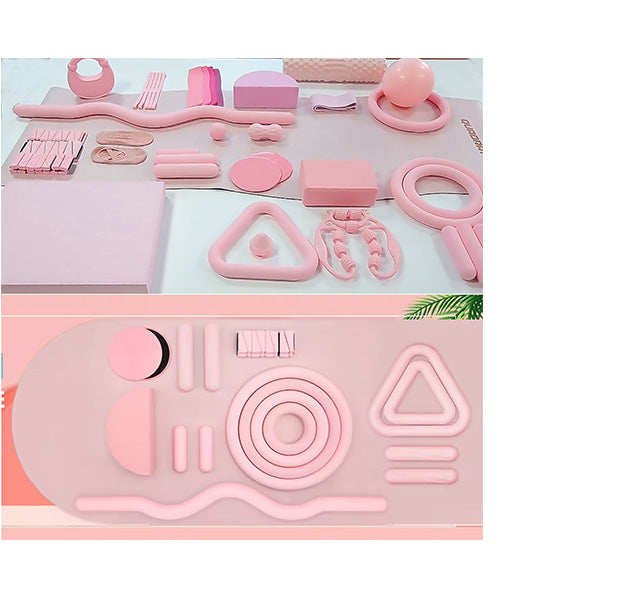
Pilates accessory set
-

If you already have a reference product, include its model number, supplier SKU, product link, photos, drawings, or technical specifications.
This is especially important when a product has multiple versions. Two Pilates rings may look almost identical but differ in diameter, materials, weight, resistance, handles, or surface finish.
Practical tip: If your product is based on an existing item, attach clear reference photos and mark the areas you want to change.
2. Include Product Specifications
A supplier cannot provide a meaningful quotation without knowing what they are expected to manufacture.
Depending on the product, your RFQ should include:
-
Material
-
Product dimensions
-
Weight
-
Thickness
-
Resistance level
-
Color
-
Shape or design
-
Surface finish
-
Components
-
Accessories
-
Logo requirements
-
Special functional requirements
For example, an RFQ for a Pilates resistance band could specify the material, dimensions, resistance levels, color options, logo method, and whether the bands will be sold individually or as a set.
For a Pilates ring, you may need to specify the diameter, frame material, padding, handles, color, and packaging.
The more measurable the requirement, the easier it is for the supplier to quote accurately.
3. State Your Order Quantity and MOQ Expectations
Quantity is one of the most important factors affecting a wholesale quotation.
Your RFQ should clearly state:
Estimated order quantity: 1,000 pcs
Expected repeat order: 2,000–5,000 pcs
Color quantity: 250 pcs per color
If you are still testing the market, explain that as well.
For example:We plan to order 300 pcs for the initial launch and expect to increase the quantity after the first sales cycle.
This gives the supplier useful commercial context without forcing you to commit to an unrealistic quantity.
You should also ask the supplier to state:
-
Standard MOQ
-
MOQ for custom colors
-
MOQ for custom logos
-
MOQ for custom packaging
-
Whether mixed colors are allowed
-
Whether different models can be combined for MOQ purposes
MOQ can change significantly when you move from a standard product to a customized one.
4. Explain Your Customization Requirements
If you are developing a private-label Pilates product, don't simply write “OEM available.”
Explain what you actually want customized.
Common options include:
Product Customization
-
Custom color
-
Custom size
-
Material changes
-
Product structure
-
Resistance level
-
Accessories
-
Surface finish
Branding
-
Logo printing
-
Embossed logo
-
Laser engraving
-
Woven label
-
Hangtag
-
Brand sticker
Packaging
-
Custom color box
-
Mailer box
-
Drawstring bag
-
Polybag
-
Instruction card
-
Custom carton markings
Send your logo in a suitable vector format when possible and provide brand colors or physical color references when color matching matters.
Customization should be documented before production rather than left to informal messages. In commercial Pilates sourcing, changes to materials, branding, packaging, and configuration can affect production and quotation requirements.
5. Tell the Supplier About Your Target Market
Your destination market can affect product requirements, packaging, labeling, documentation, and shipping.
Include:
-
Target country or region
-
Sales channel
-
Intended users
-
Retail or commercial use
-
Online or offline sales
-
Any known compliance requirements
For example:
- Target market: United States
- Sales channel: E-commerce and Pilates studios
- Product positioning: Mid-to-premium
- Packaging: Retail-ready
You don't need to provide a long company introduction. A few useful details are enough to help the supplier understand the project.
If your destination market has specific regulatory or testing requirements, state them before quotation rather than after production has started.
6. Specify Quality Requirements
“Good quality” means different things to different buyers.
Instead of simply writing:High quality required.
define what quality means for your product.
For example:
-
No visible surface defects
-
Consistent color between units
-
Accurate dimensions
-
Logo must match approved artwork
-
No loose stitching
-
No unpleasant odor
-
Smooth edges
-
Consistent resistance
-
Secure component assembly
-
Packaging must arrive without significant damage
For larger orders, you can also ask the supplier to explain its inspection process and whether pre-shipment inspection is available.
A strong sourcing process normally links the approved specification, approved sample, production inspection, and final packing. This makes it much easier to identify whether the finished products actually match what was ordered.
7. Ask for Sample Information
Before placing a large customized order, a sample can help you evaluate the actual product rather than relying only on photographs or specifications.
Your RFQ can ask:
-
Is a sample available?
-
What is the sample cost?
-
Is the sample fee refundable after bulk order?
-
How long does sampling take?
-
Can the sample be customized?
-
Can the supplier use the final production materials for the sample?
-
Can the approved sample be retained as a production reference?
For customized products, the last question is particularly useful.
Once a sample is approved, make sure the important specifications are recorded. This may include dimensions, material, color, logo position, packaging, accessories, and other details that matter to the final product.
8. Request a Complete Quotation
Don't compare suppliers based only on the unit price.
Ask each supplier to provide the same commercial information.
A useful quotation should ideally include:
| Item | Information to Request |
|---|---|
| Unit price | Price based on your stated quantity |
| MOQ | Standard and customized MOQ |
| Sample cost | Sample price and refund policy |
| Tooling | Mold or setup costs if applicable |
| Logo | Custom logo cost |
| Packaging | Standard and custom packaging cost |
| Production | Estimated lead time |
| Payment | Payment terms |
| Shipping | Available shipping terms |
| Validity | How long the quotation is valid |
For international orders, also clarify the Incoterm, such as EXW, FOB, CIF, or DDP.
A quotation that only says “$5 per piece” doesn't give you enough information to compare the real landed cost.
9. Include Packaging Requirements
Packaging is often overlooked during the RFQ stage.
However, packaging can affect:
-
Unit cost
-
Product protection
-
Carton dimensions
-
Shipping cost
-
Warehouse storage
-
Retail presentation
Tell the supplier whether you need:
-
Individual polybags
-
Color boxes
-
Kraft packaging
-
Retail-ready packaging
-
Instruction manuals
-
Barcode labels
-
Carton labels
-
Custom shipping marks
-
Inner cartons
-
Master cartons
If your products will be sold through e-commerce, packaging requirements may be different from products shipped directly to Pilates studios.
Ask for the estimated carton size, units per carton, gross weight, and net weight once the packaging configuration is determined. These details are useful when calculating freight and warehouse costs.
10. Give a Realistic Delivery Requirement
Don't simply ask:How fast can you ship?
Instead, provide your target date.
For example:Target delivery: within 45 days after sample approval and deposit.
Then ask the supplier to confirm:
-
Sample lead time
-
Production lead time
-
Packaging lead time
-
Estimated shipping time
-
Earliest available production slot
Keep in mind that production lead time and transportation time are not the same thing.
A supplier may complete production in 30 days, but the total time to your warehouse will also depend on freight, customs clearance, and the selected shipping method.
11. Ask About Spare Parts and After-Sales Support
This matters more for equipment than for small accessories, but it can still be important for a growing Pilates product line.
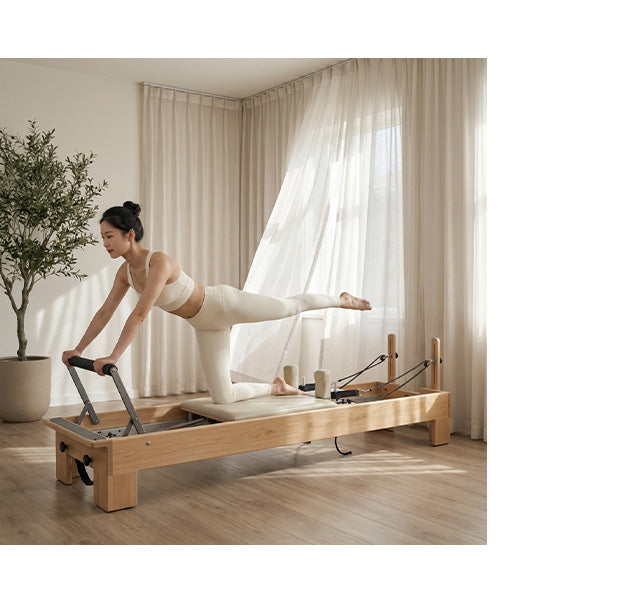
For larger Pilates equipment, ask about:
-
Replacement parts
-
Warranty period
-
Repair support
-
Spare-part pricing
-
User manuals
-
Assembly instructions
-
Technical support
For accessories, you may instead want to clarify the supplier's policy for defective units, replacement products, or production claims.
A good RFQ doesn't only focus on getting the lowest initial price. It should help you understand the supplier's ability to support the product after shipment.
12. Use the Same RFQ for Every Supplier
One of the easiest ways to make supplier comparisons more reliable is to send essentially the same RFQ to every manufacturer.
For example, compare suppliers using the same:
-
Product specification
-
Quantity
-
Color
-
Logo requirement
-
Packaging
-
Delivery destination
-
Quality expectations
-
Incoterm
Otherwise, you may end up comparing a basic product from one supplier against a customized product from another.
A lower unit price isn't necessarily a better deal if it excludes packaging, branding, accessories, inspection, or other requirements.
A Simple Pilates Product RFQ Template
You can use the following structure when contacting a Pilates product manufacturer:
Product: Pilates Resistance Band Set
Quantity: 100 sets
Material: Polyester + latex
Set Configuration: 3 resistance levels
Color: Custom colors
Logo: Custom logo on each band
Packaging: Custom retail box
Target Market: United States
Application: Pilates, home fitness, studio training
Quality Requirements: Consistent resistance, clean stitching, accurate logo placement, no visible defects
Sample: Customized pre-production sample required
Target Delivery: Within 45 days after sample approval
Please quote:
-
Unit price
-
MOQ
-
Sample cost
-
Logo cost
-
Custom packaging cost
-
Production lead time
-
Payment terms
-
Shipping terms
-
Carton dimensions and weight
-
Warranty or defect policy
This format gives a supplier enough information to prepare a useful quotation without making the RFQ unnecessarily complicated.
What Makes a Good Pilates RFQ?
The best RFQ is not necessarily the longest one.
It is the one that removes the most uncertainty.
Before sending your request, ask yourself:
Can the supplier clearly understand what product I want?
Can they calculate the price without asking five more questions?
Can I compare their quotation with another supplier's quotation?
Can the final approved specification be used during production and QC?
If the answer is yes, your RFQ is probably doing its job.
For B2B Pilates sourcing, this level of clarity can make a significant difference. It reduces unnecessary communication, makes quotations easier to compare, and gives both sides a clearer reference before sampling and production.
Final Thoughts
A Pilates product RFQ should cover more than product name and quantity.
At minimum, include the product specification, quantity, customization, quality requirements, packaging, sample requirements, quotation details, delivery expectations, and destination market.
For private-label or OEM projects, go one step further and document the details that could affect production—especially materials, dimensions, colors, logo placement, packaging, and accessories.
The goal is simple: give the supplier enough information to quote the product you actually want, not a different product that only looks similar in a catalog.
At MOWIN, we work with buyers sourcing yoga and Pilates products for wholesale, private-label, and customized projects. If you already have a product idea, specification sheet, reference photo, or target quantity, a clear RFQ is a good place to start the conversation.
