


Pilates vs Gym Workout Comparison is a common search for people who want to improve their strength, body composition, mobility, posture, or overall fitness—but the answer is not simply that one workout is better than the other.
Pilates and gym workouts are built around different training principles. Pilates emphasizes controlled movement, core stability, posture, balance, mobility, and muscular endurance, while gym-based training can include resistance training, cardiovascular exercise, functional training, and sport-specific conditioning.
The right choice depends on what you want to achieve.
For many people, the most effective approach may not be Pilates vs Gym, but Pilates and Gym.
Pilates vs Gym Workout: Quick Comparison
| Training Factor | Pilates | Gym Workout |
|---|---|---|
| Core strength | Excellent | Excellent with appropriate exercises |
| Muscular endurance | Excellent | Good to excellent |
| Maximum strength | Moderate | Excellent |
| Muscle hypertrophy | Limited to moderate | Excellent with progressive resistance |
| Flexibility | Excellent | Moderate to good |
| Balance & body control | Excellent | Good |
| Cardiovascular fitness | Moderate depending on intensity | Excellent with dedicated cardio |
| Mobility | Excellent | Moderate to excellent |
| Equipment options | Mat, ring, ball, bands, reformer | Dumbbells, barbells, machines, cables, cardio equipment |
| Workout customization | Moderate to high | Very high |
| Beginner accessibility | High | High, depending on exercise selection |
| Best for | Core, mobility, control, endurance | Strength, muscle growth, conditioning |
This comparison should not be interpreted as one method being universally superior. Training results depend heavily on exercise selection, training frequency, intensity, progression, nutrition, recovery, and individual consistency.
What Is Pilates?
Pilates is a form of structured exercise that focuses on controlled movement, breathing, posture, core engagement, balance, and body awareness.
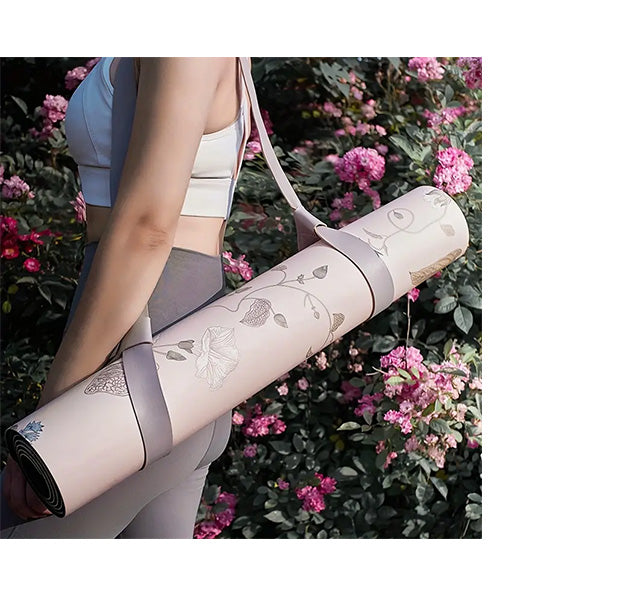
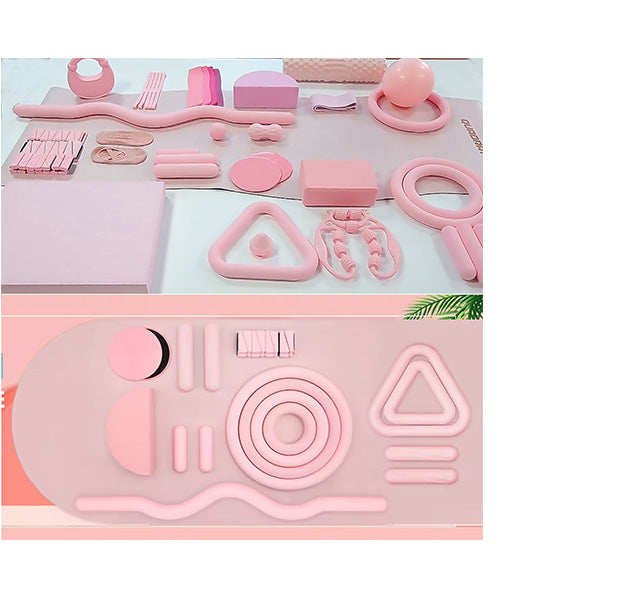
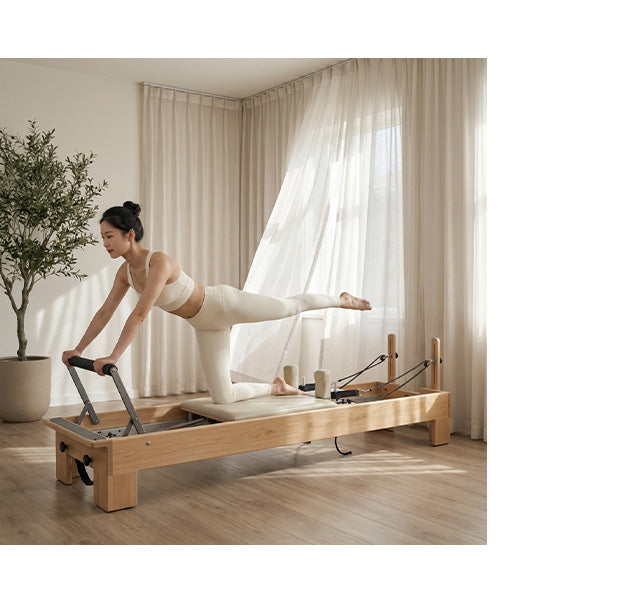
Traditional Pilates can be performed on a mat, while modern Pilates programs may use equipment such as:
-
Pilates reformers
-
Pilates rings
-
Resistance bands
-
Pilates balls
-
Pilates weights
-
Stability cushions
-
Pilates barrels and other specialized equipment
A typical Pilates session may include exercises targeting the abdominal muscles, glutes, hips, back, shoulders, and legs.
Rather than simply moving a heavy load from point A to point B, Pilates places considerable emphasis on how the movement is performed.
This makes movement quality an important part of the training experience.
Research also supports some of these benefits. A systematic review and meta-analysis of healthy adults found that Pilates performed approximately two to three times per week could improve abdominal muscular endurance compared with no exercise, while other research has reported benefits for dynamic balance and muscular endurance.
However, Pilates should not be presented as a replacement for every type of physical training. Its benefits and limitations depend on the specific program and training goal.

What Is a Gym Workout?
“Gym workout” is a much broader category.
A gym session can include:
-
Weight training
-
Resistance machines
-
Dumbbell exercises
-
Barbell training
-
Cable exercises
-
Functional training
-
HIIT
-
Treadmill workouts
-
Cycling
-
Rowing
-
Mobility training
-
Circuit training
Because gym training can be highly customized, it can address very different goals.
For example, someone trying to build muscle may focus on progressive resistance training, while another person may spend most of their gym session performing cardiovascular exercise.
This is one reason why a Pilates vs Gym Workout Comparison cannot be based simply on calories burned or workout difficulty.
The actual exercises and training variables matter.

Pilates vs Gym for Muscle Building
If your primary goal is building muscle, traditional gym-based resistance training generally has an advantage.
Muscle growth requires sufficient resistance and progressive overload over time. Gym equipment makes it easier to progressively increase external resistance through dumbbells, barbells, machines, and cables.
For example, a beginner might perform:
Squat → 20 kg → 25 kg → 30 kg → 35 kg
The progressive increase in resistance provides a clear way to increase training demand.
Pilates can strengthen muscles and improve muscular endurance, particularly through repeated controlled movements and resistance from body weight, springs, bands, or specialized equipment.
However, conventional Pilates is generally not designed primarily around maximizing hypertrophy.
Winner for muscle growth: Gym
If your main goal is significant muscle hypertrophy, structured resistance training is usually the more direct option.
Pilates vs Gym for Core Strength
This is where Pilates becomes particularly competitive.
Core training is not simply about performing hundreds of crunches.
A strong core helps control the trunk and transfer force between the upper and lower body.
Pilates frequently incorporates:
-
Trunk stabilization
-
Abdominal bracing
-
Controlled spinal movement
-
Hip stabilization
-
Pelvic control
-
Balance challenges
-
Anti-extension and anti-rotation patterns
The emphasis on controlled movement can help people develop better awareness of their trunk position and movement mechanics.
Gym workouts can also build excellent core strength through exercises such as:
-
Deadlifts
-
Squats
-
Overhead presses
-
Farmer's carries
-
Cable rotations
-
Hanging leg raises
-
Ab wheel rollouts
Therefore, the difference is often not whether one method can train the core, but how the core is trained.
Best choice: Pilates for control and endurance; Gym for loaded strength
Pilates vs Gym for Weight Loss
This question requires a more careful answer.
Neither Pilates nor gym workouts automatically cause fat loss.
Body-fat reduction is primarily influenced by long-term energy balance, nutrition, physical activity, training, sleep, and lifestyle.
Gym workouts can provide a high-energy expenditure through resistance training, circuits, HIIT, and cardiovascular exercise.
Pilates may contribute to weight-management goals by increasing physical activity, improving muscular endurance, and helping people maintain a consistent exercise routine.
But Pilates should not be marketed as a guaranteed “fat-burning workout.”
A more realistic approach is to combine resistance training, aerobic activity, daily movement, and appropriate nutrition.
The World Health Organization recommends that adults accumulate 150–300 minutes of moderate-intensity aerobic activity per week, or 75–150 minutes of vigorous activity, along with muscle-strengthening activities involving major muscle groups on at least two days per week.
Best approach for fat loss: A combination
For many people, combining Pilates with strength training and aerobic exercise provides a more comprehensive fitness routine.
Pilates vs Gym for Flexibility and Mobility
Pilates has a clear advantage when flexibility, mobility, and movement control are important priorities.
Pilates exercises often combine strength with controlled ranges of motion.
This can be useful for people who spend long hours sitting, athletes who want additional mobility work, or beginners who want to develop better movement awareness.
Gym training can also improve mobility, particularly when exercises are performed through appropriate ranges of motion and mobility work is intentionally included.
However, a traditional gym program focused only on lifting heavy weights may not provide enough dedicated mobility work.
Winner: Pilates
Especially for people who want a combination of mobility, controlled movement, balance, and muscular endurance.
Pilates vs Gym for Cardiovascular Fitness
Gym workouts have a significant advantage here because gyms provide access to dedicated cardio equipment and high-intensity training options.
Examples include:
-
Treadmill running
-
Stationary cycling
-
Rowing
-
Stair climbing
-
Elliptical training
-
HIIT circuits
Some Pilates sessions can elevate heart rate, particularly reformer or higher-intensity Pilates classes, but cardiovascular training is not usually the primary purpose of traditional Pilates.
Winner: Gym
If improving aerobic capacity is your primary objective, dedicated cardiovascular training is generally more appropriate.
Pilates vs Gym: Which Is Better for Beginners?
Both can be beginner-friendly.
The bigger factor is exercise selection and coaching quality.
Pilates can be attractive to beginners because many exercises use body weight or relatively light resistance. The controlled pace can also make it easier to focus on movement technique.
Gym training can initially feel more complicated because beginners may encounter:
-
Barbells
-
Dumbbells
-
Cable machines
-
Resistance machines
-
Multiple training programs
However, a properly designed beginner strength program can be highly accessible.
For someone completely new to exercise, starting with simple movements and gradually increasing training volume and intensity is generally more practical than immediately pursuing advanced workouts.
Pilates vs Gym for Body Toning
“Body toning” is commonly used in the fitness industry, but technically, muscles do not become “toned” through a unique type of exercise.
A more accurate explanation is:
Build or maintain muscle + reduce body fat = greater muscle definition.
Pilates can help improve muscular endurance and body awareness.
Resistance training can provide stronger stimuli for muscle growth and strength.
Nutrition and overall activity influence body-fat levels.
Therefore, if someone wants a more defined appearance, combining Pilates, resistance training, cardiovascular activity, and appropriate nutrition may be more effective than relying on one training method alone.
Pilates vs Gym: Which Burns More Calories?
There is no universal answer.
Calorie expenditure depends on:
-
Body weight
-
Workout duration
-
Exercise selection
-
Exercise intensity
-
Rest periods
-
Training experience
-
Individual metabolism
A high-intensity gym circuit may burn considerably more energy than a gentle Pilates session.
On the other hand, a challenging reformer Pilates class may require substantially more effort than a low-intensity gym session.
Therefore, comparing the two simply by workout type can be misleading.
Intensity and duration matter more than the label attached to the workout.
Pilates vs Gym Equipment
The equipment requirements are also very different.
Pilates Equipment
Popular Pilates accessories include:
-
Wrist weights
-
Pilates sliders
These products are especially useful for studios, fitness clubs, home workouts, and Pilates-focused training programs.

Gym Equipment
Gym environments may include:
-
Kettlebells
-
Weight plates
-
Cable machines
-
Resistance machines
-
Treadmills
-
Rowing machines
-
Exercise bikes
The wider equipment selection allows gym workouts to be highly specific to strength, hypertrophy, power, endurance, or sport performance.
Pilates vs Gym: Which One Should You Choose?
Instead of asking:“Is Pilates better than the gym?”
A better question is:“What am I trying to achieve?”
Choose Pilates if you want to prioritize:
-
Core stability
-
Mobility
-
Flexibility
-
Balance
-
Movement control
-
Muscular endurance
-
Low-impact exercise
-
Mind-body awareness
Choose gym-based training if you want to prioritize:
-
Muscle growth
-
Maximum strength
-
Progressive resistance
-
Cardiovascular conditioning
-
Athletic performance
-
Higher training loads
-
Body recomposition
Combine Pilates and Gym if you want:
-
Strength + mobility
-
Muscle development + core control
-
Resistance training + flexibility
-
Cardiovascular fitness + movement quality
-
A more comprehensive weekly fitness routine
For many people, this final option may be the most practical.
A Practical Pilates + Gym Weekly Workout Plan
If your schedule allows four training sessions per week, you could structure your routine like this:
Monday — Gym Strength
Lower body + upper body resistance training
Tuesday — Pilates
Core + mobility + flexibility
Thursday — Gym Strength
Full-body resistance training
Saturday — Pilates
Core + balance + controlled movement
You can also add walking, cycling, running, or another aerobic activity according to your fitness level and goals.
This type of hybrid program can help distribute different training demands across the week instead of trying to make one workout method do everything.
Is Pilates Enough on Its Own?
For some people, yes.
If your goals are general fitness, movement quality, flexibility, core endurance, and maintaining an active lifestyle, Pilates can be a meaningful part of a complete exercise routine.
However, people whose primary goal is maximizing muscle size, maximal strength, or high-level cardiovascular performance may benefit from adding specific resistance or aerobic training.
The important point is that “enough” depends on the individual goal.
There is no single workout method that optimally develops every component of physical fitness.
The Bottom Line: Pilates vs Gym Workout Comparison
The most useful conclusion from this Pilates vs Gym Workout Comparison is that Pilates and gym training are complementary rather than competing systems.
Pilates excels at controlled movement, core training, mobility, balance, flexibility, and muscular endurance.
Gym training excels at progressive resistance, muscle growth, maximum strength, and dedicated cardiovascular conditioning.
If your goal is overall fitness, you do not necessarily need to choose one.
A well-designed program can use Pilates to improve movement quality and core control while using resistance training to develop strength and muscle.
Ultimately, the best workout is the one that matches your goals, can be performed safely, and is sustainable enough for you to do consistently.
Regular physical activity matters more than choosing between two popular exercise labels. WHO guidelines emphasize that any physical activity is better than none, while meeting recommended aerobic and muscle-strengthening activity levels provides additional health benefits.
Frequently Asked Questions
Q:Is Pilates better than going to the gym?
Not necessarily. Pilates and gym workouts serve different purposes. Pilates is particularly useful for core control, mobility, balance, flexibility, and muscular endurance, while gym training offers more options for progressive strength and muscle development.
Q:Can Pilates build muscle?
Yes, Pilates can strengthen muscles and improve muscular endurance. However, conventional Pilates is generally less effective than progressive resistance training when the primary goal is maximizing muscle hypertrophy.
Q:Can I do Pilates and gym workouts together?
Yes. Combining Pilates and resistance training can provide complementary benefits, particularly for people who want strength, mobility, core control, and overall fitness.
Q:Is Pilates good for weight loss?
Pilates can contribute to an active lifestyle, but weight loss depends on overall energy balance and lifestyle factors. Combining regular exercise with appropriate nutrition is more important than choosing Pilates alone.
Q:How often should I do Pilates?
Frequency depends on your training level and goals. Research on healthy adults has found benefits from Pilates programs performed around two to three times per week, although individual programs vary.
Q:Which is better for beginners, Pilates or the gym?
Both can work well. Beginners should prioritize proper technique, manageable training volume, gradual progression, and consistency rather than choosing an exercise method based only on popularity.
Expert Takeaway
There is no universal winner in the Pilates vs Gym Workout Comparison.
If you want better movement control, core endurance, mobility, and flexibility, Pilates may be an excellent choice.
If you want to maximize strength and muscle growth, structured gym-based resistance training is usually more appropriate.
If you want a balanced fitness routine, consider using both.
The goal should not be to find the “perfect” workout.
The goal is to build a sustainable training routine that supports your specific fitness needs.
Written by MOWIN