

Thinking about skipping the crowded studio and bringing the workout to your living room? Investing in an at-home Pilates reformer is one of the best moves you can make for your core strength, flexibility, and posture.
But with prices ranging from a few hundred dollars to upwards of $5,000, and terms like "tower combos," "rebounders," and "spring tension" flying around, knowing how to choose a Pilates reformer that fits your body and your home can feel overwhelming.
In this comprehensive buying guide, we’ll break down the exact factors you need to consider so you can invest with absolute confidence.
1. Frame Material: Wood vs. Aluminum Pilates Reformer
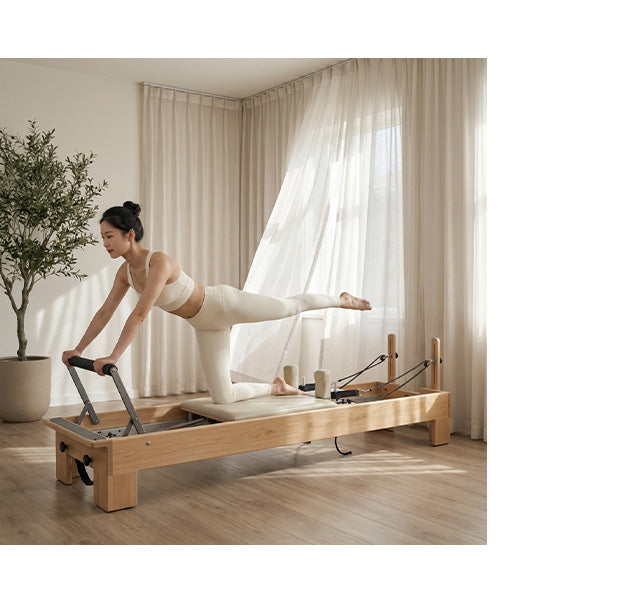
The frame is the foundation of your machine. It dictates not just the aesthetics of your home gym, but also the stability and lifespan of the reformer.
Wood Pilates Reformers (Oak, Maple, Beech)
Wood is the classic, aesthetic choice preferred by traditional training systems.
-
Pros: Incredible stability (heavyweight means zero sliding during intense workouts), beautiful furniture-grade look, naturally absorbs sound for a quieter glide.
-
Best For: Dedicated home fitness rooms or private home studios where the machine stays in one place.
-
Top Picks: Oak wood full-track reformers or Premium Maple reformers offer the best lifetime durability.

Aluminum & Steel Pilates Reformers
Aluminum represents the modern, sleek, industrial approach to home fitness.
-
Pros: Lightweight, highly rust- and moisture-resistant, easier to move, and typically has a lower shipping cost.
-
Best For: Modern apartments, humid climates, or users who want a sleek, contemporary look.

2. Space Constraints: Do You Need a Foldable Pilates Reformer?
A standard commercial reformer is about 88 to 94 inches long—roughly the length of a standard three-seater sofa. Before you buy, you must measure your footprint.
-
The Non-Folding Studio Reformer: If you have a dedicated workout zone, a non-folding machine offers the smootしくは, sturdiest ride.
-
The Foldable Pilates Reformer: If you live in an apartment or need a multi-purpose room, a foldable wood reformer or aluminum foldable reformer is a game-changer. These can be folded in half or stood upright against a wall or in a closet in under 60 seconds.
Pro Tip: If you choose a folding model, ensure it features transport wheels and a secure locking mechanism for safety when folded.


3. The Heart of the Machine: Spring Resistance Systems
This is where cheap, entry-level reformers cut corners. Traditional, studio-quality Pilates machines use a tiered spring system, while budget options often use elastic cords.
| Feature | Commercial-Grade Springs | Elastic Resistance Cords |
| Resistance Type | Progressive (gets harder as it stretches) | Linear (stretches evenly, less dynamic) |
| Durability | Plated steel, lasts decades without losing tension | Degrades and stretches out within 1-2 years |
| Customization | Standard 5-spring setup (e.g., 3 Heavy, 1 Medium, 1 Light) | Limited levels, harder to fine-tune |
If your budget allows, always choose weighted springs over cords. Look for color-coded systems that allow you to adapt the tension seamlessly for different exercises.
4. Key Components to Inspect Before Buying
To get the best value for your money, don't just look at the frame. Check these four critical components:
-
Carriage Glide & Noise: A premium reformer should glide silently. Look for an 8-wheel carriage system with premium bearings (like ABEC-7). If you hear a loud "click-clack" during transitions, the rollers are low quality.
-
Adjustable Footbar: The footbar shouldn't just look good; it needs to adapt. Look for a footbar with multiple vertical and horizontal locking positions to facilitate a comprehensive range of motion for different heights.
-
Max User Weight Capacity: Even if you weigh 150 lbs, look for a machine rated for at least 300–350 lbs. High weight capacity is a direct indicator of heavy-duty frame engineering and rope durability.
-
Ropes and Cleats: Look for marine-grade ropes with quick-adjust cleats or risers. Cheap ropes fray easily and can become dangerous under high tension.
5. Which Reformer Type Matches Your Pilates Goals?
Your Pilates Journey
       │
       ├─► Beginner / Tight Space? ──────► Foldable Aluminum Reformer (Budget-friendly)
       │
       ├─► Dedicated Home Practice? ─────► Premium Maple/Oak Studio Reformer
       │
       └─► Want Max Workout Variety? ───► Pilates Reformer with Tower Combo
The Pilates Reformer with Tower Combo
If you want to replicate 90% of a full commercial studio experience without buying a massive Cadillac table, look into a reformer with tower bundle. The vertical tower attachment adds vertical spring configurations, allowing you to perform advanced leg springs, arm series, and spinal decompression exercises right at home.
Final Verdict: Buying Checklist
When shopping for the best at-home Pilates reformer, ask the manufacturer these final questions:
-
Does it ship fully assembled, or is there a complex setup?
-
Are the springs commercial-grade or elastic bungee cords?
-
What is the exact warranty on the frame vs. wear-and-tear parts (ropes/springs)?
Investing in the right equipment means you won't outgrow it as your core strength and practice progress.