

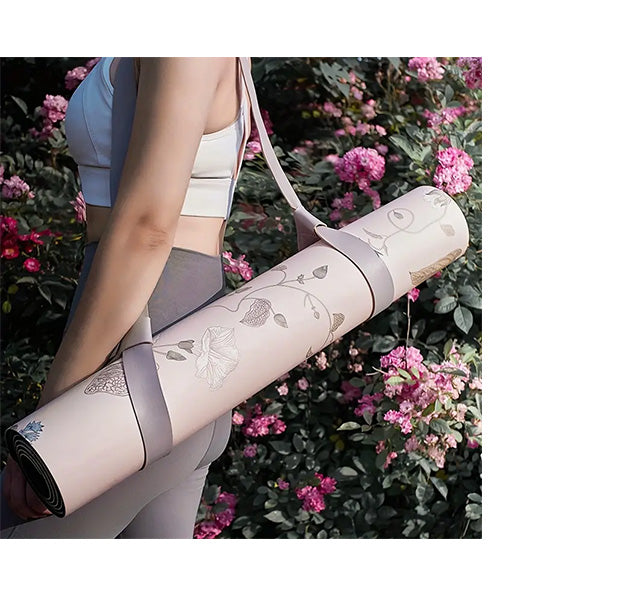

A yoga mat may look like a simple product: a flat piece of material, a printed logo, and a rolled-up package.
Manufacturing one consistently is a different story.
The final performance of a yoga mat depends on decisions made much earlier in the production process — from the material formula and density to the way the sheet is formed, how the surface is textured, how layers are bonded, and how the finished mats are inspected.
For brands, distributors, studios, and importers, understanding how yoga mats are manufactured is useful for more than satisfying curiosity. It helps you compare suppliers, evaluate samples, understand price differences, and avoid problems when moving from a sample order to mass production.
At MOWIN, we work with different yoga and fitness products, including yoga mats made with materials such as TPE, natural rubber, PU and other constructions. In practice, we have found that the most important manufacturing questions are rarely about how attractive a product looks in a catalog. They are about material consistency, production control and whether the finished mat actually matches the agreed specification.
So, what happens between raw material and finished yoga mat?
Let's look at the process from a buyer's perspective.
1. It Starts With the Material, Not the Design
Before a factory can produce a yoga mat, the material and construction need to be defined.
Common yoga mat materials include:
-
TPE
-
PVC
-
Natural rubber
-
PU + rubber or other backing materials
-
Cork-based constructions
-
Suede or fabric-surface constructions
-
NBR and other foam materials
These materials do not behave the same way during manufacturing.
For example, a TPE mat and a natural rubber mat may have similar dimensions, but their production routes are quite different. TPE products generally involve compounding, forming, foaming and cooling, while natural rubber products require rubber processing and curing.
Material selection also affects the finished product's:
-
Grip
-
Cushioning
-
Density
-
Weight
-
Flexibility
-
Durability
-
Surface feel
-
Odor
-
Production cost
-
Recycling or environmental characteristics
This is why simply asking a supplier, “How much is a 6 mm yoga mat?”, isn't enough to compare quotations.
Two 6 mm mats can have very different construction, density and performance.
What buyers should ask
Before requesting a final quotation, confirm:
Material + thickness + size + density/weight + surface construction + color + logo method + packaging.
The more precise the specification, the more meaningful the quotation becomes.
2. Raw Materials Are Prepared and Mixed
Once the material specification is confirmed, the manufacturing process begins with material preparation.
For synthetic materials such as TPE or PVC, the base material is combined with other ingredients according to the production formula. Depending on the construction, these can include color masterbatch, processing additives, stabilizers, foaming components and other formulation ingredients.
The purpose isn't simply to produce the right color.
The formulation can affect the material's:
-
Hardness
-
Density
-
Flexibility
-
Resilience
-
Surface characteristics
-
Processing stability
-
Final appearance
This is one reason why two mats that look almost identical in product photos can feel completely different when you actually use them.
A reliable manufacturer should have a defined material formulation rather than changing the raw material mix from one order to another just to reach a target price.
For B2B buyers, batch consistency is particularly important.
If you launch a product in January and reorder it six months later, your customers should not receive a mat that is noticeably different in color, thickness or feel.
3. The Material Is Formed Into a Sheet
After mixing, the material needs to be formed into a continuous sheet or another suitable semi-finished structure.
Depending on the material and construction, manufacturers may use processes such as:
-
Extrusion
-
Calendering
-
Foaming
-
Molding
-
Rubber processing
-
Lamination
For TPE production, for example, the compounded material can be heated and processed through an extrusion system before subsequent foaming, cooling and finishing stages.
The goal is to achieve a stable material structure with consistent thickness and density.
This stage is more important than it may appear.
If thickness or density changes during production, the finished mat can have differences in:
-
Weight
-
Cushioning
-
Flexibility
-
Recovery
-
Surface appearance
A specification of 6 mm thickness should therefore not simply mean that one measurement from one sample is 6 mm.
The manufacturer needs a process that can keep the production within the agreed tolerance.
4. Foaming Creates the Cushioning Structure
For many foam-based yoga mats, foaming is one of the key manufacturing stages.
The material expands under controlled production conditions, creating the internal structure that gives the mat its cushioning and resilience.
The relationship between material formulation, temperature, pressure, foaming conditions and cooling can affect the final density and feel.
This is one reason why thickness alone doesn't tell you whether a yoga mat is good.
Consider two mats:
Mat A: 6 mm thick, relatively low density
Mat B: 6 mm thick, higher density
They may have the same nominal thickness, but they can feel very different when you kneel, stand or move through poses.
For buyers sourcing yoga mats in bulk, it's therefore useful to evaluate weight and density together with thickness, rather than using thickness as the only quality indicator.
5. Cooling and Stabilization Matter More Than Buyers Often Realize
After forming or foaming, the material needs to cool and stabilize.
This stage helps the material settle into its intended dimensions and physical characteristics.
Poor control can contribute to issues such as:
-
Uneven thickness
-
Curling
-
Surface distortion
-
Dimensional variation
-
Inconsistent density
This becomes particularly important for large-volume orders.
A sample may look perfect because it was produced under carefully controlled conditions. The real test is whether the factory can reproduce the same result across thousands of pieces.
For B2B buyers, repeatability is often more valuable than a perfect one-off sample.
6. Surface Texture Is Where Grip Starts to Take Shape
Grip is one of the first things customers notice when they use a yoga mat.
But grip isn't simply a marketing word printed on a product page.
The final traction can be influenced by the combination of:
material + surface structure + texture + construction + moisture conditions.
Manufacturers can create different surface finishes through processes such as embossing, texturing, printing, coating or other finishing methods, depending on the mat construction.
A textured surface can also change the visual appearance of the product.
For example, a brand may want:
-
A fine leather-like texture
-
A natural cork appearance
-
A smooth PU surface
-
A fabric-like finish
-
A geometric grip pattern
-
A branded embossed pattern
These choices need to be considered during product development rather than added at the last minute.
A useful buyer tip
Don't evaluate grip only by touching a dry sample with your fingertips.
If the mat is intended for hot yoga, fitness studios or intensive practice, test it under the conditions your customers will actually experience.
A mat that feels very grippy when dry may behave differently when exposed to sweat.
7. Multi-Layer Yoga Mats Require Another Critical Step: Lamination
Not every yoga mat is made from a single material.
Some premium or specialized mats combine different layers to achieve a particular combination of grip, cushioning, stability or appearance.
For example, a construction may combine a performance surface with a rubber or TPE backing.
In these products, lamination becomes a critical manufacturing stage.
The layers need to bond properly without creating:
-
Bubbles
-
Wrinkles
-
Uneven areas
-
Edge separation
-
Delamination
-
Surface distortion
A mat can look excellent when it leaves the factory but still develop problems later if the bonding process isn't properly controlled.
This is why buyers should not evaluate a multi-layer mat only by looking at the surface.
Ask the manufacturer:
How are the layers bonded, and how is adhesion checked during production?
8. Cutting Turns the Continuous Material Into Individual Mats
Once the material structure is ready, it can be cut into the required dimensions.
Common specifications might include:
-
183 × 61 cm
-
183 × 68 cm
-
185 × 80 cm
-
Custom dimensions
The exact size depends on the target market and product positioning.
Cutting sounds straightforward, but dimensional consistency still matters.
If the mat is designed to be 183 × 61 cm, repeated production should stay within the agreed tolerance.
Buyers should pay attention to:
-
Length
-
Width
-
Thickness
-
Corner shape
-
Edge straightness
-
Diagonal consistency
These details become especially noticeable when mats are used side by side in studios or photographed for e-commerce listings.
9. Logos and Artwork Are Added After the Main Construction
Custom yoga mats often require more than simply adding a logo.
Depending on the material and design, manufacturers may offer:
-
Screen printing
-
Heat-transfer printing
-
Digital printing
-
Laser engraving
-
Embossing
-
Customized surface patterns
The best method depends on the product.
For a simple one-color logo, screen printing may be practical.
For detailed artwork, digital printing may make more sense.
For a permanent minimalist logo or alignment design, laser engraving or embossing may be suitable for certain materials.
This is also where brands should think about MOQ and tooling costs.
A custom surface pattern or embossed logo may require additional tooling, while a printed logo may have a different cost structure.
Don't compare logo prices without asking what is included.
10. Quality Control Happens Throughout Production — Not Just at the End
One of the biggest mistakes buyers make is treating quality inspection as something that happens only before shipment.
In reality, quality should be controlled at several stages.
Incoming material inspection
The manufacturer checks whether incoming materials match the required specification.
In-process inspection
Production staff monitor important parameters such as:
-
Thickness
-
Dimensions
-
Color
-
Surface quality
-
Density or weight
-
Lamination
-
Texture
Finished product inspection
The completed mats are checked before packing.
Depending on the buyer's specification and market requirements, inspections may include:
-
Appearance
-
Dimensions
-
Weight
-
Thickness
-
Color consistency
-
Surface defects
-
Printing quality
-
Adhesion
-
Packaging
The exact QC plan should be agreed before mass production.
This is especially important for private-label orders.
11. Packaging Is Part of the Product
Once the mats pass inspection, they're prepared for shipment.
Depending on the product and sales channel, packaging can include:
-
Individual polybags
-
Paper sleeves
-
Printed boxes
-
Kraft packaging
-
Hang tags
-
Custom labels
-
Cartons
-
Palletized shipping
For online brands, packaging isn't just about protection.
The packaging affects:
-
Shipping volume
-
Freight cost
-
Unboxing experience
-
Retail presentation
-
Storage requirements
A buyer ordering a large quantity should therefore confirm the rolled size, carton dimensions, carton quantity and gross weight before finalizing the order.
A small packaging change can sometimes have a surprisingly large effect on logistics costs when multiplied across a full container.

What Can Go Wrong During Yoga Mat Manufacturing?
Understanding the manufacturing process also makes it easier to understand common quality problems.
Uneven thickness
Possible causes include material or forming instability.
Color variation
This can occur when the material formulation or color standard isn't properly controlled between batches.
Strong or unusual odor
Odor can be influenced by raw materials, additives, processing and storage conditions. Buyers should establish their odor requirements rather than simply accepting a supplier's statement that a product is “eco-friendly.”
Curling
This can be related to material structure, cooling, storage or construction.
Surface defects
Scratches, marks, bubbles, contamination or uneven texture can occur during production or handling.
Delamination
For multi-layer mats, inadequate bonding or poor process control can result in layers separating.
Sample-to-bulk differences
This is perhaps one of the most frustrating problems for buyers.
A supplier may provide a good sample, but the bulk shipment doesn't look or feel exactly the same.
This is why the approved sample and written specification should become the reference for mass production.
How Should Buyers Evaluate a Yoga Mat Manufacturer?
You don't necessarily need the biggest factory.
You need a manufacturer whose capabilities match your product.
For example, a supplier producing standard TPE mats may not be the best choice for a highly customized PU + natural rubber product.
Before placing an order, ask these questions:
1. What materials do you actually manufacture?
Don't just ask what products the supplier sells.
Ask which materials and production processes they control themselves.
2. Which production steps are done in-house?
Ask whether mixing, forming, lamination, printing, cutting and packaging are performed internally or subcontracted.
Outsourcing isn't automatically a problem. The important question is whether the supplier can still control the quality of outsourced processes.
3. Can you provide a production sample?
A production-representative sample is more useful than a catalog photograph.
4. What are your thickness and dimensional tolerances?
Get the tolerances in writing.
5. How do you control color consistency?
For custom colors, ask how the approved color standard is maintained across production batches.
6. What testing or compliance documents are available?
Requirements depend on your destination market and product construction.
Don't accept a generic statement such as “all materials are eco-friendly.”
Ask for the specific documentation relevant to your market and product.
7. What is the MOQ for customization?
There may be separate MOQs for:
-
Product
-
Custom color
-
Logo
-
Printing
-
Packaging
-
Special tooling
Understanding these separately can help you avoid unexpected costs.
The Most Important Lesson: Don't Buy a Yoga Mat by Thickness Alone
If you're sourcing yoga mats for your own brand, thickness is only one part of the specification.
A more useful product specification might look like this:
Material: TPE / Natural Rubber / PU + Rubber
Size: 183 × 61 cm
Thickness: 6 mm
Weight: Defined target range
Surface: Custom texture
Color: Approved color standard
Logo: Defined printing or engraving method
Packaging: Individual + export carton
QC: Agreed inspection criteria
Compliance: Based on destination market
This gives both the buyer and manufacturer a much clearer target.
It also makes quotations easier to compare.
From Raw Material to Finished Product: The Complete Flow
The overall yoga mat manufacturing process can be summarized as:
- Material Selection
- Raw Material Preparation & Mixing
- Sheet Formation / Extrusion / Calendering
- Foaming or Curing
- Cooling & Stabilization
- Surface Texturing
- Lamination, If Required
- Cutting
- Printing / Embossing / Laser Engraving
- Quality Inspection
- Packaging
- Finished Yoga Mats Ready for Shipment
The exact process varies according to the material and construction. A TPE mat, natural rubber mat and PU-coated rubber mat should not be expected to follow exactly the same production route.
Why the Manufacturer Matters More Than the Product Catalog
When you're sourcing yoga mats, it's easy to compare suppliers based on photographs and unit prices.
But the real difference between manufacturers often becomes visible only after production begins.
A reliable supplier should be able to explain:
-
Why a particular material is suitable for your market
-
How the product is manufactured
-
What specifications can realistically be controlled
-
Which customizations require tooling
-
How samples are approved
-
How bulk production is inspected
-
What documentation can be provided
-
How packaging is designed for export
That information is much more useful than simply hearing that a product is “premium,” “eco-friendly,” or “professional.”
For B2B buyers, manufacturing transparency is part of product quality.
How MOWIN Approaches Yoga Mat Manufacturing
At MOWIN, we don't believe every buyer needs the same yoga mat.
A yoga studio ordering hundreds of mats for daily classes has different requirements from an e-commerce brand launching a premium private-label collection. A distributor may prioritize price and container efficiency, while a boutique fitness brand may care more about surface feel, color matching and packaging.
That's why product development starts with the application and target market.
Depending on the project, we can discuss:
-
Material selection
-
Mat dimensions
-
Thickness
-
Color
-
Surface texture
-
Logo customization
-
Packaging
-
Private-label requirements
-
Sample development
-
Bulk production
-
Quality inspection
For a custom project, the goal isn't simply to produce a yoga mat.
It is to produce the specific yoga mat your customers are expecting — consistently, from the approved sample through repeat orders.
FAQs
How long does it take to manufacture yoga mats?
The timeline depends on the material, customization, order quantity, packaging and production schedule. Standard products are generally faster than fully customized products because custom colors, printing, tooling and packaging may require additional development and approval.
For an actual order, buyers should ask for a timeline covering sample approval, bulk production, inspection and shipping, rather than only asking how many days production takes.
What is the best material for a yoga mat?
There isn't one material that is best for every buyer.
TPE, PVC, natural rubber, PU-based constructions, cork and other materials each have different performance, cost and positioning characteristics.
The better question is:
Which material fits my target customer, price point and intended use?
Can I customize the size and color of a yoga mat?
Yes, many manufacturers can customize dimensions, colors, surface textures, logos and packaging. However, customization may increase MOQ, tooling or development costs.
Always confirm these requirements before placing the order.
Why does the bulk order sometimes look different from the sample?
Possible reasons include raw material batch differences, color formulation, production conditions, surface processing or changes made during mass production.
This is why a detailed specification and approved pre-production sample are important.
How can I check whether a yoga mat manufacturer is reliable?
Start with the basics:
Ask about materials, production capabilities, QC procedures, customization, samples, certifications/testing documents, MOQ and production lead time.
Then compare what the supplier says with what they can actually demonstrate through samples, factory information and production documentation.
Final Thoughts
A yoga mat isn't simply cut from a large sheet and put into a package.
The finished product is the result of many decisions made throughout the manufacturing process — material formulation, forming, foaming or curing, cooling, surface treatment, lamination, cutting, printing, inspection and packaging.
For consumers, these details may be invisible.
For brands and wholesale buyers, they can determine whether a product becomes a repeat-order item or a source of customer complaints.
If you're sourcing yoga mats, don't start with “What's your lowest price?”
Start with:
What material is it? How is it constructed? What specifications can you control? How do you inspect production? And can you reproduce the approved sample consistently?
Those questions will usually tell you much more about a yoga mat manufacturer than a product catalog ever will.
Looking for custom or wholesale yoga mats for your brand? Contact MOWIN with your target material, size, thickness, quantity and customization requirements, and we can help you evaluate the right production option.