

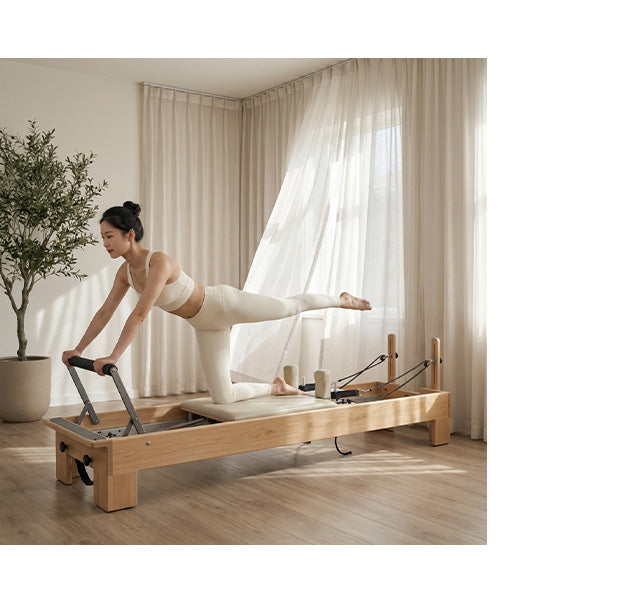

When launching a fitness brand in the Pilates space, the most common founder mistake isn’t poor taste—it’s inventory sprawl.
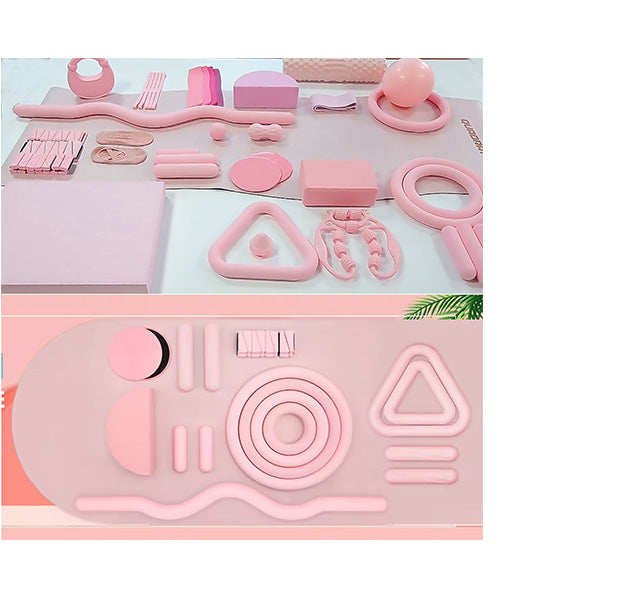
It is easy to get seduced by factory catalogs offering hundreds of variations: five types of reformers, ten resistance loop tensions, foam rollers in every diameter, and twenty Pantone swatches. But spreading your early capital across a 30-SKU catalog usually leads to split marketing messages, bloated minimum order quantities (MOQs), and dead stock gathering dust in a warehouse.
The most successful boutique fitness brands don’t launch as full-line department stores. They launch with a tight, intentional product mix that solves a specific movement problem, photographs effortlessly, and establishes a recognizable aesthetic signature.
Here is how to structure a high-margin, scalable Pilates product lineup from day one.
1. Build Around the "Core Three" Movement Architecture

Every profitable Pilates collection anchors itself on three functional categories: The Base, The Micro-Load, and The Dynamic Tension.
┌─────────────────────────────────────────────────────────────┐
│                   THE CORE THREE MATRIX                     │
├───────────────────┬───────────────────┬─────────────────────┤
│     THE BASE      │  THE MICRO-LOAD   │   DYNAMIC TENSION   │
│   (High Touch)    │   (High Visual)   │    (High Margin)    │
├───────────────────┼───────────────────┼─────────────────────┤
│ • Studio/Travel   │ • Wearable Ankle  │ • Fabric & Silicone │
│   Mat             │   & Wrist Weights │   Resistance Loops  │
│ • Reformer Towel  │ • Sculpting Hand  │ • Long Flat Bands   │
│   Topper          │   Weights (2-3lb) │ • Pilates Ring      │
└───────────────────┴───────────────────┴─────────────────────┘
The Base (High Touch, Daily Utility)
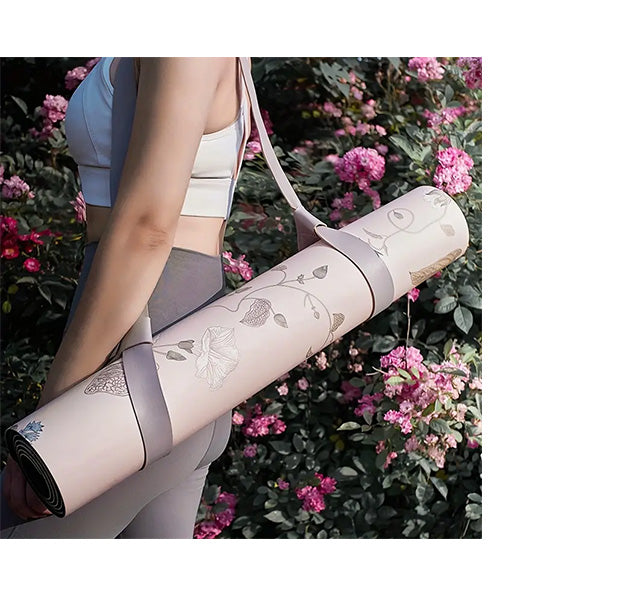
Your mat or reformer topper is the physical foundation of every workout. If it smells like synthetic rubber, flakes under sweaty palms, or stretches during a plank series, clients won't trust the rest of your catalog. Focus on high-density, closed-cell materials (like natural rubber bonded with sweat-activated polyurethane or vegan suede) that roll flat immediately.
The Micro-Load (High Visual Appeal, Social Driver)
In classical and contemporary Pilates, resistance rarely exceeds 2 to 5 pounds. Wearable ankle/wrist weights and sculptural hand weights are your brand’s best marketing assets. They sit on coffee tables, appear in mirror selfies, and convert casual viewers into customers. Choose ergonomic, smooth silicone-coated designs with clean geometric profiles that won't roll away during quick mat transitions.
Dynamic Tension (Low Shipping Cost, Easy Add-On)
Resistance bands and rings offer the highest margin-to-weight ratio in fitness hardware. Replace generic, pinch-prone latex loops with woven elastic fabric or soft silicone bands in graduated tensions. They pack flat, cost little to ship, and serve as frictionless upsells at checkout.
2. Apply the 70/20/10 Assortment Rule
To keep cash flow healthy and forecasting predictable, allocate your initial production budget across three distinct tiers:
- 70% Core Essentials (The Volume Drivers): Your hero mat, 1–2 lb wearable weights, 3 lb sculpting hand weights, and a 3-piece resistance loop set. These should generate 75% of your total revenue.
- 20% Differentiators (The Margin Builders): A specialized Pilates ring with ergonomic recessed handles, or a triangular floor-stability dumbbell. These items demonstrate that your brand understands movement biomechanics better than white-label commodity sellers.
- 10% Lifestyle & Carry (The AOV Boosters): A structured carry bag, mat strap, or travel pouch. These accessories complete the kit, increase your Average Order Value (AOV), and turn individual props into giftable lifestyle packages.
3. Maintain Colorway and Material Discipline
One of the quickest ways to drain working capital is offering too many color choices at launch. Five products across six colorways equals 30 separate inventory lines to manage.
┌─────────────────────────────────────────────────────────────┐
│                 RECOMMENDED LAUNCH PALETTE                  │
├──────────────────────────────┬──────────────────────────────┤
│ 1. Core Neutral (60% stock)  │ Oat, Sand, Slate, or Off-Charcoal
│ 2. Signature Hue (30% stock) │ Sage, Muted Clay, or Warm Taupe
│ 3. Limited Accent (10% stock)│ Deep Espresso or Soft Terracotta
└──────────────────────────────┴──────────────────────────────┘
Stick to non-porous, sweat-resistant finishes like matte silicone and cast iron. Ensure that your metal hardware, fabric weaves, and silicone coatings match under both cool studio LEDs and warm natural sunlight. When every piece in your line coordinates seamlessly, customers are far more likely to buy the entire collection rather than a single item.
4. Design for Shipping Economics (Dimensional Weight Matters)
Bulky, low-density products kill direct-to-consumer (D2C) margins. A lightweight foam roller takes up the same box space as four sets of compact dumbbells, but incurs hefty dimensional weight surcharges from carriers.
When refining your product mix:
- Prioritize high density over high volume: Compact silicone weights and flat bands pack tightly and ship affordably.
- Design nested packaging: If you sell a 3-piece band set or nesting weights, engineer the packaging so items sit flush inside each other.
- Target a 65%+ gross margin: Account for freight, packaging, merchant processing, and shipping subsidies before finalizing retail pricing.
5. Pre-Launch Filter: The 4-Question SKU Test
Before sending purchase orders to manufacturers, run every proposed product through this filter:
- Does it fit into a cohesive starter kit? Can you bundle it with two other items to create a $120–$180 bundle?
- Can it be cleaned in 15 seconds? If it requires delicate laundering or traps sweat odors, studio buyers and home users will abandon it.
- Is the branding subtle and enduring? Use laser engraving, debossing, or tone-on-tone logos rather than loud screen-printed graphics that peel over time.
- Does it look good left out on a living room rug? Modern fitness gear is home decor. If a customer feels compelled to hide your product in a closet after working out, rethink the design.
Final Thoughts: Depth Over Breadth
Launching a fitness brand is not about having everything; it is about having the right things executed with uncompromising quality. Start with a disciplined core assortment, perfect the tactile and visual details, and let customer demand guide your catalog expansion.