

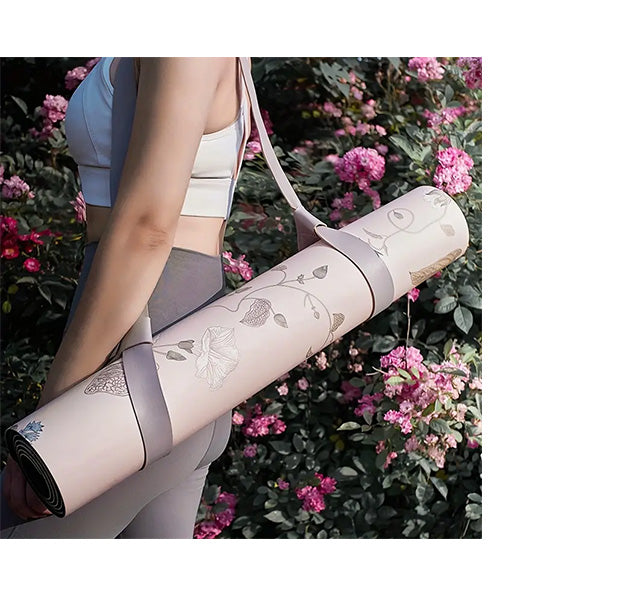

Choosing the right yoga mat is crucial for enhancing your practice experience. Faced with countless options in the market, material is undoubtedly the core consideration. It affects not only the feel but also slip resistance, cushioning, eco-friendliness, and lifespan. This article will help you deeply understand various yoga mat materials to make an informed choice.
Comprehensive Look at Common Yoga Mat Materials
TPE (Thermoplastic Elastomer): Lightweight and Eco-Friendly Entry-Level Choice
TPE material has gained popularity in recent years due to its lightweight and environmentally friendly characteristics.
Key Features:
- Eco-friendly and non-toxic: Recyclable, naturally oxidizes and decomposes, avoiding environmental pollution
- Lightweight and portable: Each mat weighs about 1100g, approximately 300g lighter than PVC foam mats, ideal for those who need to carry their mats
- Good slip resistance: Maintains excellent anti-slip performance even when the surface is wet
- Strong rebound: Though only a few millimeters thick, it has strong resilience, making practice very comfortable
Drawbacks: TPE mats have relatively weak support, tend to collapse during core training or strength exercises, develop a "sagging feeling" over time, and have a relatively short lifespan.
TPE material is particularly suitable for beginners, travel enthusiasts, and environmentally conscious practitioners.

PVC (Polyvinyl Chloride): Affordable Choice with Good Slip Resistance and Stability
PVC is one of the most common yoga mat materials on the market, typically more affordable, and often the first mat for many yoga beginners.
Key Features:
- Strong slip resistance: Excellent grip, won't slip even with oily palms
- Good support: High density provides sufficient support for various types of exercises
- High durability: Resistant to deformation, long service life
- Budget-friendly: Numerous style options available at affordable prices
Drawbacks: Poor eco-friendliness, difficult to recycle; relatively heavy, inconvenient to carry; may develop odor with prolonged use; poor slip resistance when sweaty, can feel sticky.
PVC material suits yoga enthusiasts, heavy sweaters, and those seeking stable support.

Natural Rubber: Premium Eco-Conscious Choice
Natural rubber yoga mats come from rubber trees and are the preferred choice for environmentalists and professional practitioners.
Key Features:
- Natural and eco-friendly: Made from natural sources, biodegradable and recyclable
- Excellent slip resistance: Natural texture and open-cell structure help absorb moisture, effective against both dry and wet slipping
- Good support: High stability provides excellent support
- High durability: Resists deformation under similar pressure, helping maintain balance during exercise
Drawbacks: Higher price; heavy weight, inconvenient to carry; initial natural rubber odor; open-cell structure easily absorbs stains, requires frequent cleaning; ages when exposed to air, typically lasts about two years, avoid sunlight exposure.
Natural rubber mats are especially suitable for intermediate to advanced yoga practitioners, those seeking extreme slip resistance, and environmentally conscious individuals.

NBR (Nitrile Rubber Foam): Soft Cushioning with Good Value
NBR material is typically thicker, providing good cushioning at a relatively low price.
Key Features:
- Strong cushioning: Usually 6-10mm thick, excellent shock absorption, suitable for hard surfaces
- Low cost: Low entry barrier
- Resistant to deformation: Wear-resistant and pressure-resistant
Drawbacks: Poor slip resistance; relatively heavy material, inconvenient to carry; low eco-friendliness, difficult to decompose.
NBR material suits budget-conscious beginners who value cushioning effects.
Hybrid Materials: Innovative Choices Combining Strengths
To combine the advantages of multiple materials, hybrid yoga mats have emerged on the market, such as TPE + natural rubber combinations.
Key Features:
- Excellent comprehensive performance: Combines TPE's lightness with rubber's slip resistance
- Good eco-friendliness: Incorporates recyclable material properties
- Good balance: Balanced grip and cushioning
Drawbacks: Limited market options; relatively high prices.
Performance Comparison of Different Materials
For a more intuitive understanding of performance differences between materials, see the table below:
| Material | Slip Resistance | Support | Eco-Friendliness | Portability | Price | Durability |
| TPE | Medium | Medium | High | High | Medium | Medium |
| PVC | High (dry) | High | Low | Medium | Low | High |
| Natural Rubber | High | High | High | Low | High | High |
| NBR | Low | High (cushioning) | Low | Medium | Low | Medium |
| Hybrid Materials | High | High | High | Medium | High | High |
How to Choose Yoga Mat Material Based on Needs
By Practice Type
· Flow Yoga, Hot Yoga, or Heavy Sweating: Prioritize natural rubber or PVC materials as they maintain excellent slip resistance in high humidity.
· Yin Yoga, Restorative Yoga, or Low-Impact Exercise: Choose TPE or NBR materials for softer cushioning to protect joints.
· Ashtanga or Practices Requiring Stable Support: PVC or natural rubber are more suitable for better stability and support.
By Usage Scenario
· Home Use: Can ignore portability, choose thicker materials like PVC or NBR.
· Outdoor or Travel Use: TPE is preferred for its lightweight and portable properties.
· Studio or Multi-Person Use: Consider natural rubber or PVC for better durability and longer lifespan.
By Budget
· Limited Budget: NBR or TPE materials offer good value.
· Medium Budget: Consider high-quality TPE or entry-level natural rubber.
· Ample Budget: Natural rubber or hybrid materials provide superior performance and longer lifespan.
Cleaning and Maintenance of Yoga Mat Materials
Different materials require different cleaning methods:
· TPE Mats: Wipe with a damp cloth, relatively easy to clean.
· PVC Mats: Low absorption, easy to clean, can be wiped with water.
· Natural Rubber Mats: Open-cell surface structure easily absorbs stains, requires frequent cleaning, but should not be soaked or sun-exposed.
· NBR Mats: Relatively easy to clean, minimal pollutant residue.
For daily cleaning, use specialized yoga mat cleaning spray and a dry cloth. When storing, avoid rolling too tightly or long-term compression; recommend hanging or laying flat in a cool place.
Long-Term Value of Investing in a Good Mat
A high-quality yoga mat is not just practice equipment but also a companion on your practice journey. According to tests by the Shanghai Consumer Council, yoga mats of different materials show significant differences in durability - natural rubber yoga mats resist deformation well and have good durability.
Considering the typical yoga mat lifespan is about half a year (resilience and slip resistance decrease over time), investing in a more durable mat may be more economical in the long run.
When choosing yoga mat materials, comprehensively consider personal practice habits, physical condition, usage scenarios, and budget. There's no "best" material, only the "most suitable" material. As many experienced practitioners say, only when you've chosen the right practice partner will every unrolling truly be something to look forward to.
Now that you understand the characteristics of various yoga mat materials, have you found your ideal choice? At Mowin, we deeply understand the unique needs of different yoga practitioners and have carefully created multiple yoga mat series in various materials. Visit Mowin's official website now to explore our full range of yoga mat products.
Image Source:https://tinyurl.com/yk4w7p3z