


Health begins with the basics, and choosing the right yoga mat is the first step in your practice.
Yoga is a popular physical and mental exercise worldwide, and having a suitable yoga mat is essential. Whether you're a beginner or an experienced practitioner, understanding standard yoga mat sizes will help you make an informed choice and enhance your practice experience.Finding the right dimensions ensures that your focus remains on your "Asanas" (poses) rather than constantly adjusting your hands and feet to stay on the mat.
This article will provide a detailed breakdown of standard yoga mat dimensions, helping you find the perfect one among numerous options.
Why Should You Care About Yoga Mat Size?
The size of a yoga mat directly affects comfort and stability during practice. A mat that is too long or too short can limit movement, while one that is too narrow may impact balance poses. Additionally, thickness is closely related to comfort and support.Moreover, the right size of yoga mat can also contribute to your overall sense of well - being during practice. When you feel comfortable and stable on the mat, you are more likely to focus on your breath and movements, leading to a deeper and more fulfilling yoga experience. It can also prevent unnecessary distractions and potential injuries caused by an ill - fitting mat.
In addition, a properly sized yoga mat can significantly improve your alignment awareness. When your body consistently stays within the mat boundaries, it naturally reinforces spatial control, helping you refine posture precision over time—especially important for balance-based poses such as Tree Pose or Warrior III.Furthermore, a mat that fits your body proportions acts as a personal "sanctuary," providing a psychological boundary that helps you stay grounded during meditation and high-intensity flows.
Detailed Breakdown of Standard Yoga Mat Sizes
1、Length Dimensions
Most standard yoga mats range between 170-185 cm in length. Common size ranges include:
- Universal length: 172-183 cm (approx. 68-72 inches)
- Extra-long models: Up to 200 cm (approx. 79 inches) or more, suitable for taller individuals
For example, the Manduka Begin Mat is 172 cm (68 inches) long, while a best-selling yoga mat on Alibaba measures 183 cm.Beyond height-based selection, length also affects flow transitions. Practitioners who perform long sequences such as Sun Salutations or Pilates-style fusion workouts often benefit from extra length, as it prevents stepping off the mat during dynamic movement transitions. If you are over 6 feet (183 cm) tall, we highly recommend seeking "Long" or "Extra-Long" (84-inch) versions to ensure your head and heels are supported during Savasana (Corpse Pose).It's worth noting that some specialized yoga mats, such as those designed for aerial yoga or acro - yoga, may have different length requirements. These mats often need to be longer to accommodate the unique movements and poses involved in these styles.
2、Width Dimensions
Yoga mat widths typically range from 60-66 cm (approx. 24-26 inches):
- Standard width: 61-66 cm
- Wider options: Some models offer wider versions, up to 80 cm or more, ideal for advanced practitioners needing extra space
Wider yoga mats can also be beneficial for pregnant women during their yoga practice. The extra width provides more room for the growing belly and allows for a greater range of movement without feeling cramped. Additionally, for those who like to incorporate props like blocks or straps into their practice, a wider mat can offer more space to place these items conveniently.Broad-shouldered individuals often find that a standard 24-inch mat causes their hands to hang off the edge during Downward-Facing Dog; in such cases, a 28-inch (71 cm) wide mat can drastically improve comfort and alignment.
3、Thickness Range
Yoga mat thickness varies significantly, from ultra-thin to extra-thick:
- Travel thin mats: 1.5-2 mm (lightweight and portable, but with limited cushioning)
- Standard thickness: 3-5 mm (balances cushioning and stability)
- Thicker models: 6 mm or more (provides extra cushioning, suitable for those with sensitive joints)
- Extra-thick practice mats: Up to 18 mm (ideal for Pilates and rehabilitation training)
When considering thickness, it's important to think about the surface you'll be practicing on. If you're practicing on a hard floor like concrete, a thicker mat can offer more protection for your joints. On the other hand, if you're practicing on a soft surface like carpet, a thinner mat may be sufficient as the carpet already provides some cushioning. However, be aware that "thickness" does not always equal "support." High-density materials (like natural rubber) provide more joint protection at 4mm than a low-density foam mat does at 6mm.Also, for those who practice yoga outdoors, a thicker mat can help insulate against the cold ground.

Suitable Scenarios for Different Yoga Mat Thicknesses
I've compiled the characteristics and suitable scenarios for different yoga mat thicknesses to help you choose based on your needs:
| Thickness Range | Characteristics | Suitable For | Ideal Yoga Styles |
| Ultra-thin (1.5-2mm) | Lightweight and portable, good stability Limited cushioning | Frequent travelers Experienced yogis | Hot yoga Flow yoga |
| Standard (3-5mm) | Balances cushioning and stability Versatile | Beginners to intermediate practitioners Regular practitioners | Hatha yoga Ashtanga General fitness |
| Thick (6-8mm) | Good joint protection Excellent cushioning Slightly heavier | Those with sensitive joints Beginners People needing extra cushioning | Restorative yoga Yin yoga Physical therapy |
| Extra-thick (10mm+) | Maximum cushioning Bulky and heavier | People with special needs (e.g., rehabilitation training) Elderly practitioners Children | Pilates Floor exercises Rehabilitation training |
In addition to the above, for people with pre - existing injuries, a thicker mat can be a great choice. It can reduce the impact on the injured area during practice and provide more support for healing. For example, someone with a knee injury may find that a 6 - 8mm thick mat helps them perform poses more comfortably without putting too much stress on the knee joint.It is also worth noting that thicker mats (6mm+) can make balance poses like "Tree Pose" slightly more challenging as the surface becomes more "squishy," requiring more ankle stability.
Relationship Between Yoga Mat Material and Size
Different materials also have common size characteristics:
- TPE : Lightweight and eco-friendly, stable dimensions, commonly found in medium-thickness mats.
- PU : Good surface grip, often combined with other materials, such as PU + natural rubber combinations.
- Natural Rubber: Offers excellent grip and durability but is heavier, commonly found in 4-5mm thickness.
- POE: A new eco-friendly material with good rebound and comfortable support.
- PVC:The traditional choice for durability. While often the most affordable, look for "non-toxic" or "Phthalate-free" PVC to ensure your mat is safe for skin contact and the environment.
When it comes to the relationship between material and size, it's also important to consider the flexibility of the material. Some materials, like natural rubber, may have more give and stretch, which can affect how the mat feels during different poses. For example, in a forward - fold pose, a more flexible mat may conform better to the shape of your body, providing a more comfortable experience. On the other hand, a stiffer material like some types of TPE may offer more stability for standing poses.Additionally, heavier materials like natural rubber are less likely to "curl up" at the ends, ensuring the full length of the mat stays flat on the floor throughout your session.
Additionally, material density can influence perceived thickness. For example, a 5mm natural rubber mat may feel firmer than a 5mm TPE mat due to differences in compression resistance. This means two mats with identical thickness can still provide very different support experiences depending on material composition.
How to Choose the Right Yoga Mat Size for You
1、Consider Height and Body Type
Height is the most important factor when choosing a yoga mat. A simple rule is: the mat length should be 15-30 cm longer than your height, ensuring your head and feet stay within the mat during lying and supine poses.Your body type can also play a role. If you have a wider build, you may want to consider a wider mat to ensure you have enough space for all your movements. Similarly, if you have a more slender build, a standard - width mat may be sufficient, but you can still opt for a wider one if you prefer more room.
A useful upgrade to the standard rule is the “movement margin principle”: in dynamic practices, your mat should allow at least 10–15 cm of buffer space beyond your extended reach in all directions. This prevents accidental stepping off during transitions.
2、Choose Based on Practice Style
- Flow Yoga and Ashtanga: Choose a mat with good surface grip and moderate width (61-66 cm) to prevent hands and feet from slipping off the mat.
- Yin Yoga and Restorative Yoga: Thicker mats (5-6 mm or more) provide better support and comfort.
- Hot Yoga: Choose a mat with a non-slip surface to maintain stability even when sweating.
- Travel Practice: Consider foldable or ultra-thin mats, such as QMAT's 6mm foldable mat.
For those who practice a combination of different yoga styles, a versatile mat can be a great investment. A standard - thickness (3 - 5mm) mat with good grip can work well for most styles. You can also look for mats that have reversible surfaces, with one side offering more grip for dynamic practices and the other side providing more cushioning for restorative poses.
If your training includes mixed styles (e.g., yoga + strength + mobility work), consider a hybrid mat design. These mats combine medium thickness with enhanced grip textures, allowing seamless transition between static poses and dynamic exercises without switching equipment.
3、Consider Storage and Portability
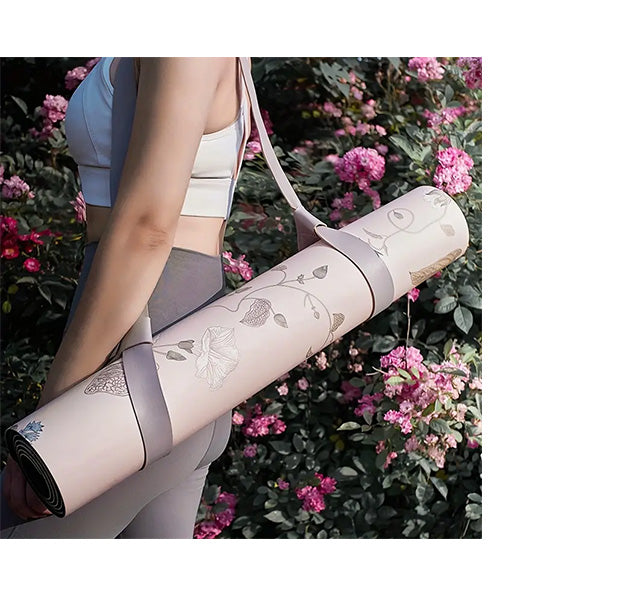
If storage space is limited or you need to carry the mat frequently, consider foldable styles. For example, Zhaoyang Industrial's foldable yoga mat measures only 9cm x 15cm x 60cm when folded, saving significant space.Another option for portability is a yoga mat with a carrying strap or bag. This makes it easier to transport the mat to and from the studio or outdoor practice location. Some mats even come with built - in handles, which can be very convenient for carrying.
For urban users, especially those living in compact apartments, foldable mats or roll-and-carry systems are increasingly popular. Some modern designs even integrate quick-strap compression systems, allowing the mat to be secured in under 5 seconds—ideal for commuting to studios or outdoor sessions.When choosing a mat for commuting, also consider the weight: Natural rubber mats can weigh over 3kg (7lbs), while TPE or POE versions are often under 1kg (2.2lbs).
Frequently Asked Questions
1、“What is the standard yoga mat size?”
The most common standard yoga mat size is 183 cm x 61 cm (72 inches x 24 inches), with a thickness of 3-5 mm. However, this is not absolute, as sizes vary by brand and model.Some high - end or specialized brands may offer non - standard sizes to cater to specific needs. For example, some brands may offer extra - wide mats for those who need more space or shorter mats for children or petite individuals.
2、“What thickness of yoga mat is most suitable?”
This depends on your practice style and personal needs:
- Beginners and those with sensitive joints: Choose 4-6 mm thickness for extra cushioning.
- Flow yoga and dynamic practices: 3-5 mm thickness provides a balance of stability and cushioning.
- Experienced practitioners: 1.5-3 mm thin mats offer better ground connection.
If you're unsure about which thickness to choose, you can always try out different mats at a local yoga studio or store. Many studios have mats available for students to use during class, so you can get a feel for different thicknesses and see which one works best for you. You can also read online reviews from other yogis to get an idea of their experiences with different mat thicknesses.
3、“How long should my yoga mat be?”
The mat should be 15-30 cm longer than your height. If you are 170 cm tall, a mat around 183 cm is suitable. Taller individuals may consider 200 cm extra-long models.It's also a good idea to consider the length of your typical yoga poses. If you often do long - holding poses like the extended side angle pose, you may want a longer mat to ensure you have enough space to fully extend your body without going off the mat.
4、“What are the differences between yoga mats of different materials?”
- TPE: Lightweight and eco-friendly, suitable for beginners.
- Natural Rubber: Best grip and durability.
- PU: Good surface grip, especially suitable for practices with heavy sweating.
- POE: Eco-friendly with good rebound.
In addition to these differences, the cost of the materials can also vary. Natural rubber mats tend to be more expensive due to their high - quality and durability. TPE mats are usually more affordable, making them a great option for beginners or those on a budget. PU mats may fall somewhere in the middle in terms of price, depending on the specific combination of materials used.
5、“How do I clean and maintain a yoga mat?”
Most yoga mats can be wiped with water and air-dried. Some materials can be cleaned with mild soapy water. Avoid direct sunlight and soaking, as this shortens the mat's lifespan.To keep your yoga mat in good condition, you can also use a yoga mat cleaner specifically designed for the type of material your mat is made of. These cleaners can help remove dirt, sweat, and bacteria more effectively than just water. Additionally, storing your mat in a cool, dry place away from direct sunlight and extreme temperatures can help prolong its life.
Additional insight: Many beginners underestimate how quickly preferences change. It is common for practitioners to start with thicker mats for comfort and gradually shift to thinner mats as balance, strength, and confidence improve.
Choosing the right yoga mat is a critical step in enhancing your practice experience. Ideal size should fit your height, practice style and individual needs, there is no universal standard.
The best yoga mat is a partner that allows you to practice safely and comfortably and that you want to use consistently. We hope this guide helps you find the right mat to make every practice more enjoyable and productive.
If you're still looking for your ideal yoga mat, check out the Mowin range of professional yoga mats - available in a wide range of eco-friendly materials, scientific thicknesses (3mm-8mm), and extended lengths and widths to suit different heights and genres. Innovative anti-slip textures and cushioning technology combine floor stability and joint protection to help you explore the boundaries of your practice with greater peace of mind.
Click on Mowin to find the right yoga mat for you through the intelligent filtering function and start a more enjoyable practice journey.
