


If you are sourcing POE yoga mats for a fitness brand, yoga studio, distributor, gym or online store, material selection is only the beginning.
A product can look excellent in a supplier's catalog and still create problems after it reaches your warehouse: the surface may not feel right for your target customers, the thickness may not match the intended use, colors may vary between batches, packaging may be inefficient, or the minimum order quantity may not work for your business.
This is why POE yoga mats deserve a closer look.
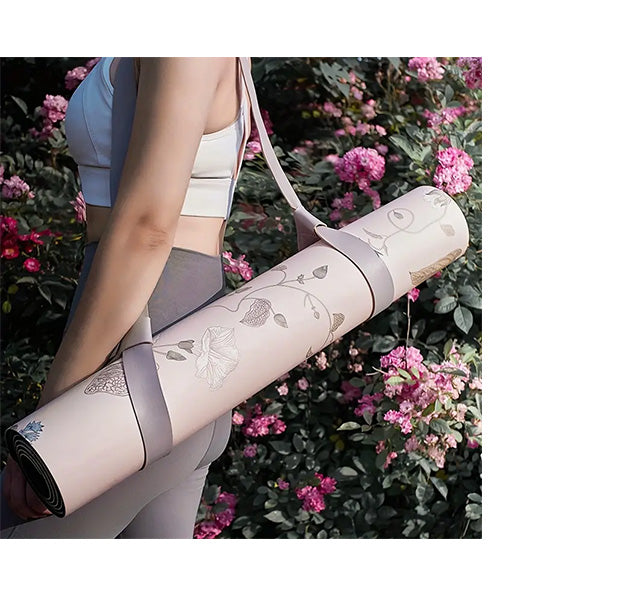
POE, or Polyolefin Elastomer, is a flexible foam material used in yoga and fitness mats. Depending on its formulation and manufacturing process, POE can offer a useful balance of softness, resilience, cushioning and portability. Commercial POE mats are available in different thicknesses, sizes, textures and designs, which makes the material suitable for different product positioning.
But for B2B buyers, the real question is not simply:
“Is POE a good yoga mat material?”
The better question is:
“Is POE the right material for my market, product positioning and customers?”
That is what this guide is designed to answer.
What Is a POE Yoga Mat?
POE stands for Polyolefin Elastomer.
In yoga mats, POE is commonly processed into a flexible foam structure. The finished mat can be designed with different densities, surface textures and thicknesses depending on the intended application.
Compared with traditional PVC-based mats, POE products are often positioned around lightweight handling, flexibility and cushioning. Some manufacturers also offer recyclable or compliance-tested POE formulations, but B2B buyers should always request the actual material specification and test documentation rather than relying only on a supplier's marketing description.
That distinction matters.
“POE yoga mat” describes the material family. It does not automatically tell you:
how soft the mat will feel
how much grip it will provide
how quickly it will recover after compression
how durable the surface will be
whether it is suitable for hot yoga
what testing has been completed
whether the material formulation meets your target market's requirements
Those details need to be confirmed with the manufacturer.
Why Are POE Yoga Mats Interesting for B2B Buyers?
For a consumer buying one mat, material selection may come down to personal preference.
For a B2B buyer ordering hundreds or thousands of units, the decision is different.
You need to consider product performance, production consistency, logistics, customization and commercial positioning at the same time.
1. A Comfortable Balance of Cushioning and Flexibility
One reason brands consider POE is its combination of flexibility and cushioning.
Depending on thickness and formulation, a POE mat can provide a softer training surface while maintaining enough resilience for common yoga and fitness movements.
For brands targeting:
beginner yoga
home workouts
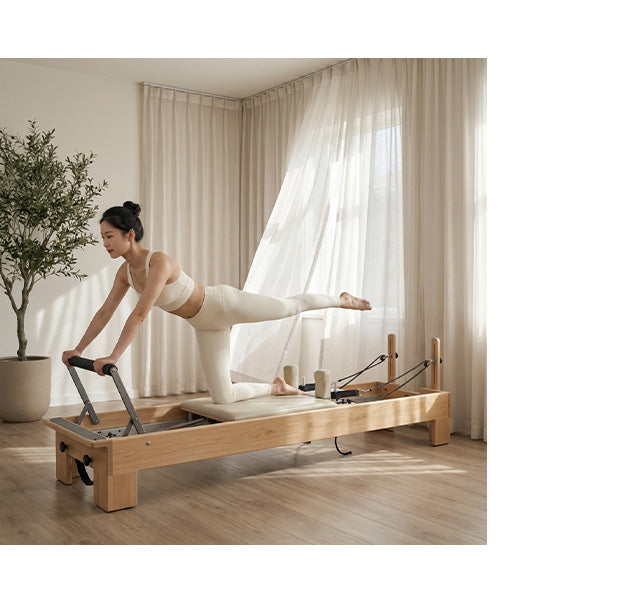
Pilates
stretching
meditation
general fitness
family fitness products
this balance can be attractive.
However, thickness should not be selected based on the number alone.
A 6 mm mat from one supplier may feel noticeably different from a 6 mm mat from another supplier because density, hardness, foam structure and surface construction can vary.
For B2B purchasing, thickness and material specification should always be evaluated together.
2. Lightweight Handling Can Help With Distribution
Weight matters when you are buying yoga mats commercially.
A lighter product can make a difference in:
container loading
warehouse handling
carton configuration
shipping cost
retail packaging
customer portability
This is particularly relevant for brands selling through e-commerce.
A product that is comfortable to carry is easier to position as a travel-friendly or home-workout mat.
Some existing POE yoga mat suppliers offer foldable designs and portable formats specifically for this reason.
For B2B buyers, however, do not simply ask:
“How much does one mat weigh?”
Also ask:
“How many units fit into one carton, and what is the carton dimension and gross weight?”
That number is much more useful when calculating landed cost.
POE vs TPE vs PVC: Which Material Should a Brand Choose?
There is no universal winner.
The right material depends on your target market, price point, product positioning and expected use.
| Material | Typical B2B Positioning | Main Considerations |
|---|---|---|
| POE | Lightweight, flexible, comfortable | Formulation and surface design matter |
| TPE | Lightweight, versatile, popular for yoga | Grip, density and durability vary |
| PVC | Cost-effective and established | Heavier and different sustainability positioning |
| NBR | Thick cushioning and fitness use | Less focused on traditional yoga feel |
| Natural Rubber | Premium grip and natural-material positioning | Heavier and may have latex considerations |
| PU + Rubber | Premium performance | Higher material and production cost |
The mistake is to compare materials only by their names.
A professional buyer should compare finished products, not just raw materials.
For example, if your customers prioritize portability, a lightweight POE mat may make more commercial sense than a heavier premium rubber mat.
If your customers practice intense hot yoga, surface grip and moisture behavior may become much more important.
If your customers mainly perform stretching and Pilates at home, cushioning and comfort may carry more weight.
What Thickness Should You Choose for a POE Yoga Mat?
Thickness is one of the first specifications your customers will notice, but it should be selected according to the product's purpose.
Common commercial POE mat specifications include thicknesses from several millimeters up to around 10 mm, depending on the supplier and product design.
3–4 mm
A thinner mat can be suitable when portability and a closer connection to the floor are priorities.
Potential applications include:
travel yoga
lightweight fitness
minimalist yoga products
customers who prefer firmer floor feedback
5–6 mm
This is often a practical middle ground for general-purpose products.
It can work well for:
yoga
Pilates
stretching
home workouts
studio products
8–10 mm
Thicker designs provide more cushioning and can be positioned toward customers who prioritize comfort.
They may be suitable for:
beginners
home fitness
floor exercises
stretching
low-impact training
But thicker does not automatically mean better.
A very soft mat may feel comfortable during kneeling exercises but can feel less stable during balance poses.
For private-label brands, it is usually better to choose thickness based on the customer experience you want to create, rather than simply choosing the thickest option.
Grip Is More Important Than the Word “Non-Slip”
“Non-slip” is one of the most common phrases used in yoga mat marketing.
For B2B buyers, it is also one of the phrases that needs the most clarification.
A supplier may describe a mat as non-slip, but you should ask:
Which side is the primary grip surface?
What surface texture is used?
Is the grip dry or moisture-dependent?
How does the surface behave during sweating?
What flooring has been tested?
Is there a test method for the claimed grip performance?
Does the texture change after repeated cleaning?
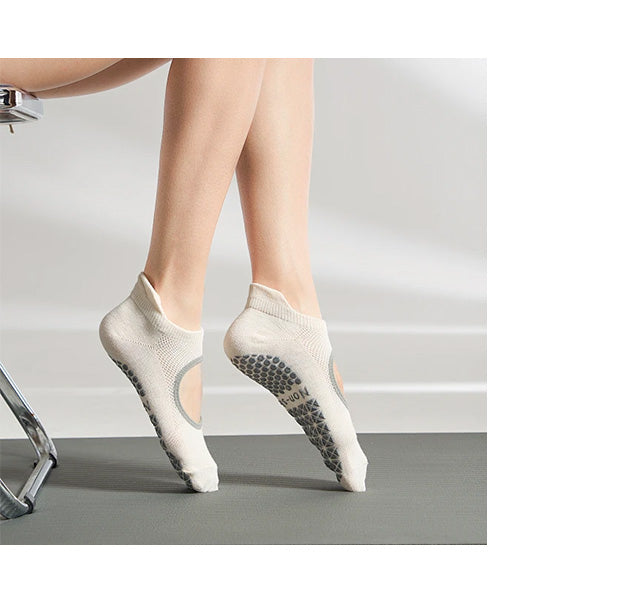
A POE yoga mat can be produced with different surface textures and dual-sided designs. Some commercial products are specifically manufactured with different textures on each side.
This is why requesting a physical sample before mass production is important.
You cannot fully judge yoga mat grip from a product photograph.
Custom POE Yoga Mats: What Can Be Customized?
For private-label brands, POE is not only about material selection.
The finished product can be developed around your brand identity.
Depending on the manufacturer's production capabilities, customization may include:
Size
Standard dimensions are useful for mass-market products, but oversized or specialized dimensions can help a brand differentiate itself.
Thickness
Different thicknesses can be developed for different customer groups.
Color
Color is particularly important for yoga and Pilates brands because the mat often becomes part of the customer's lifestyle and visual identity.
Instead of offering only standard black, blue or pink, brands can develop colors around their existing product collection.
Surface Texture
Texture affects both appearance and user experience.
A textured surface can also help a product look more distinctive in e-commerce photography.
Logo
Depending on the product structure and production process, branding options may include:
embossed logos
printed logos
laser marking
woven labels
customized surface patterns

Packaging
Packaging is often underestimated during product development.
For B2B brands, you may need:
individual polybags
paper sleeves
custom boxes
hang tags
barcode labels
instruction cards
customized carton marks
The best time to discuss packaging is before production, not after the products are already finished.

What Should You Ask a POE Yoga Mat Manufacturer?
Before placing a bulk order, a professional sourcing checklist should cover more than price.
Here are the questions we recommend asking.
Material
Ask the manufacturer:
What exactly is the POE formulation and construction?
Do not rely on the product title alone.
Request the material specification and relevant testing documentation for your target market.
Dimensions
Confirm:
length
width
thickness tolerance
folded dimensions, if applicable
weight tolerance
Small differences can become significant when purchasing thousands of units.
Surface
Ask about:
surface texture
grip performance
water resistance
cleaning requirements
wear resistance
Quality Control
Ask how the manufacturer controls:
thickness consistency
dimensions
color consistency
surface defects
logo positioning
packaging
carton quantity
A good factory should be able to explain its inspection process rather than simply saying “we have good quality.”
Sampling
Always request a sample.
Ideally, evaluate:
appearance
odor
thickness
softness
rebound
surface texture
grip
cleaning
logo quality
packaging
POE Yoga Mats for Private Label Brands
For a growing yoga or fitness brand, private labeling can be more valuable than simply buying a generic mat.
A customized POE yoga mat allows the product to become part of a larger collection.
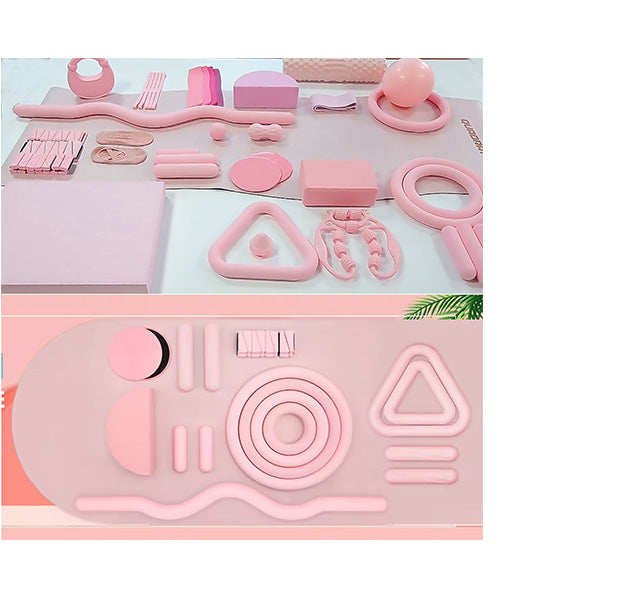
For example, a brand could develop a coordinated range including:
POE yoga mats
yoga straps
yoga blocks
Pilates rings
resistance bands
ankle weights
yoga towels
The same color palette, logo treatment and packaging can then be used across the collection.
This creates a stronger visual identity than selling unrelated products from different suppliers.
For B2B buyers, this is one of the biggest differences between product sourcing and product development.
POE Yoga Mats for Yoga Studios and Fitness Businesses
Private-label brands are not the only B2B customers for POE mats.
Yoga studios, gyms and fitness centers have different priorities.
They may care more about:
easy cleaning
consistent sizing
durability
replacement availability
bulk pricing
storage efficiency
color consistency
A studio may need 50, 100 or more mats that look and feel consistent.
That makes production consistency extremely important.
If the first shipment has one texture and the next shipment has another, customers will notice.
This is why an ongoing B2B relationship with the manufacturer can be more valuable than finding the lowest initial quotation.
How Much Does a POE Yoga Mat Cost?
There is no single “POE yoga mat price.”
The final quotation can change according to:
material formulation
thickness
size
weight
surface treatment
color
printing
logo method
packaging
order quantity
shipping terms
testing requirements
For example, a simple standard POE mat ordered in bulk will have a very different cost structure from a fully customized private-label product with custom packaging and testing.
Instead of asking suppliers only:
“What is your price?”
B2B buyers should ask for a complete quotation based on the same specification.
That makes supplier comparisons much more meaningful.
What Makes a Good POE Yoga Mat Supplier?
A reliable supplier should be able to answer technical and commercial questions clearly.
Look for a manufacturer that can provide:
1. Stable production capability
Your second order should not become a completely different product from your first order.
2. Clear specifications
Material, size, thickness, weight and packaging should be documented.
3. Sample support
You should be able to evaluate the physical product before mass production.
4. Customization capability
The supplier should understand OEM/ODM requirements instead of simply adding a logo to a standard product.
5. Quality control
There should be defined inspection points during production.
6. Communication
For B2B projects, communication speed and accuracy can directly affect your launch schedule.
Why Working Directly With a Yoga Mat Factory Matters
When you buy directly from a manufacturer, you can discuss the product at the production level.
Instead of simply choosing from a catalog, you can communicate about:
material
dimensions
thickness
texture
color
logo
packaging
sampling
production requirements
At MOWIN, our focus is on supplying yoga and Pilates products for B2B customers, including private-label and customized product projects.
For a POE yoga mat project, we recommend starting with the intended market and customer rather than starting with a random existing model.
For example:
“We need a lightweight POE yoga mat for an online fitness brand.”
is a much more useful starting point than:
“Give us your cheapest POE mat.”
Once the application, target price and customer profile are clear, specifications can be developed around the actual business requirement.
A Practical POE Yoga Mat Buying Checklist
Before confirming your order, make sure you have checked:
POE material specification
Product dimensions
Thickness and tolerance
Product weight
Surface texture
Grip requirements
Color specification
Logo method
Packaging
Carton dimensions
MOQ
Sample approval
Production lead time
Quality inspection requirements
Testing/certification requirements for your target market
Shipping terms
This checklist can save far more money than negotiating a few cents off the unit price.
Final Thoughts: Is POE the Right Material for Your Yoga Mat Business?
POE yoga mats can be an interesting option for brands and businesses looking for a balance of flexibility, cushioning, portability and customizable product design.
But material alone does not determine product quality.
The final performance depends on the formulation, density, thickness, surface structure and manufacturing process.
For B2B buyers, the best POE yoga mat is therefore not necessarily the cheapest one or the thickest one.
It is the product that fits your target customer, selling price, application, brand positioning and distribution model.
If you are developing a private-label yoga mat collection, the next step should be to define your specifications before comparing factory quotations.
Looking for a POE yoga mat manufacturer for your brand, studio or wholesale business?
Contact MOWIN to discuss your requirements, including material, size, thickness, color, logo, packaging and OEM/ODM options.
Tell us your target market and product requirements, and we can help you work backward from the finished product you want to sell.
