

)
Pilates for posture correction works because it fixes the root cause — weak deep core muscles, tight hip flexors, and a sleepy posterior chain — not just the symptom of slouching. With 3 short sessions a week, most people notice real changes in how they stand and sit within 4 to 8 weeks. Below is exactly what to do, why it works, and the exercises physiotherapists actually recommend.
Why Your Posture Is Bad(And Why“Just Sit Up Straight” Never Works
If you've ever been told to "stop slouching," you already know the advice doesn't stick. That's because posture isn't about willpower — it's about muscle balance.
The average desk worker spends 7+ hours a day in spinal flexion (rounded forward). Over time, three things happen:
| What changes |
What it causes |
How it feels |
|
Chest & hip flexors get tight |
Shoulders roll forward, pelvis tips |
"Hunched" look, tight neck |
|
Deep core & glutes get weak |
Spine loses its natural support |
Lower back aches by 3 pm |
|
Upper back muscles get long & lazy |
Head drifts in front of shoulders |
Tech neck, tension headaches |
The key insight: You can't "think" your way into better posture. You have to rebuild the muscles that hold you upright. That's exactly what Pilates is designed to do.
Does Pilates Improve Posture?
Yes — and there's research to back it up. Multiple studies on Pilates training show measurable improvements in spinal alignment, core endurance, and reductions in chronic lower back pain.
Here's why Pilates is uniquely good for posture compared to most workouts:
- It trains the deep core first. Pilates targets the transverse abdominis and multifidus — the muscles that act like a natural corset for your spine.
- It's full-body, not just abs. Every movement connects breath, core, and the posterior chain (glutes, hamstrings, back).
- It builds postural awareness. The "mind-body" cueing teaches you to find neutral spine in daily life, not just on the mat.
- It's low-impact and sustainable. No bouncing, no joint stress — so you can do it forever, which is what posture correction requires.
The 6 Best Pilates Exercise For Posture Correction
Do these as a 15-minute routine, 3–4 times per week. No equipment needed — just a mat.
1、PELVIC CURL (SPINE ARTICULATION)
Targets: lower back mobility, glutes, hamstring connection
- Lie on your back, knees bent, feet hip-width apart.
- Inhale to prep. Exhale and peel your spine off the floor one vertebra at a time.
- Squeeze glutes at the top, then roll back down slowly.
- Reps: 8–10
Why it helps: Wakes up the glutes and teaches the spine to move as a unit — the foundation of standing tall.

2、CHEST LIFT WITH ROTATION
Targets: deep abdominal strength, neck support
- Lie on back, hands behind head (fingers, not palms).
- Exhale, lift head and shoulders, then rotate elbow toward opposite knee.
- Keep the neck long — imagine a peach under your chin.
- Reps: 6 per side
3、SWAN PREP (BACK EXTENSION)
Targets: erector spinae, counters rounded shoulders
- Lie on stomach, hands under shoulders.
- Inhale, lengthen; exhale, lift chest only as far as comfortable.
- Reps: 5–8
This is the antidote to "computer hunch." It strengthens the exact muscles that pull your shoulders back.
4、THREAD THE NEEDLE (THORACIC ROTATION)
Targets: upper back mobility, shoulder openness
- On all fours, slide one arm under the other, rotating the spine.
- Breathe into the stretch.
- Reps: 5 per side
5、SINGLE-LEG STRETCH
Targets: core stability under movement
- Lie on back, tabletop legs.
- Exhale, extend one leg, hold opposite shin.
- Alternate with control. Reps: 10 total

6、STANDING ROLL-DOWN (THE DAILY RESET)
Targets: full spinal articulation, posture reset
- Stand tall, inhale. Exhale and roll down slowly, one vertebra at a time.
- Inhale at the bottom, exhale to roll back up.
- Reps: 5
Pro tip: Do the Roll-Down every time you get up from your desk. It's the single most useful "posture habit" you can build.
Pilates VS Yoga For Posture:Which Is Better?
This is one of the most searched questions, so let's settle it clearly:
|
Pilates |
yoga |
|
| Primary goal |
Core strength & alignment |
Flexibility & mindfulness |
| Best for posture because… |
Builds the supporting muscles |
Improves tightness from sitting |
| Intensity |
Controlled, repetitive |
low or hold-based |
| Time to see posture change |
4–8 weeks |
8–12 weeks |
Verdict: For pure posture correction, Pilates usually wins because it directly strengthens the stabilizers that hold you upright. Many people do both — yoga to release, Pilates to strengthen.
How Long Does It Take To Fix Your Posture With Pilates?
Realistic timeline based on consistent practice (3+ sessions/week):
- Weeks 1–2: You feel the exercises; awareness improves.
- Weeks 3–4: Less end-of-day back pain; easier to "find" neutral spine.
- Weeks 4–8: Visible change — friends notice you stand taller.
- 3+ months: New posture becomes your default, not a conscious effort.
Honest caveat: Pilates won't undo 20 years of slouching in a month. But it's the most sustainable, evidence-aligned method available — and far safer than posture braces, which weaken the muscles you're trying to build.
Common Mistakes That Sabotage Your Progress
- Holding your breath — Pilates is built on coordinated breathing. Breathe out on effort.
- Rushing the reps — Slow, controlled movement is where the strength lives.
- Chasing the stretch, ignoring the strength — Flexible but weak = still slouched.
- Doing it once a week — Consistency beats intensity every time.
FAQ:
Q:Can Pilates fix rounded shoulders?
Yes. Exercises like Swan Prep and Thread the Needle directly strengthen the upper-back muscles and open the chest, reversing the forward-shoulder pattern caused by desk work.
Q:Is Pilates or gym better for posture?
Pilates is generally better for postural correction because it isolates deep stabilizers. Heavy lifting at the gym can help too, but often reinforces compensations if form is poor.
Q:Do I need equipment (reformer) for posture Pilates?
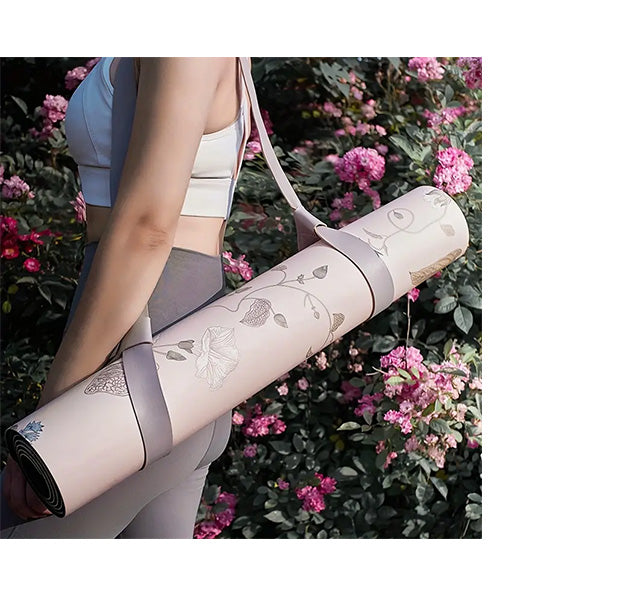
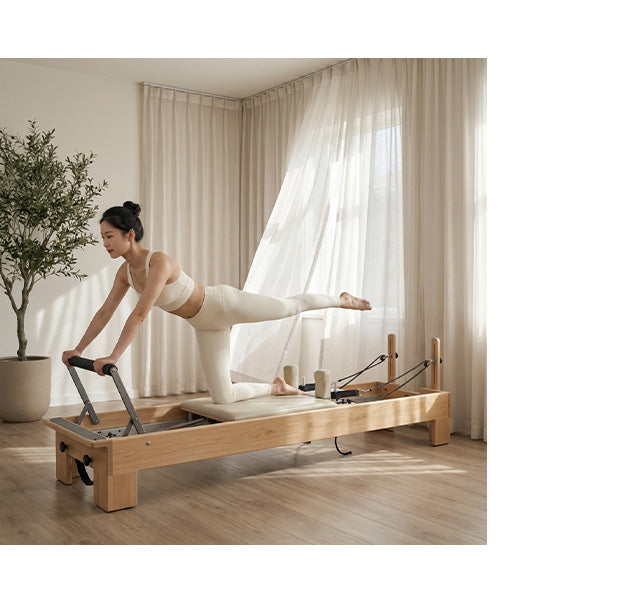
No. Mat Pilates alone delivers excellent posture results. A reformer can accelerate progress but isn't required to start seeing changes.
Q:How many times a week should I do Pilates for posture?
3–4 sessions of 15–30 minutes is the sweet spot for most beginners. Daily micro-sessions (like the Standing Roll-Down) add up fast.
Q:Will better posture reduce my back pain?
For most people with posture-related pain, yes — strengthening the core and posterior chain takes pressure off the lower back. (Always check with a physio for acute or radiating pain.)
Your 4-week Starter Plan
| Week | Focus | Routine |
| 1 | Learn the moves | 3×/week, full 6-exercise routine |
| 2 | Add control | Slow down, focus on breath |
| 3 | Build endurance | Add 2 reps to each exercise |
| 4 | Make it a habit | Daily Roll-Down + 3 full sessions |
Final
Pilates for posture correction isn't a quick fix — it's a rebuild. But it's the rare fitness method that targets the exact muscles modern life weakens, with almost zero downside. Start with 15 minutes, three times a week, and let consistency do the heavy lifting.
Ready to begin? Bookmark this page and try the 6-move routine today. Your future, taller self will thank you.
References & further reading:
[1] Studies on Pilates and spinal alignment / low back pain — available via PubMed and peer-reviewed physiotherapy journals.
Disclaimer: This article is for general education and is not a substitute for personalized medical advice. Consult a healthcare provider for persistent pain.