


Choosing a Pilates equipment manufacturer is not simply about finding a factory with a long product catalog.
For a studio owner, distributor, private-label brand, or fitness retailer, the more important questions usually come later:
Can the manufacturer produce the same specification consistently?
Can they control materials and components?
Can they make a sample that actually matches the final production?
What happens when a product arrives damaged or a replacement part is needed?
And if you are building your own brand, can the factory adapt the product without turning every order into a completely new project?
These questions matter because Pilates equipment is not one single category. A commercial reformer involves structural components, moving parts, springs, upholstery and assembly. Smaller Pilates products such as rings, resistance bands, balls, ankle weights and other accessories have completely different manufacturing requirements.
A suitable Pilates equipment manufacturer should therefore be evaluated according to the products you actually intend to buy—not simply by the size of its website or the number of products shown in its catalog.
What Does a Pilates Equipment Manufacturer Actually Do?
A manufacturer is different from a trading company that purchases finished products from several factories and resells them.
A genuine manufacturing partner may be involved in several stages of the product lifecycle:
-
Product design and development
-
Material sourcing
-
Component processing
-
Production
-
Assembly
-
Quality inspection
-
Packaging
-
OEM/ODM customization
-
Export preparation
-
Replacement parts and after-sales support
The exact scope varies from factory to factory.
Some manufacturers specialize in large equipment such as reformers, Cadillac systems, Pilates chairs and barrels. Others focus on smaller Pilates accessories. Some factories have their own machining, woodworking or metalworking capabilities, while others rely on qualified suppliers for certain components.
This distinction is important when comparing suppliers.
A factory does not need to manufacture every Pilates product in existence to be a good supplier. What matters is whether its actual manufacturing capability matches your product requirements.
What Types of Pilates Equipment Can a Manufacturer Supply?
Before contacting manufacturers, define your product range.
A Pilates equipment manufacturer may specialize in one category or provide a broader product portfolio.
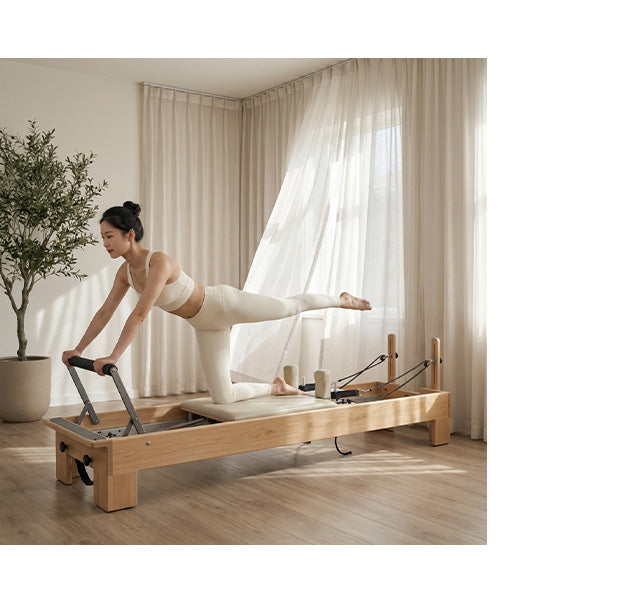
Pilates Reformers
Reformers are among the more technically demanding Pilates products because the product combines a structural frame with a carriage, rails or wheels, springs, ropes or straps, footbar and other components.
For commercial applications, buyers should pay attention to structural stability, movement consistency, component quality and ease of maintenance.

Cadillac and Tower Equipment
These systems add vertical structures and additional attachment points to Pilates training equipment.
When sourcing these products, frame construction, connection points, dimensions and installation requirements need to be clearly confirmed before production.
Pilates Chairs and Barrels
Pilates chairs and barrels have their own structural and ergonomic requirements. Material selection, padding, upholstery, dimensions and surface finishing can significantly affect the final product.
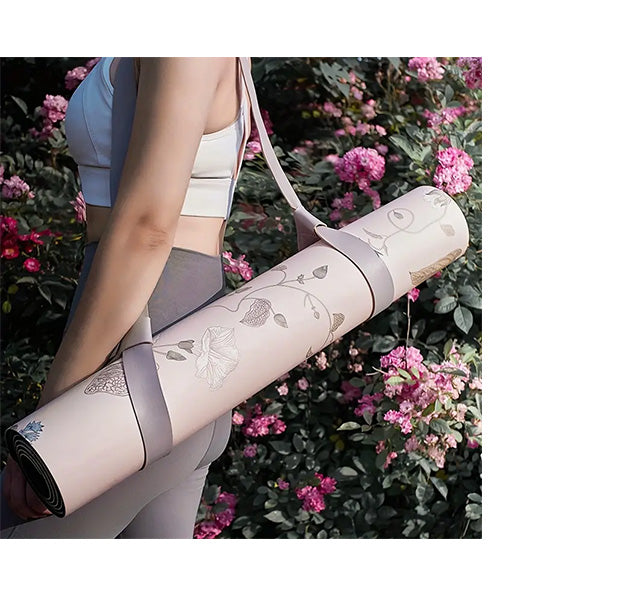
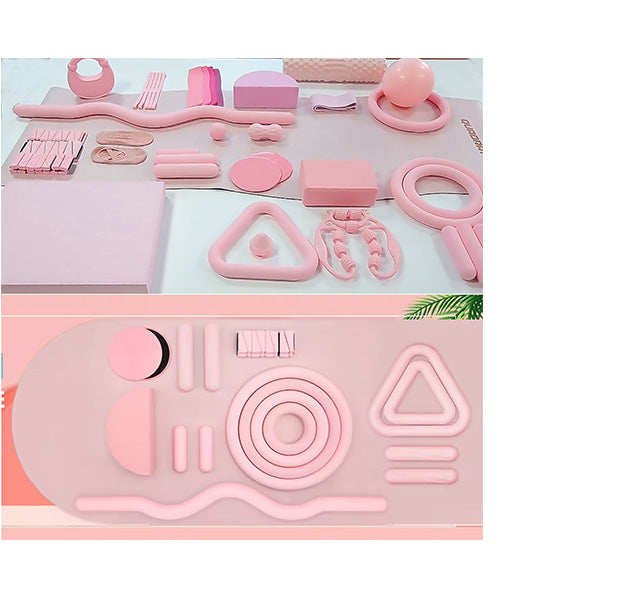
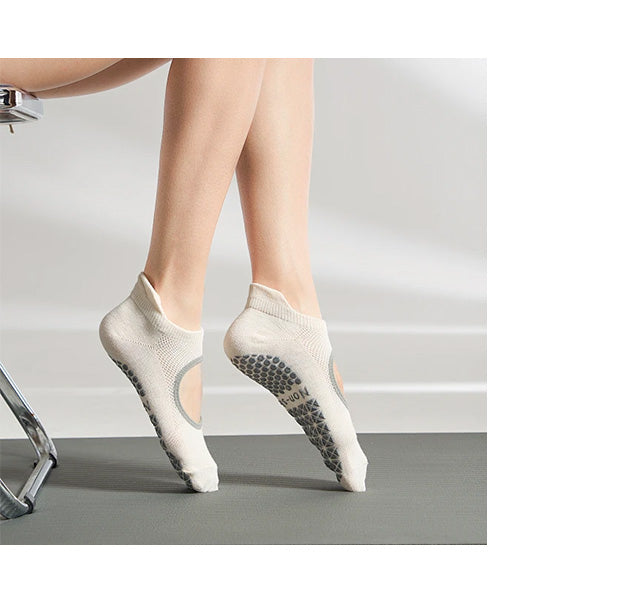
Pilates Accessories
This is a much broader category and can include:
-
Pilates mats
-
Yoga and Pilates straps
-
Foam rollers
-
Small training accessories
For brands selling complete Pilates collections, accessories can also be an important part of product differentiation.
7 Things to Check When Choosing a Pilates Equipment Manufacturer
1. Start With Manufacturing Capability, Not Marketing Claims
A professional-looking website is useful, but it should not be your main quality indicator.
Ask the manufacturer what happens after you place an order.
For example:
-
Where are the products manufactured?
-
Which processes are performed in-house?
-
Which components are sourced externally?
-
What materials are available?
-
How are products inspected?
-
Can the factory provide production samples?
-
Can specifications be maintained between batches?
Some established Pilates manufacturers publicly describe processes such as raw-material inspection, assembly checks, movement testing and final shipment inspection. These are much more meaningful indicators than simply claiming that a factory has “excellent quality.”
If a supplier cannot clearly explain its production process, it is reasonable to ask more questions before moving to a large order.
2. Look Closely at Materials and Components
“Premium material” is not a useful specification on its own.
A buyer should ask what the material actually is.
For example, depending on the product, specifications may involve:
-
Hardwood species
-
Aluminum alloy
-
Steel components
-
Spring specifications
-
Upholstery material
-
Foam density
-
Rope or strap material
-
Wheel and bearing systems
-
Hardware and fasteners
Commercial Pilates manufacturers may offer different combinations of wood, aluminum, stainless-steel hardware, springs, upholstery and other components depending on the equipment configuration.
For accessories, the same principle applies.
Instead of asking:“Is this resistance band high quality?”
ask:“What material is used, what are the dimensions, what is the resistance range, and how is consistency checked between batches?”
Specific questions lead to specific answers.
3. Ask About Quality Control at Different Stages
Quality control should not happen only when the finished product is sitting in the warehouse.
A more useful way to evaluate a manufacturer is to look at QC throughout the production process.
A practical framework is:
Incoming Quality Control
Materials and components are checked before entering production.
In-Process Quality Control
Critical dimensions, assembly and production processes are checked during manufacturing.
Final Quality Control
The completed product is inspected before packing.
Outgoing Quality Control
The order, accessories, packaging and shipping details are checked before shipment.
Several Pilates manufacturers publicly describe multi-stage inspection processes covering materials, assembly, function and final packing.
For a B2B buyer, this matters because a final visual inspection alone may not identify every production problem.
4. Understand What OEM and ODM Really Mean
OEM and ODM are often used loosely in the fitness industry.
They are not necessarily the same thing.
OEM: Manufacturing to Your Specification
With OEM production, you generally start with an existing product or a defined specification and customize elements such as:
-
Logo
-
Color
-
Upholstery
-
Packaging
-
Product configuration
-
Dimensions
-
Certain components
The exact customization scope depends on the manufacturer's capabilities.
ODM: Product Development With the Manufacturer
ODM usually involves a greater degree of manufacturer participation in product development.
This can include:
-
Structural modifications
-
New dimensions
-
Functional changes
-
Material changes
-
Appearance development
-
New product concepts
Some Pilates factories explicitly offer customization ranging from branding and colors to structural modifications and product development.
For a new brand, it is worth asking a manufacturer which changes are genuinely possible and which are simply standard options from a catalog.
5. Always Confirm a Sample Before Large Production
A sample is not just a sales formality.
It is an opportunity to verify whether your written specification actually translates into a physical product.
For a Pilates product, check:
-
Dimensions
-
Material
-
Weight
-
Surface finish
-
Stitching
-
Logo placement
-
Color
-
Packaging
-
Accessories
-
Product function
-
Assembly
-
User experience
For equipment with moving parts, functional checks are particularly important.
For smaller accessories, consistency of dimensions, material feel, printing, stitching and resistance can be equally important.
If you make changes after approving the sample, document those changes clearly. Otherwise, the factory may continue manufacturing according to the original approved version.

6. Don't Ignore Packaging and Shipping
A product can leave the factory in perfect condition and still arrive damaged.
This is particularly relevant for international B2B orders.
When evaluating a manufacturer, ask about:
-
Individual packaging
-
Protective materials
-
Carton specifications
-
Wooden crates where appropriate
-
Container loading
-
Product protection during transportation
-
Assembly instructions
-
Spare parts
-
Shipping documentation
Some Pilates equipment manufacturers specifically describe export packaging and shipping preparation as part of their production process.
For buyers importing equipment, packaging should therefore be considered part of product quality—not an afterthought.

7. Check After-Sales Support Before You Need It
This is one of the easiest things to overlook when comparing quotations.
Ask the manufacturer:
-
What is the warranty period?
-
Which parts are covered?
-
Are spare parts available?
-
Can replacement components be ordered separately?
-
What happens if a product arrives damaged?
-
Can the factory provide assembly instructions?
-
How are technical problems handled?
For equipment containing springs, wheels, straps, ropes or other wear components, replacement-part availability can become especially important over time.
A lower initial price does not necessarily mean a lower total cost if replacement parts are difficult to obtain.
How Much Customization Should You Request?
More customization is not always better.
This is particularly important for a new brand.
A buyer might want to customize everything at once:
-
Frame color
-
Upholstery
-
Logo
-
Dimensions
-
Hardware
-
Packaging
-
Accessories
-
Product structure
But every additional change can introduce new development, sampling and production requirements.
A more practical approach is to separate customization into three levels.
Level 1: Branding
The simplest option.
Examples include:
-
Logo
-
Packaging
-
Labels
-
Color selection
Level 2: Configuration
The product remains based on an existing model, but certain specifications change.
Examples:
-
Dimensions
-
Upholstery
-
Accessories
-
Resistance configuration
-
Component options
Level 3: Product Development
The manufacturer helps develop a substantially modified or new product.
This requires clearer specifications, sampling and testing.
For many new B2B brands, starting with an existing manufacturing platform and making controlled modifications can be more practical than developing a completely new product from the beginning.
Pilates Equipment Manufacturer vs. Trading Company
Neither option is automatically right for every buyer.
A trading company may be useful when you need products from multiple factories or want a single point of communication for a broad product range.
A manufacturer can be more suitable when you need:
-
Product customization
-
Consistent specifications
-
Factory-level communication
-
Repeat bulk production
-
Product development
-
Private labeling
-
Direct quality-control communication
The key question is not:
“Is this company a factory?”
The better question is:
“Who controls the production of the product I am buying?”
Ask for factory photos, production videos, product samples, inspection procedures and clear specifications. If necessary, arrange a factory audit or third-party inspection for larger orders.
What About Certifications and Compliance?
Be careful with generic claims such as “FDA approved” or “CE certified.”
Compliance requirements depend on the product, intended use and target market.
For example, the FDA states that exercise equipment intended only for general physical conditioning is generally not regulated as a medical device, while equipment promoted for certain medical purposes can fall under FDA medical-device requirements.
That distinction matters for Pilates companies selling into the United States.
If a product is marketed for rehabilitation or another medical purpose, do not assume that ordinary fitness-equipment requirements are sufficient.
For international sales, buyers should confirm the applicable requirements for their destination market with the manufacturer and, when necessary, an appropriate compliance professional or testing laboratory.
The safest approach is to ask for the actual certificate, test report or standard reference, rather than relying on a sentence on a product page.
A Practical Checklist for Comparing Pilates Equipment Manufacturers
Before placing your first bulk order, you can use the following questions:
Factory
-
Where is the product manufactured?
-
What production processes are performed in-house?
-
What products does the factory specialize in?
-
How long has the factory been producing this type of equipment?
Product
-
What are the exact materials?
-
What are the dimensions and weight?
-
What components are included?
-
Which specifications can be customized?
-
Is a pre-production sample available?
Quality
-
How are incoming materials inspected?
-
What checks are performed during production?
-
What final inspection is carried out?
-
Can inspection records be provided?
OEM/ODM
-
Can you customize the logo?
-
Can you customize colors and packaging?
-
Can dimensions or components be modified?
-
Is product development available?
Order
-
What is the MOQ?
-
What is the sample process?
-
What is the production lead time?
-
How are specification changes documented?
After-Sales
-
What is the warranty?
-
Which parts are replaceable?
-
Are spare parts available?
-
How are damaged products handled?
A manufacturer that answers these questions clearly is usually easier to work with than one that only focuses on price.
Why Product Consistency Matters More Than One Good Sample
One of the biggest differences between buying one product and building a B2B product line is repeatability.
A sample can look excellent.
The real test comes when you order 100, 500 or 1,000 units—or when you reorder the same product six months later.
For this reason, B2B buyers should keep an approved specification sheet covering:
-
Material
-
Dimensions
-
Weight
-
Color
-
Logo
-
Packaging
-
Components
-
Tolerances where relevant
-
Approved sample
-
Inspection requirements
This gives both sides the same reference point.
For a growing brand, this documentation becomes increasingly valuable because it reduces the risk of specifications gradually changing between production batches.
Where MOWIN Fits Into the Pilates Supply Chain
MOWIN focuses on the manufacturing and supply of yoga and Pilates-related fitness products, particularly accessories and training products for B2B customers.
For buyers looking beyond a single Pilates machine, this type of product sourcing can be useful when building a broader product collection.
Instead of treating accessories as unrelated items, a brand can develop a consistent range around a particular market position—for example:
-
Pilates training accessories
-
Resistance products
-
Small weights
-
Pilates rings
-
Mats
-
Training sets
-
Yoga and Pilates accessories
The important point is to match the manufacturer's actual production capability with the products being discussed.
A responsible supplier should be able to tell you what it manufactures directly, what it sources, what can be customized and what needs additional development.
That level of transparency is more useful than simply describing every product as “premium.”
Questions to Ask a Pilates Equipment Manufacturer Before Your First Order
If you are contacting a factory for the first time, you do not need a complicated RFQ.
A clear request can include:
We are looking for a Pilates equipment manufacturing partner for our market.
Please provide your current product catalog, material specifications, MOQ, sample policy, OEM/ODM options, production lead time, quality-control process, packaging details and warranty information.
For customized products, please also explain which specifications can be modified and whether a pre-production sample is required.
This gives the manufacturer enough information to respond with useful commercial details rather than sending a generic catalog.
Final Thoughts: Choose a Manufacturer You Can Verify
Finding a Pilates equipment manufacturer is not about choosing the factory with the biggest claims.
It is about finding a supplier whose capabilities can be verified and whose production process fits your business.
Look at the factory、materials、sample、QC process、packaging、replacement-part policy.
And most importantly, look at whether the manufacturer can reproduce the same product consistently after the first order.
For B2B buyers, that consistency is often more valuable than a slightly lower quotation.
A good manufacturing relationship should make the second order easier than the first—not force you to start from zero every time.
Looking for a Pilates equipment manufacturing partner?
Contact MOWIN to discuss your product requirements, customization options and wholesale project.