




Whether you are looking to sculpt your core, relieve nagging back pain, or boost your overall fitness, Pilates is one of the most effective workouts you can choose. But once you commit to the mat or the reformer, one crucial question always pops up: How often should you do Pilates to actually see results?
Do you need to practice every single day, or is a couple of times a week enough?
The short answer is: For most people, doing Pilates 3 to 4 times per week is the "sweet spot" to experience noticeable changes in posture, strength, and flexibility. However, the perfect frequency depends entirely on your personal goals, fitness level, and schedule.
In this ultimate guide, we will break down exactly how often you should do Pilates based on what you want to achieve, how to structure your week, and what Joseph Pilates himself recommended.
What Did Joseph Pilates Recommend?
To understand the ideal frequency, it helps to look back at the origins of the practice. Joseph Pilates, the creator of the method (originally called "Contrology"), had a very specific vision for how often people should practice.
In his book Return to Life Through Contrology, he wrote:
"Practice your exercises diligently with the fixed and unalterable determination that you must permit nothing to shift your decision from keeping faith with yourself."
He recommended practicing his routine at least 4 times a week. He believed that consistency was the only way to completely re-educate the body and achieve optimal physical health.
How Often Should You Do Pilates? (Based on Your Goals)
Your ideal weekly Pilates schedule depends heavily on what you want to get out of your workouts. Let’s break down the most common fitness goals:
1. For Absolute Beginners: 2–3 Times Per Week
If you are completely new to Pilates, your main focus should be learning proper form, alignment, and the signature lateral breathing technique.
-
Why: Pilates activates deep, stabilizing muscles (like the transverse abdominis) that you might not be used to targeting. Working out 2 to 3 times a week gives your nervous system and muscles enough time to adapt without overwhelming your body.
2. For Core Strength & Muscle Toning: 3–4 Times Per Week
If your goal is to get that long, lean, and sculpted look, you need to increase the frequency.
-
Why: To build muscle endurance and tone, your muscles need consistent stimulus. At 3 to 4 sessions a week, you are challenging your body frequently enough to trigger muscle hypertrophy (growth and strengthening) while still allowing time for recovery.
3. For Weight Loss: 4–5 Times Per Week (Combined with Cardio)
Pilates is excellent for building calorie-burning lean muscle, but traditional Pilates is generally a low-to-moderate intensity workout.
-
Why: If weight loss is your primary goal, aiming for 4 to 5 times a week is ideal. However, it is highly recommended to mix Mat or Reformer Pilates with high-intensity interval training (HIIT) or steady-state cardio (like swimming, running, or cycling) to maximize your daily caloric burn.
4. For Injury Rehabilitation & Back Pain Relief: 2–3 Times Per Week
Many people come to Pilates because a physical therapist recommended it for lower back pain or joint stability.
-
Why: In this scenario, less is often more. 2 to 3 gentle sessions a week, preferably under the guidance of a certified instructor or in a private setting, will help realign your body without aggravating the injury.
Mat Pilates vs. Reformer Pilates: Does the Frequency Change?
Does it matter if you are doing floor work or using the machine? Yes, the intensity levels differ, which can affect your recovery time.
-
Mat Pilates: Uses your own body weight for resistance. Because it relies heavily on your core to stabilize against gravity, it can be incredibly intense. However, since there is no heavy external loading, you can safely do Mat Pilates 4 to 5 times a week.

-
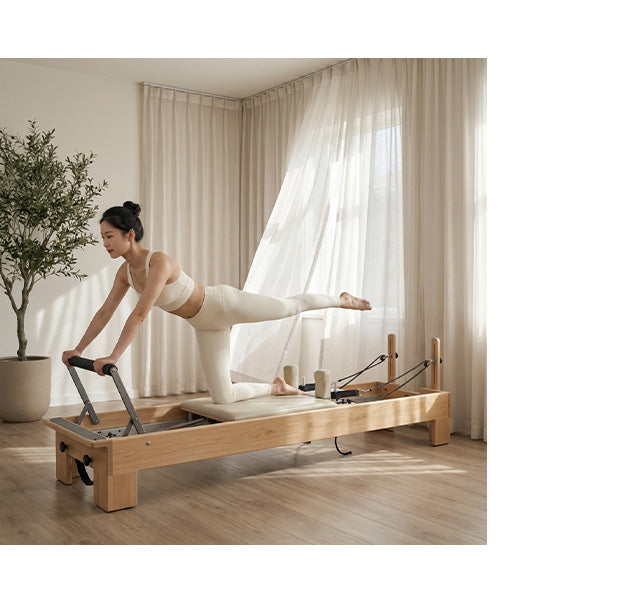
Reformer Pilates: Uses springs and pulleys to add resistance or assistance. The springs can act like weights, creating more muscle tear and requiring more recovery time. If you are doing intense, high-resistance Reformer classes, 3 times a week is usually the perfect amount to avoid overtraining.

The Perfect Weekly Pilates Schedule (Sample Layout)
To give you an idea of how to structure your fitness routine, here is a balanced weekly schedule that combines Pilates with other forms of movement for optimal health:
| Day | Workout Type | Focus |
| Monday | Pilates Class (Mat or Reformer) | Full Body & Core |
| Tuesday | Cardiovascular Training | Walking, Running, or Cycling |
| Wednesday | Pilates Class | Flexibility & Posture |
| Thursday | Active Recovery or Rest | Gentle Stretching / Yoga |
| Friday | Pilates Class | Strength & Resistance |
| Saturday | Total Body Strength / HIIT | Conventional weights or cardio |
| Sunday | Full Rest Day | Recovery |
Can You Do Pilates Every Day?
A very common question is: Is it safe to do Pilates 7 days a week?
Yes, you can safely do Pilates every day, but only if you vary the intensity.
Unlike heavy weightlifting, which damages muscle fibers to the point where they need 48 hours of rest, Pilates focuses on control, alignment, and elongation. A strenuous Reformer class on Monday can be followed by a gentle, restorative Mat stretch session on Tuesday.
However, for most people, a daily routine isn't necessary. Your body needs rest to repair and grow stronger. Incorporating at least one full rest day a week is vital for long-term progress.
When Will You See Results from Pilates?
Joseph Pilates famously said:
"In 10 sessions you'll feel the difference, in 20 sessions you'll see the difference, and in 30 sessions you'll have a whole new body."
If you stick to a schedule of 3 times per week, here is what that timeline looks like:
-
After 3-4 Weeks (10 Sessions): You will notice you are standing taller. Your deep core feels more engaged during daily tasks, and nagging back aches may begin to fade.
-
After 7-8 Weeks (20 Sessions): Your clothes might fit differently. You will see visible muscle definition in your abs, arms, and thighs, and your flexibility will improve significantly.
-
After 10-12 Weeks (30 Sessions): The "whole new body" phase. Your overall strength, posture, balance, and core stability will be fundamentally transformed.
Signs You Are Doing Too Much (Overtraining)
While consistency is key, more is not always better. Listen to your body. If you are doing Pilates too often without enough rest, you might experience:
-
Persistent muscle soreness that doesn't go away after 48 hours.
-
Chronic fatigue or feeling exhausted during your workouts.
-
A plateau or decrease in your physical performance.
-
Disrupted sleep patterns or increased irritability.
If you notice these signs, scale back your routine by one session a week and prioritize sleep and nutrition.
Summary: Finding Your Personal Sweet Spot
There is no one-size-fits-all answer to how often you should do Pilates. The magic number depends on your lifestyle, budget, and goals.
If you are just starting out, aim for 2 sessions a week. Once your body builds the stamina and muscle memory, bump it up to 3 or 4 times a week to unlock the full, transformative benefits of the practice.
Ready to start your Pilates journey? Consistency beats intensity every single time. Grab your mat, schedule your sessions like important business appointments, and watch your body transform.