


Yoga is not just about stretching the body; it's a dialogue with the soul. When morning light filters through the sheer curtains onto the yoga mat, or when a warm lamp is lit as night falls, the moment you unroll the mat seems to press the pause button on the noisy world. Here, every breath is a reconciliation with oneself, and every drop of sweat is a release of stress. Today, let's delve into how yoga permeates our lives and becomes a nourishing daily ritual for both body and mind through real stories, specific scenarios, and actionable advice.

I. Yoga: More Than Just Asanas, a Philosophy of Life - The Awakening from "Resistance" to "Acceptance"
Many people first encounter yoga in pursuit of "perfect asanas," but those who truly persist will discover that the ultimate goal of yoga is to teach us "acceptance."
1. Accepting the Imperfections of the Body: From "Forcing" to "Listening"
Case: Ms. Li, 32, suffered from a lumbar disc herniation due to prolonged sitting in an office. Her doctor recommended yoga to alleviate the pain. Initially, she was fixated on achieving a perfectly straight stretch in the "Downward-Facing Dog" pose, but excessive stretching led to severe lower back pain. Under the guidance of her coach, she switched to the dynamic flow of the "Cat-Cow" pose, relaxed with the "Child's Pose," and used yoga blocks to assist in maintaining balance in the "Tree Pose." After three months, not only did her pain subside, but she also learned to "practice at the edge of comfort" - not pursuing perfection but respecting the signals from her body.
Scientific Basis: Research from Harvard Medical School shows that excessive stretching activates the body's "pain defense mechanism," which can actually lead to muscle tension. Minor adjustments in yoga, such as slightly bending the knees or tilting the pelvis backward, can reduce the risk of injury while enhancing proprioception (the body's perception of its position and movement).
2. Accepting the Flow of Emotions: From "Suppression" to "Release"
Case: Mr. Zhang, a 28-year-old programmer, suffered from long-term anxiety. During a yoga class, when he tried the "Lion Pose" (Lion Breath), he suddenly burst out laughing and then wept uncontrollably. Afterward, he said, "I've been pretending to be 'calm' all along, but yoga allowed me to accept my 'imperfections.'"
Psychological Perspective: The "Pranayama" (breath control) techniques in yoga can regulate the parasympathetic nervous system and lower cortisol (stress hormone) levels. For example, the "4-7-8 breathing method" (inhale for 4 seconds → hold for 7 seconds → exhale for 8 seconds) has been proven to quickly relieve anxiety attacks.
3. Accepting Oneself in the Present Moment: From "Comparison" to "Focus"
Case: Ms. Wang, a 45-year-old yoga instructor, once doubted herself because her students could perform the "Handstand." It wasn't until she read the line from the "Yoga Sutras," "Yoga is the cessation of the fluctuations of the mind" (Yogas Chitta Vritti Nirodhah), that she realized "progress is not about surpassing others but surpassing yourself from yesterday." Now, she always says in her classes, "Your asanas don't need to be perfect, but your breath must be sincere."
II. The Ritual Sense on the Yoga Mat: Making Practice a Daily "Spiritual SPA" - An Immersive Experience from Environment to Details
Why can a simple mat become a spiritual anchor for yogis? Because it's not just a tool; it's a medium for creating a "safe space."
1. Creating a Dedicated Practice Corner: The Five-Senses Immersion Method
Sight: Choose soft lighting (such as a warm yellow table lamp) or candles, avoiding harsh white light; hang a natural landscape painting (like a forest or ocean) on the wall to enhance relaxation.
Sound: Play natural white noise (such as rain or stream sounds) or yoga-specific music (like Deva Premal's chanting); avoid fast-paced pop music that may distract attention.
Smell: Use natural essential oil diffusers (recommended scents: cedarwood (calming), sweet orange (invigorating), frankincense (meditative)); avoid synthetic fragrances that may trigger headaches.
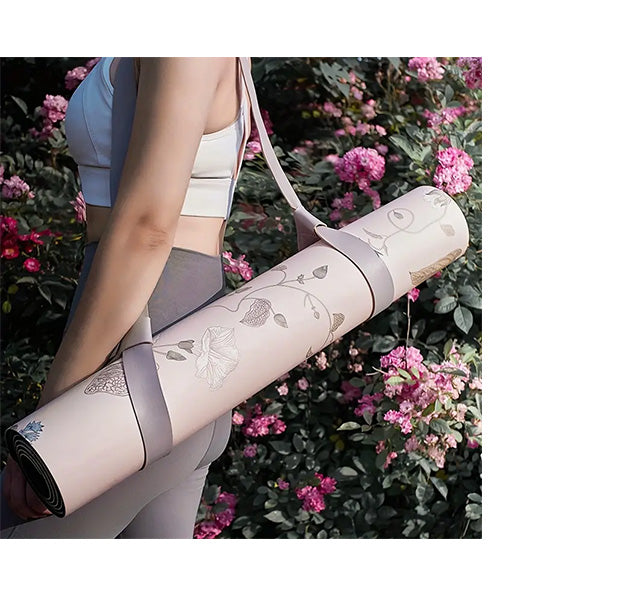
Touch: Choose a yoga mat with moderate thickness (4-6mm) and strong anti-slip properties. For example, a natural rubber mat is suitable for dynamic flow practices (like Ashtanga), while a TPE mat is better for beginners or travel.
Taste: Drink a cup of warm lemon water before practice (to boost metabolism) and coconut water after practice (to replenish electrolytes); avoid coffee or strong tea that may cause shaky hands.
2. Establishing a Fixed Practice Rhythm: "Yoga Calibration" of the Biological Clock
Morning Practice (6:00-7:30 AM):
Recommend 12 rounds of "Sun Salutations" paired with "Ujjayi Breath" (deep breathing with a throat sound) to awaken energy and boost metabolism.
Case: Ms. Chen, a 30-year-old office worker, has transformed from a "chronic snoozer" to a "natural wake-up expert" after half a year of morning practice, and she feels more energetic during the day.
Evening Practice (8:30-9:30 PM):
Try "Yin Yoga," holding poses for 3-5 minutes (such as "Butterfly Pose" or "Sleeping Pigeon Pose") paired with "Abdominal Breathing" to release tension accumulated throughout the day.
Case: Ms. Zhao, a 35-year-old mother, has relieved her shoulder and neck stiffness through evening practice and significantly improved her sleep quality (from 1 hour of deep sleep to 2.5 hours).
3. Choosing "Soulful" Equipment: Connecting Functionality with Emotion
Yoga Mat:
-
Natural Rubber Mat: Strong anti-slip properties, suitable for hot yoga or dynamic flow (like Ashtanga); but relatively heavy (about 3kg), inconvenient to carry.

- TPE Mat: Lightweight (about 1.5kg), moderately anti-slip, suitable for beginners or travel; but slightly less durable than rubber mats.
-
Suede Mat: Highly absorbent, suitable for people with sweaty hands; but requires regular cleaning (wipe with a damp cloth + air dry).
Recommendation: Our [Product Name] yoga mat features a 5mm natural rubber base + ultra-fine fiber suede surface, with 40% improved anti-slip properties and certified by the EU REACH (free of harmful chemicals), safe even if chewed by children.
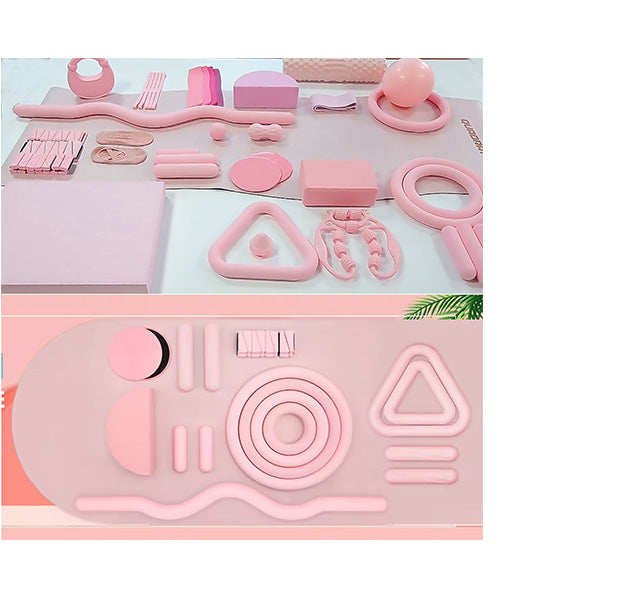
Auxiliary Tools: -
Yoga Blocks: Help adjust poses (such as placing them under the feet in the "Forward Bend" to reduce lower back pressure).

- Stretching Straps: Assist in completing poses that require flexibility (like the "Cow Face Pose").
- Meditation Cushions: Enhance comfort in poses like "Lotus Pose" or "Hero Pose," preventing leg numbness.
III. Yoga and Life: The Wisdom Transfer from Mat to Off-Mat - Making Yoga a "Life Philosophy"
The philosophy of yoga will eventually integrate into daily life. The lessons learned on the mat will quietly transform your diet, relationships, and work style.
1. Diet: Choosing Food as You Would Nurture Your Body - From "Satisfying the Palate" to "Nourishing Cells"
Principles:
- Sattvic Food: Fresh fruits and vegetables, whole grains, legumes, nuts - promote mental and physical peace.
- Rajasic Food: Coffee, chili peppers, processed foods - may trigger anxiety or laziness.
-
Tamasic Food: Fried foods, alcohol, leftover meals - cause physical heaviness.
Case: Ms. Lin, a 26-year-old yoga enthusiast, used to rely heavily on takeout. After practicing yoga, she started cooking for herself: oatmeal with blueberries and chia seeds for breakfast, quinoa salad with chicken breast for lunch, and pumpkin soup with steamed vegetables for dinner. After three months, her skin became radiant, and she no longer relied on coffee to stay awake.
2. Relationships: Resolving Conflicts with "Non-Violent" Communication - From "Attack" to "Empathy"
Principles:
- Observe: Objectively describe facts (e.g., "You were 20 minutes late today") instead of evaluating (e.g., "You're always late").
- Feel: Express your emotions (e.g., "I felt worried because time is important to us") instead of blaming (e.g., "You made me angry").
- Need: Clarify your needs (e.g., "I need us to respect each other's time") instead of demanding (e.g., "You must be on time").
-
Request: Propose specific actions (e.g., "Can we leave 10 minutes earlier next time?") instead of commanding (e.g., "Don't be late again").
Case: Mr. and Mrs. Liu, a couple in their 30s, used to argue frequently over their child's education. After learning "non-violent communication," they changed their dialogue style:
Before: Mrs. Liu: "You never take care of the child; you just play with your phone!"
Now: Mrs. Liu: "The child didn't finish his homework today (observation). I feel anxious (feeling) because I hope he can develop good habits (need). Can you spend 30 minutes helping him with his homework every day? (request)"
Result: Fewer arguments, improved child's grades, and a more harmonious marital relationship.
3. Work: Focusing Like the "Tree Pose" - From "Multitasking" to "Single-Tasking"
Principles:
- Concentrate on completing one task at a time (like focusing on a single point in the "Tree Pose") instead of frequently switching (e.g., replying to emails while attending a meeting).
- Take short breaks every 50 minutes of work (e.g., get up for water, stretch shoulders and neck) like the "Downward-Facing Dog" to avoid fatigue from prolonged sitting.
- When under pressure, use the "Alternate Nostril Breathing" (Nadi Shodhana) to quickly calm down:
- Press the right nostril with the right thumb and inhale through the left nostril for 4 seconds;
- Release the thumb and exhale through the right nostril for 6 seconds;
- Press the left nostril with the left thumb and inhale through the right nostril for 4 seconds;
- Release the thumb and exhale through the left nostril for 6 seconds;
- Repeat for 5 rounds.
Case: Mr. Wu, a 40-year-old project manager, used to have low efficiency due to "multitasking." After learning the "single-task work method," he prioritized tasks and focused on one at a time, using breathing techniques to relieve stress. After three months, his project completion rate increased by 30%, and he no longer worked overtime.
IV. Advice for Yoga Beginners: Three Steps from "Starting" to "Loving" - Avoiding "Inconsistent Practice"
1. Let Go of "Perfectionism": From "5 Minutes" to "Habit"
Misconception: Many people give up because they "can't perform difficult asanas" or "don't have time to practice."
Solution:
- Set a "minimum viable goal": 5 minutes a day (e.g., sitting quietly and breathing, flowing through the "Cat-Cow" pose) is easier to stick to than "1 hour, 3 times a week."
- Record progress: Use your phone to take videos of your daily practice or keep a "yoga journal" to document physical and emotional changes.
Case: Ms. Zhou, a 25-year-old beginner, could only persist for 3 minutes initially, but she took photos every day and was able to complete a 15-minute "Sun Salutation" flow after a month.
2. Find Your "Trigger Point": From "External Motivation" to "Internal Motivation"
Types of Motivation:
- External Motivation: Weight loss, body shaping, following trends (easy to give up).
-
Internal Motivation: Relieving back pain, improving sleep, enhancing focus (more sustainable).
Solution: - Clarify core needs: Ask yourself, "Why do I want to practice yoga?" (e.g., "I want to stop relying on painkillers").
- Link practice to needs: Associate practice with daily scenarios (e.g., "Do a 5-minute 'Neck Relaxation Sequence' every time my shoulders and neck ache").
Case: Mr. Zheng, a 33-year-old programmer, suffered from shoulder and neck stiffness due to prolonged sitting. He set the "Neck Relaxation Sequence" (e.g., "Cat-Cow + Neck Side Bends") as his computer wallpaper and practiced for 2 minutes every time he saw it. After three months, the pain disappeared.
3. Join a Community but Stay Independent: From "Dependency on Others" to "Self-Awareness"
Advantages of Community: Provides support, shares experiences, and increases motivation (e.g., online check-in groups, offline studios).
Principles of Independence:
- Listen to Your Body: Immediately exit a pose if you feel pain, even if the coach says, "Hold for 5 more seconds."
-
Respect Your Pace: Don't feel anxious because others can perform the "Handstand"; your progress is only about yourself.
Case: Ms. Sun, a 29-year-old yoga enthusiast, was injured because she compared poses in a community. Now, she focuses only on her breath and body sensations and progresses faster.
V. The "Hidden Functions" of the Yoga Mat: It's Not Just a Tool but a "Life Companion" - From Practice to Inheritance with Warmth
1. Stories in the Traces: The "Growth Map" on the Mat Surface
Sweat stains, creases, small tears... These "imperfections" record your persistence:
- Sweat Stains: Proof that you gave your all;
- Creases: Indicate that you often roll up the mat to practice;
-
Small Tears: May be "medals" from your first attempt at the "Headstand."
User Sharing: "The edges of my mat are worn out, but every time I see it, I think of my transformation from stiffness to flexibility - it's the most precious 'yoga medal.'"
2. Extended Use Across Scenarios: A "Multi-Functional Partner" from Practice to Life
- Outdoor Picnic Mat: Spread it on the grass to enjoy the dual nourishment of sunlight and yoga;
- Children's Play Mat: Do "parent-child yoga" with your child to enhance your bond;
- Emergency Sleeping Mat: If the hotel mattress is too hard during travel, lay it on the bed for added comfort.
3. The Warmth of Inheritance: From "Self-Growth" to "Helping Others"
As your practice deepens, you may give your old mat to a friend or donate it to a community center or yoga charity organization:
Case: Ms. Chen, a 42-year-old yoga teacher, donated her old mat to a mountain school where children used it for physical education classes. She said, "The mat carried my growth; now it's going to help more people grow."
Conclusion: The Yoga Mat, a Starting Point and a Destination - Encounter a Better Self with Every Breath
When we roll up the yoga mat, we take away not just physical relaxation but also a clear awareness: life is like practice on the mat, with falls and balances, but as long as we keep breathing, we can find our center.
May you feel in every moment of unrolling the mat:
🌿 Your body is relaxing, and your mind is growing.
🌿 Reconciling with yourself and gently coexisting with the world.
MOWIN always believes:
A good yoga mat can accompany you through countless moments of self-transformation.
Our products use safe materials and have passed SGS testing.