


When it comes to enhancing your yoga practice, the thickness of yoga mats plays a crucial role in comfort, stability, and performance. Whether you’re a beginner or a seasoned yogi, understanding how different mat thicknesses cater to various needs can transform your experience. Additionally, considering yoga mat size alongside thickness ensures a perfect fit for your body and practice space. Below, we break down the most common mat thicknesses—3mm, 4mm, 5mm, and 6mm—with a handy comparison table, and explore how yoga mat size complements your choice. Follow this yoga mat thickness guide to choose the right mat for you!
Choosing the correct mat thickness not only improves comfort but also helps prevent joint strain, improves balance, and supports long-term practice consistency.
The best thickness of a yoga mat
There is no uniform standard for the optimal thickness of yoga mats, which should be chosen flexibly according to the type of practice, physical needs and usage scenarios. You can refer to the following table to make your choice:
| Thickness | Cushioning | Support&Stability | Scenario | Applicable population |
| 3mm | low | High (close to the floor) | Advanced practices (e.g., Ashtanga, Vinyasa) | Yogis seeking precision, balance, and ground feedback |
| 4mm | moderate | Moderate-high | Flowing sequences (e.g., Hatha, Power Yoga) | Those wanting a balance of cushion and stability |
| 5mm | moderate-high | Moderate | General practice, restorative yoga | Beginners or those with minor joint sensitivity |
| 6mm | high | Low (more cushioning) | Restorative yoga, Pilates, or injury recovery | Individuals with knee/hip pain or prefer deep padding |
| 8mm | high | Moderate |
yin yoga, rehabilitation training, home meditation etc. |
Suitable for practitioners with sensitive joints who prefer soft support. |
For most practitioners, 4–5mm is often considered the “balanced zone”, offering enough cushioning while still maintaining stability for standing and balancing poses.

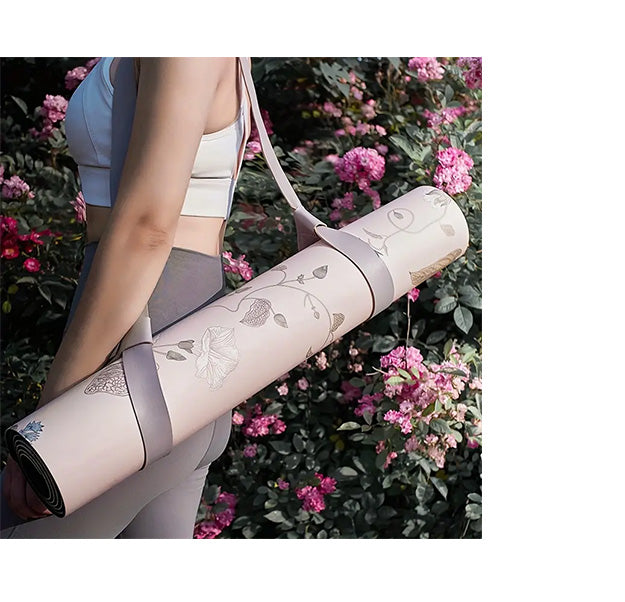
Double-sided Non Slip PVC Yoga Mat
Why Does the Thickness of Yoga Mats Matter?
1. Practice Style:
- Thin mats (3–4mm) are ideal for dynamic styles like Vinyasa or Bikram, where stability and grip are key. The reduced thickness of yoga mats allows for better proprioception (body awareness) and prevents slipping during transitions.
- Thicker mats (5–6mm) excel in slower practices like Yin or Restorative yoga, providing plush cushioning for seated or reclined poses.This extra cushioning can make long holds in these poses much more comfortable, reducing strain on the body.
If your practice includes many standing balance poses, a slightly thinner mat may improve stability and foot control.
2. Joint Health:
If you have sensitive knees, hips, or wrists, a thicker mat (e.g., 6mm) can reduce impact during kneeling or plank poses. Conversely, athletes or advanced yogis may prefer thinner mats to build strength and avoid relying on excess cushioning.Thinner mats can force your body to engage more muscles to maintain stability, which can be beneficial for strength building.
People practicing on hard floors such as concrete or hardwood often benefit from slightly thicker mats for extra joint protection.
3. Portability:
Thinner mats are easier to roll up and carry, making them perfect for studio-goers or travelers. Thicker mats are bulkier but offer home-studio comfort.If you often take your mat to different locations, a thinner mat might be more convenient to transport.
Travel yoga mats are typically 1.5–3mm thick, designed to fold easily into suitcases or backpacks.
Combined with yoga mat size selection
While thickness of yoga mats is vital, yoga mat size ensures proper alignment and space for movement. Standard sizes are:
• Standard: 173–183 cm (length) × 61 cm (width) — suitable for most practitioners under 178 cm.This size is widely available and can fit well in most yoga studios and home spaces.
• Jumbo/Long: 188–203 cm (length) × 66–76 cm (width) — ideal for taller individuals or those who prefer extra room.The extra length and width can give you more freedom to move around and try different poses without feeling cramped.
Choosing the right yoga mat size prevents stepping off the mat during poses like Downward Dog, Warrior II, or Extended Mountain Pose.
For example, a 6mm thick mat in a jumbo size might be perfect for a tall beginner practicing Yin yoga, offering both cushion and length. Conversely, a 3mm mat in standard size suits a petite yogi focusing on Ashtanga.
| Height of a person | Thickness | Size(Length*Width) | demand |
| below 160cm | 3-6mm | 173-183*61cm | Small people need heavy grip, thin and thick can be recommended medium thickness balance portable cushioning |
| 160-175cm | 4-6mm | 173-183*61cm | The best height fit for the general public, 5mm for most exercises, and easy to move around. |
| 175-185cm | 4-6mm |
188-203cm *66-76cm |
Taller is appropriate to lengthen the pad surface, 5-6mm thick pad stable standing. |
| 185cm and above | 5-6mm | 203cm+ * 76cm+ | 6mm thick + extra long cushion is suitable for high heights, cushioning joints and spreading postures. |
If you frequently practice dynamic sequences, choosing a slightly wider mat can also provide extra space for movement transitions.
Tips for Choosing Your Mat
• Test Before You Buy: If possible, try out different thicknesses in person to feel the difference.This can give you a firsthand experience of how each thickness affects your comfort and stability during practice.
• Prioritize Material: Look for eco-friendly materials (e.g., natural rubber, TPE) that offer both grip and durability, regardless of thickness.Eco-friendly materials are not only better for the environment but also often provide better performance and are safer for your health.
• Pair Thickness with Size: Ensure your mat’s length and width accommodate your tallest poses (e.g., Extended Mountain Pose) while matching your desired thickness of yoga mats.A well-sized mat can prevent you from stepping off the mat during practice, ensuring your safety and focus.
• Consider Texture and Grip:Some mats feature textured surfaces or anti-slip coatings that enhance grip during sweaty sessions.
By balancing the thickness of yoga mats with the right yoga mat size, you’ll create a practice space that supports your goals, whether that’s building strength, enhancing flexibility, or finding deep relaxation. Happy practicing!
Customise your own brand
If you can't find yoga mat sizes that fit your body and practice needs on the market, consider our customization service. We’ll create a personalized size that perfectly suits every stretch, ensuring your practice space aligns seamlessly with your physical and mental requirements. Custom yoga mats are also popular among yoga studios, fitness brands, and wellness businesses looking to build a unique brand identity.
Specialised services:
- Choose your material: whether you want tpe, natural rubber or cork, we can provide it.These materials have different characteristics in terms of grip, cushioning, and durability, allowing you to choose the one that best suits your needs.
- Personalisation: If you want to have a different branded yoga mat, you can add your logo and desired pattern on the yoga mat, choose the right colour and we will help you to stand out from the crowd.A personalized yoga mat can not only reflect your unique style but also make it easier to identify your mat in a group setting.
- High quality: we offer a wide range of technologies,such as heat transfer、silk screen、digital print and so on.These technologies can ensure that your logo and pattern are printed clearly and last for a long time, maintaining the aesthetic appeal of your yoga mat.
Our customization service supports both small business orders and large wholesale production, making it easy for brands to launch their own yoga mat collections.
