


If you're looking into Pilates for the first time, the terminology, precise form, and specialized studio apparatus can easily feel overwhelming.
The good news? You don't need a expensive studio membership or a room full of spring-loaded machinery to start. Pilates is, at its core, a bodyweight discipline focused on controlled movement, joint stability, and deliberate breathwork. Whether you are recovering from an injury, cross-training, or simply looking to build core stability, mat Pilates is accessible to virtually any fitness level.
Here is a practical breakdown of how the methodology works, what to expect, and the exact gear worth buying.
The Core Mechanics: What Makes Pilates Different
Originally named "Contrology" by founder Joseph Pilates in the 1920s, the practice was designed as a rehabilitative system. It relies on six core principles:
-
Breath
-
Concentration
-
Centering
-
Control
-
Precision
-
Flow
Unlike high-intensity interval training (HIIT), where the goal is often sheer output or cardio fatigue, Pilates focuses on quality over quantity. A set might only consist of 6 to 10 repetitions, but each rep requires total control through both the concentric and eccentric phases of the movement.
You will hear instructors talk constantly about your "powerhouse." This refers to the complex of muscles spanning from the base of your ribs to the bottom of your pelvis—including the deep transverse abdominis, pelvic floor, and back extensors. Strengthening this core foundation directly improves posture, balance, and spine protection in everyday movements.
What Real Results Look Like for Beginners
If you practice consistently (even 2–3 times a week), the initial adaptations happen quickly:
-
Improved Spinal Decompression & Posture: By targeting the deep stabilizing muscles along the spine, you'll likely notice less lower back tightness from sitting at a desk.
-
Neuromuscular Awareness: Pilates forces you to isolate smaller muscle groups—like the gluteus medius or inner thighs—that often "sleep" during compound lifts or running.
-
Low-Impact Joint Conditioning: Because movements are fluid and grounded, you get high muscle engagement with minimal impact on your joints.
The Gear: What You Need (and What You Can Skip)
One of the biggest mistakes beginners make is buying a mountain of gear before mastering basic mat mechanics. Start simple.
The Bare Essentials
1. A High-Density Mat (5mm–15mm Thick)
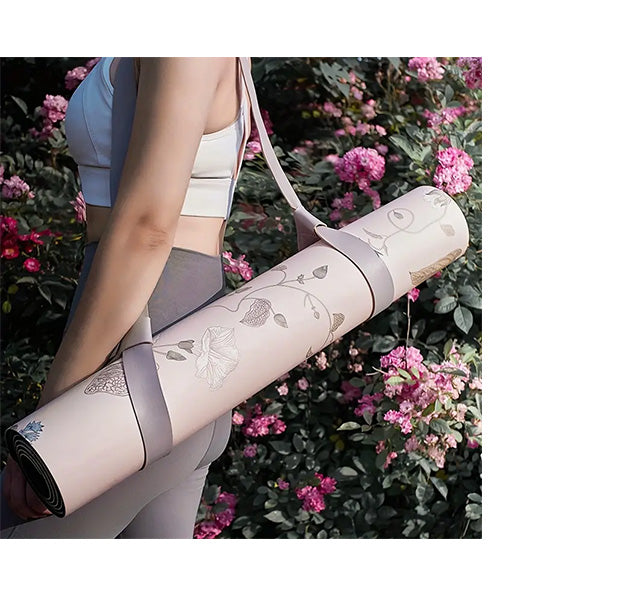
Do not use a standard sticky yoga mat for Pilates. Yoga mats are thin (usually 3mm–4mm) to provide floor contact for standing balance poses. Pilates involves rolling on your spine and supporting weight on your hips and knees. Look for a dense, cushioned mat—ideally 1/2 inch (around 10mm–15mm) thick—that protects your joints without causing you to lose your balance.
2. Form-Fitting Apparel
You don't need expensive designer activewear, but you do need fitted clothing. Loose, baggy t-shirts or wide-leg pants make it hard for you (or an instructor) to check whether your pelvis is neutral, your ribs are flared, or your spine is properly aligned.
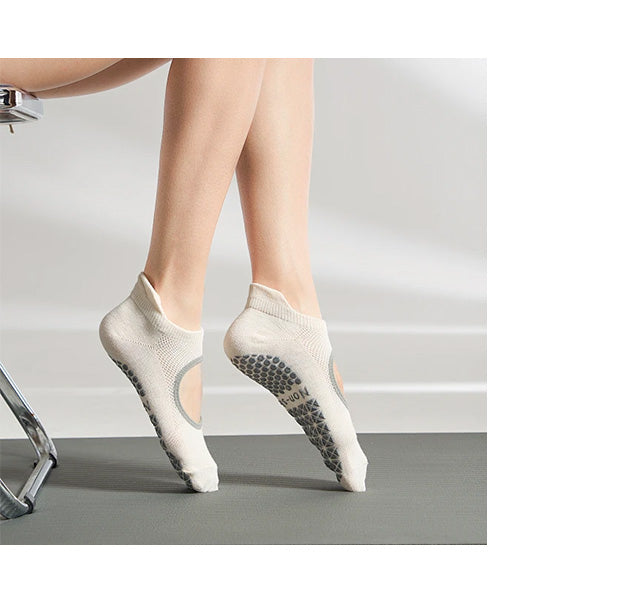
Most commercial studios require grip socks for hygiene and traction. Even at home, a pair of sticky-soled socks gives you necessary traction on wood or tile floors during plank variations and bridge work without sliding.
5 Optional Accessories to Level Up Your Home Practice
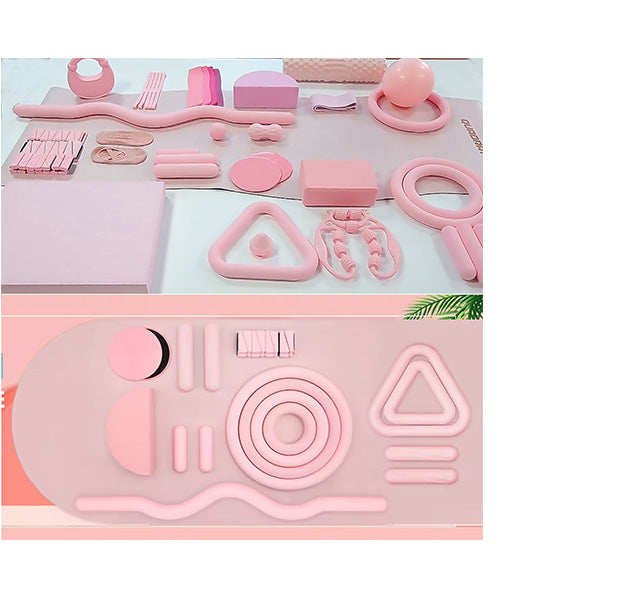
Once you’ve built a foundation with bodyweight movements, these inexpensive tools add progressive overload and variety:
Skip the cheap, thin latex bands—they roll up your legs, pinch your skin, and snap easily. Opt for woven fabric loop bands instead. They stay flat against your thighs and add comfortable resistance to glute bridges, side-lying leg series, and clam shells.
2. Mini Pilates Ball (9-Inch Soft Ball)
This is one of the most useful tools in mat work. Placing a partially deflated ball under your lower back offers tactile support during abdominal curls. Squeezing it between your inner thighs or ankles during bridges immediately fires up the adductors and pelvic floor.
3. Light Hand Weights (1–3 lbs)
In Pilates, heavy lifting is counterproductive to the goal of precision and joint stability. Adding small 1- to 3-pound hand weights or wrist weights to your arm series or standing work increases upper-body endurance without compromising your shoulder alignment or neck positioning.
4. The Pilates Ring (Magic Circle)
Invented by Joseph Pilates using the steel hoops from wooden kegs, this flexible ring features padded handles on both sides. Squeezing it between your hands or thighs creates continuous isometric tension, making it excellent for targeting the chest, upper back, and inner/outer thighs.
5. Core Sliders
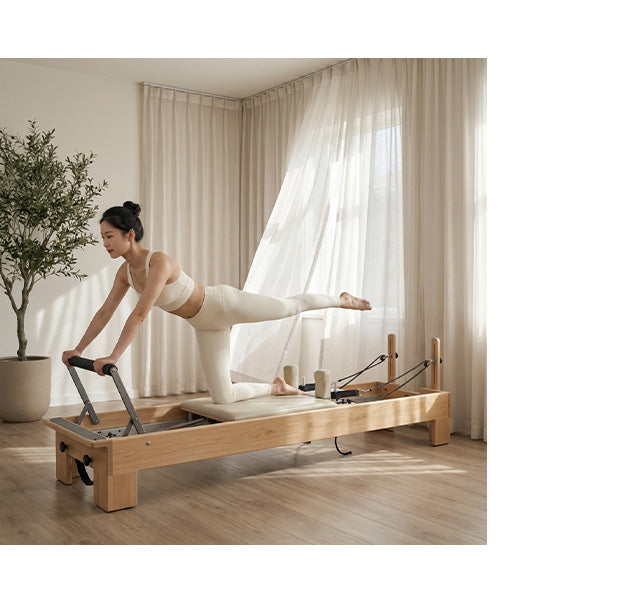
Sliders are small, smooth discs that mimic the sliding carriage of a studio Reformer on a carpet or hard floor. Placing them under your feet or hands during planks, lunges, and pikes creates instability, forcing your core to work twice as hard to control the motion.
How to Approach Your First Few Sessions
-
Expect a Learning Curve: The mind-muscle connection takes time. You might struggle to keep your ribs down or coordinate your breathing with movement during your first few sessions. That is entirely normal.
-
Focus on Range of Motion over Speed: Moving slowly is actually harder in Pilates because it removes momentum. Focus on maintaining control throughout the entire range of motion.
-
Use Modifications: A good instructor will always offer scaled versions of exercises (like dropping your knees in a plank or keeping your feet on the floor during ab work). Take the modification until your strength builds naturally.
Start with a dedicated beginner video or class, move at your own pace, and give your body time to adapt to the precision of the movement.