


Welcome to our yoga exploration! Today, we’re diving deep into the Extended Triangle Pose, a foundational asana that builds strength, flexibility, and balance. Whether you’re new to yoga or a seasoned practitioner, understanding the Extended Triangle Pose can transform your practice. In this comprehensive guide, we’ll cover everything from its definition and step-by-step instructions to common pitfalls, tailored advice for all levels, benefits, suitability, and comparisons with similar poses. By the end, you’ll have a holistic view of this powerful posture—and yes, we’ll mention the Extended Triangle Pose a total of 12 times to keep it front and center!
Definition of Extended Triangle Pose
The Extended Triangle Pose, known as Utthita Trikonasana in Sanskrit, is a standing yoga posture that involves extending the body into a wide-legged stance to form a triangular shape. It emphasizes elongation of the spine, opening of the hips and chest, and grounding through the feet. Essentially, the Extended Triangle Pose symbolizes stability and expansion, making it a cornerstone in many yoga sequences. Unlike simpler poses, this asana requires mindful alignment to harness its full potential.
Step-by-Step Guide to Practicing Extended Triangle Pose
Ready to try it? Here’s how to execute the Extended Triangle Pose safely and effectively:
- Starting Position: Stand tall with feet wide apart (about 3-4 feet), arms parallel to the floor. Turn your right foot out 90 degrees and left foot slightly inward.
- Extend and Reach: Inhale, lengthen your spine. Exhale, hinge at your hips to reach your right hand toward your right ankle, shin, or a block. Keep your left arm extended upward, creating a straight line from fingertips to fingertips.
- Hold and Breathe: Gaze at your left thumb, hold for 5-10 breaths. Ensure your chest is open and hips squared.
-
Release and Repeat: Inhale to rise, then repeat on the other side.
For beginners, use props like a block under your hand. The Extended Triangle Pose should feel challenging yet accessible—never painful. Aim to integrate this posture into your routine 2-3 times weekly for best results.

Common Mistakes in Extended Triangle Pose
Even experienced yogis slip up! Avoid these frequent errors to master the Extended Triangle Pose:
- Collapsing the Chest: This reduces the stretch; instead, actively lift your top arm to maintain openness.
- Locking the Knees: Overextending can strain joints; keep a micro-bend in your front knee for safety.
- Misaligned Hips: If hips tilt forward or back, it compromises the pose—focus on squaring them to the mat.
- Shallow Breathing: Holding your breath limits benefits; practice deep, rhythmic inhales and exhales. Correcting these ensures the Extended Triangle Pose builds resilience, not injury.
Tailored Advice for Different Levels
The Extended Triangle Pose adapts beautifully to your experience. Here’s how to approach it based on your stage:
- Beginners: Start with a wider stance and use a block for support. Focus on balance over depth—hold for shorter durations (3-5 breaths). Modify by bending your front knee slightly. This builds confidence in the Extended Triangle Pose without overwhelm.
- Intermediate Yogis: Deepen the stretch by lowering your hand closer to your ankle. Experiment with binding (e.g., reaching your top arm behind your back) to enhance shoulder opening. Aim for 8-10 breaths per side.
- Advanced Practitioners: Add variations like twisting the torso or lifting the back heel for intensity. Pair it with flows, such as transitioning into Warrior II, to challenge stability. Remember, even in advanced stages, the Extended Triangle Pose demands mindfulness to prevent ego-driven pushes.
Benefits of Extended Triangle Pose
Why include this asana? The **Extended Triangle Pose** offers profound advantages:
- Physical: It stretches hamstrings, hips, and spine while strengthening legs and core—ideal for improving posture and flexibility.
- Mental: The focus required cultivates mindfulness, reducing stress and anxiety.
- Energetic: As a heart opener, it stimulates digestion and boosts energy flow. Incorporating the Extended Triangle Pose regularly can lead to long-term vitality and balance.
Who Should Practice Extended Triangle Pose?
This pose suits most individuals, especially those seeking to enhance mobility or relieve back tension. However, avoid the Extended Triangle Pose if you have severe hip or knee injuries, or during pregnancy (modify with support). Always consult a teacher or doctor if unsure. For general fitness enthusiasts, it’s a safe, empowering addition to any routine.
Comparing Extended Triangle Pose to Similar Yoga Poses
How does the Extended Triangle Pose stack up against related asanas? Let’s contrast it:
| Comparison Aspect | Extended Triangle Pose (Utthita Trikonasana) | Triangle Pose (Trikonasana) | Extended Side Angle Pose (Utthita Parsvakonasana) |
| Leg Position | Straight legs | Straight legs | Front knee bent (90° over ankle) |
| Primary Focus | Balanced extension: Lateral bend + twist, deep chest opening | Lateral bend emphasis | Strength emphasis: Quads, hip/chest opening |
| Target Muscles | Hamstrings (back leg), spinal lateral chain, shoulders | Hamstrings, obliques, lateral chain | Quadriceps (front leg), obliques, shoulders, hip flexors |
| Intensity/Stability | Moderate: Requires leg/core strength for balance | Foundational: Focus on flexibility | Moderate-High: Demands strength/endurance |
| Typical Use | Core standing sequence; links balance & strength poses | Foundational sequences, warm-ups | Strength flows; transitions in Warrior series |
| Unique Value | Whole-body integration: Deep stretch for legs/spine/chest | Foundational lateral stretch | Lower-body strength building & deep hip opening |
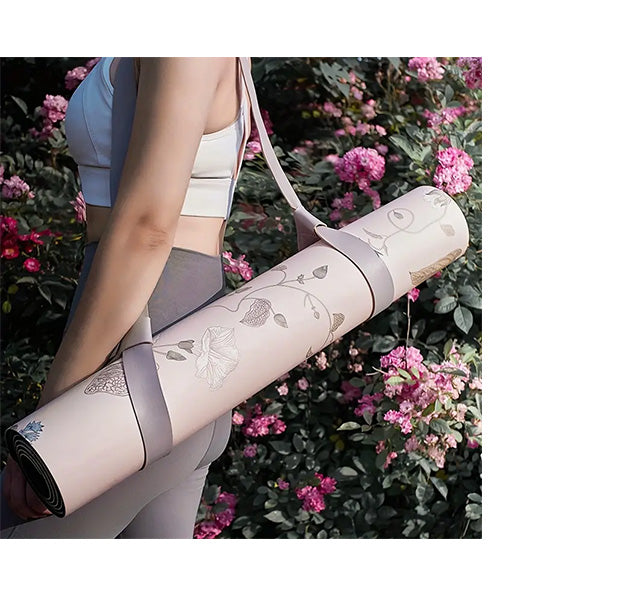
Whether you're looking for flexibility or inner peace, Extended Triangle Pose is an asana worth practising in depth. It is not only a "movement", but also a kind of awareness of the body - to feel the strength in extension, and to find stability in balance. When practicing Extended Triangle Pose, a suitable yoga mat is often the key to enhancing the experience: mowin's yoga mats are specially designed for all types of asanas, with a non-slip surface that allows you to lean sideways with your feet firmly planted and not easily slipping; the moderate elasticity of the mat not only supports your body weight, but also doesn't affect your balance due to its over-softness, making it a perfect match for the stability and extension required by the Extended Triangle Pose. Triangle Pose is the perfect fit for the Extended Pose's dual demands of stability and extension.
Next time you're on the mat, slow down and have a serious dialogue with Extended Triangle Pose, and pair it with a mat that understands you. Come to MOWIN and pick the one that's right for you, so that every stretch is more relaxed, every balance is more sure, and you can meet a more comfortable version of yourself in Extended Triangle Pose.

Source:https://tinyurl.com/mrxxhys7