

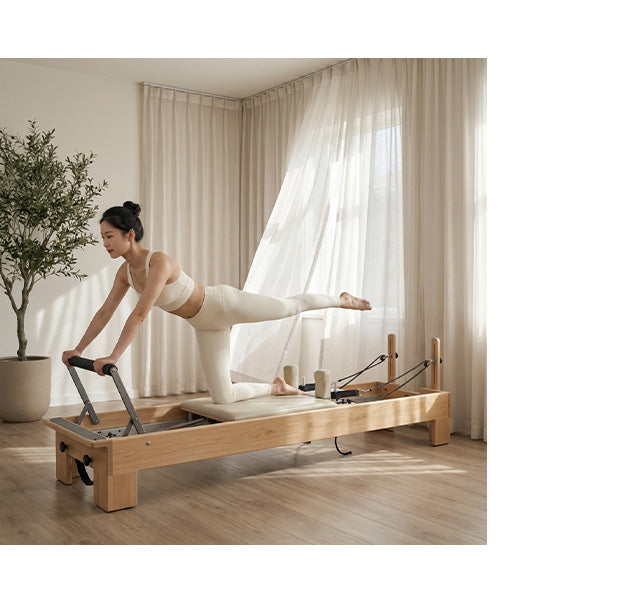

If you’ve stepped into a fitness studio recently or scrolled through your social media feed, you’ve likely seen a sleek, bed-like machine equipped with springs, ropes, and a sliding carriage. This is the Pilates Reformer—and it is taking the global wellness world by storm.
According to recent fitness industry data, bookings for group Pilates reformer workouts surged by over 66% globally, cementing it as one of the most sought-after training modalities. But what exactly makes this machine so effective, and why are both professional athletes and fitness beginners lining up for it?
In this ultimate guide, we’ll dive deep into everything you need to know about reformer Pilates: how it works, its scientifically proven benefits, essential exercises, and how to choose between the reformer and the traditional mat.
What is a Pilates Reformer and How Does It Work?
Invented by Joseph Pilates nearly a century ago, the Reformer is a specialized apparatus designed to add adjustable resistance to his signature movement methodology.
Unlike floor exercises, the reformer utilizes a system of springs, pulleys, a sliding carriage, and straps. The mechanics are brilliantly simple yet deeply challenging:
-
The Carriage: The flat platform you sit, kneel, or lie on, which glides smoothly along the frame.
-
The Springs: The heart of the machine. They provide progressive resistance, meaning the workout gets harder as the spring stretches, forcing your muscles to control both the extension and the return.
-
The Straps and Pulleys: Connected to the top of the reformer, these allow you to use your arms or legs to move the carriage, targeting deep stabilizing muscles.
By adjusting the spring tension, a Pilates reformer workout can be modified from ultra-gentle rehab support to an elite-level athletic conditioning session.
5 Science-Backed Benefits of Pilates Reformer Workouts
Why choose the reformer over traditional weightlifting or HIIT? Clinical research and data highlight several distinct physical and mental transformations.
1. Superior Core Strength and Stability
While standard crunches and planks target surface muscles, the instability of the reformer’s sliding carriage forces the activation of deep local stabilizers—specifically the transversus abdominis (your inner corset) and the multifidus (muscles supporting the spine).
2. Rapid Posture and Alignment Correction
Sitting at a desk all day creates muscular imbalances. A 12-week clinical study evaluating participants on a structured reformer program demonstrated a 37.1% improvement in postural symmetry and a 50% reduction in chronic back pain.
3. Long, Lean Muscles Through Eccentric Loading
The reformer relies heavily on eccentric muscle contractions—where the muscle lengthens while under resistance (e.g., slowly returning the carriage against the pull of the springs). This training method builds exceptional muscular endurance and tones the body without adding bulk.
4. Zero-Impact, High-Efficiency Conditioning
High-impact workouts (like running or cross-training) accumulate joint stress over time. The reformer provides intense resistance training while lying down or supported, making it exceptionally safe for joint longevity, injury rehabilitation, and pre/post-natal fitness.
5. Measurable Body Composition Changes
A regular, thrice-weekly reformer program produces noticeable changes in body circumference. Clinical data tracking female participants over 12 weeks showed significant, measurable reductions in the circumference of the waist, hips, arms, and thighs, resulting in a leaner, more sculpted silhouette.
Reformer vs. Mat Pilates: Which One is Right for You?
If you are trying to decide where to invest your time and budget, it helps to understand how the two core pillars of Pilates stack up against each other.
| Feature | Pilates Reformer Workouts | Mat Pilates |
| Resistance Source | Adjustable weighted springs and pulleys | Your own body weight against gravity |
| Variety of Movements | Over 250+ variations (lying, sitting, standing, kneeling) | Limited to floor-based sequences |
| Learning Curve | High initial curve (requires machine orientation) | Low (easy to start anywhere) |
| Best For | Target muscle isolation, eccentric toning, and progression | Learning fundamental core control |
| Joint Impact | Extremely low / Supported | Low, but requires floor mobility |
The Verdict: Mat Pilates is fantastic for mastering the basics and core principles. However, reformer workouts deliver faster, more noticeable results in muscle definition, posture correction, and strength progression due to the variable resistance.
Essential Pilates Reformer Exercises for Every Level
A typical 50-minute reformer class flows smoothly through 25 to 35 different exercises. Here is what you can expect across different experience levels:
1. For Beginners: The Foundation
-
The Footwork Series: Lying flat on the carriage with feet on the footbar, you press the carriage out and in. This warms up the lower body, aligns the pelvis, and teaches ankle, knee, and hip tracking.

-
Supine Arm Work (Midback Series): Lying on your back while pulling the straps with your hands. This activates the core while strengthening the shoulders, lats, and triceps.
2. For Intermediates: Building Core Control
-
The Hundred (on the Reformer): Knees in tabletop, head and shoulders lifted, pumping your arms with straps in hand. The spring tension adds a deep upper-abdominal burn compared to the mat version.

-
Feet in Straps (Leg Circles): Your feet are placed directly into the loops. This allows for massive hamstring and hip flexor stretching while forcing your lower abs to keep the pelvis completely stable.
3. For Advanced Practitioners: Elite Stability
-
The Elephant: Hands on the footbar, feet flat on the carriage, using purely the lower deep abdominals to pull the carriage in and out in a Pike position.
-
Short Box Series: Utilizing a specialized box over the carriage to perform advanced spinal extension, oblique twists, and deep core hold variations.
How to Get Started with Reformer Pilates
Ready to take your first session? Keep these pro-tips in mind to ensure a successful, injury-free start:
-
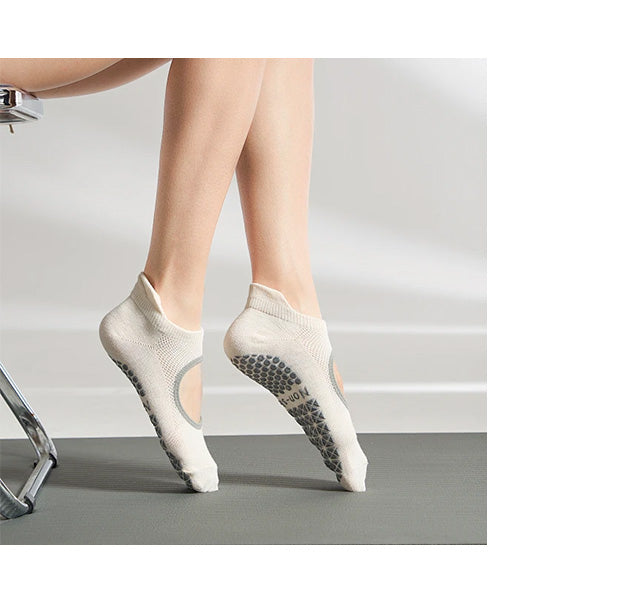
Invest in Grip Socks: Most studios require specialized non-slip grip socks for hygiene and safety while standing on the moving carriage.

-
Start with an Intro or Private Session: Before jumping into a fast-paced group class, take an introductory class. Learning how to safely change springs and handle the ropes is crucial.
-
Focus on Form, Not Weight: In Pilates, lighter springs often make an exercise harder because they provide less stability, requiring more core control. Listen carefully to your instructor's spring cues.
-
Be Consistent: To see the structural 37% improvement in posture and body sculpting, aim for 2 to 3 sessions per week.
Final Thoughts: Is It Worth the Hype?
The massive popularity of pilates reformer workouts isn't just a passing social media trend. It is a sustainable, highly efficient, and deeply intelligent training system that bridges the gap between intense strength training and mindful longevity. Whether your goal is to eliminate chronic back pain, build a rock-solid core, or enhance your athletic performance, the reformer adapts entirely to your body's unique needs.
Find a local certified studio or invest in a home reformer today, and experience the transformative power of mindful movement.