



In an era where running gear is becoming increasingly sophisticated, a pair of professional running shoes is often regarded as a runner's "second skin," providing support, cushioning, and protection. However, in recent years, a trend towards returning to nature and seeking an ultra-lightweight experience has quietly emerged—"Running in Socks," which involves running wearing only specially designed socks or minimalist footwear. This seemingly unconventional choice actually embodies a profound understanding and exploration of the essence of running. This article will comprehensively analyze this emerging running style from multiple dimensions, including scientific principles, equipment selection, training methods, potential risks, and suitable populations.

1. Scientific Principles: Why Choose "Running in Socks"?
-
Enhanced Foot Muscle Strength: Excessive support provided by traditional running shoes may weaken the natural development of foot muscles. Running in socks reduces external support, forcing the foot muscles to work actively. Over time, this can strengthen the plantar fascia, calf muscles, and ankle stability, reducing the risk of injury.
-
Improved Running Posture: Running in socks encourages forefoot or full-foot landing, rather than the heel-first landing often caused by traditional running shoes. This landing method more effectively utilizes the body's natural cushioning mechanism, reducing the impact on the knees and hips and promoting a more natural gait.
-
Enhanced Ground Sensation: Running in socks allows runners to feel the ground feedback more directly, enabling them to adjust their stride and improve running efficiency. This enhanced proprioception helps runners better control their body balance and adapt to different terrains.
2. Equipment Selection: How to Choose the Right "Socks"?
-
Material and Thickness: Choose breathable, quick-drying, and abrasion-resistant synthetic fibers, such as polyester or nylon blends, which can keep the feet dry and provide a certain degree of abrasion resistance. In terms of thickness, they should be thin but protective enough to avoid foot injuries caused by excessive thinness.
-
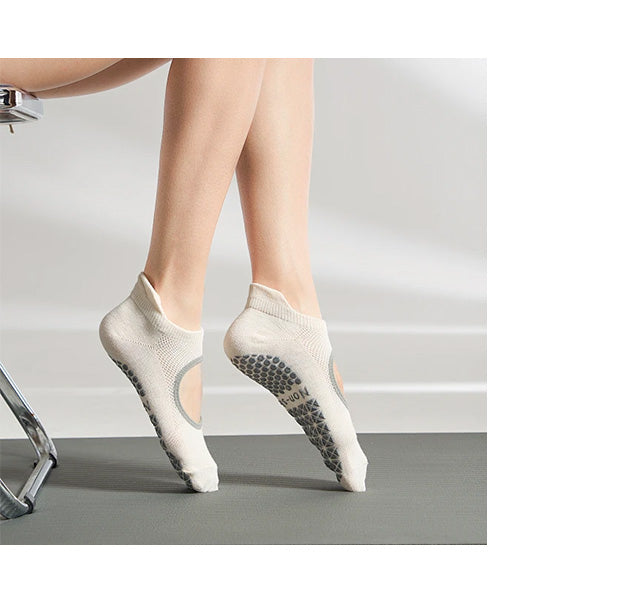
Anti-slip Design: The soles of the socks should have anti-slip particles or silicone dots to increase friction with the ground and prevent slipping, especially on wet or uneven surfaces.
-
Fit and Elasticity: The socks should fit snugly but not too tightly on the feet to avoid affecting blood circulation. Good elasticity ensures that the socks do not shift easily during running, maintaining comfort.
-
Five-toe Sock Design: Five-toe socks better simulate the barefoot state, allowing each toe to have independent movement space, promoting air circulation between the toes, and reducing friction and blisters.
3. Training Methods: How to Safely Transition to "Running in Socks"?
-
Gradual Adaptation: When first trying it, start with short distances and low intensities, gradually increasing running time and distance to give the foot muscles and joints enough time to adapt to the new running style.
-
Terrain Selection: Initially, choose flat and soft ground, such as grass or plastic tracks, to reduce the impact on the feet. As adaptability improves, gradually try harder or more uneven surfaces.
-
Combine Strength Training: Strengthen the foot, calf, and core muscles to improve overall stability and lay a solid foundation for running in socks.
-
Listen to Your Body: Any pain or discomfort is a warning signal from your body. Stop immediately and adjust your training plan to avoid injuries caused by overtraining.
4. Potential Risks and Precautions
-
Increased Risk of Foot Injuries: Lack of external support may increase the risk of plantar fasciitis, stress fractures, and other foot injuries, especially for beginners or those with existing foot problems.
-
Environmental Adaptability: Running in socks may not be suitable in extreme weather conditions (such as extreme cold or heat), and equipment adjustments or indoor running may be necessary based on the actual situation.
-
Individual Differences: Everyone's foot structure, running habits, and physical conditions are different, and running in socks may not be suitable for everyone. It is advisable to consult a professional coach or doctor before trying.
5. Suitable Populations and Scenarios
- Suitable Populations: Runners who pursue a natural running experience, hope to enhance foot muscle strength, and improve running posture; advanced runners with a certain running foundation who wish to further improve running efficiency.
- Suitable Scenarios: Flat and soft ground; short-distance, low-intensity training; as a supplement to professional running shoe training to increase training diversity.
Conclusion
"Running in Socks" is not just a running style; it is also a manifestation of a lifestyle attitude—pursuing freedom, nature, and authenticity. It requires runners to perceive the interaction between their bodies and the environment in a more nuanced way, achieving the best state of physical and mental harmony through continuous adjustment and adaptation. However, as with any exercise method, safety and health should always be the top priority. While enjoying the unique experience of running in socks, don't forget to listen to your body's signals, train scientifically, and make every step full of strength and wisdom.