


Whether you are navigating postpartum core rehabilitation, recovering from a back injury, or looking to reverse the effects of years of sedentary desk work, rebuilding your midsection can feel like a tightrope walk. You want a stronger trunk, but standard gym advice—like heavy planks or endless crunches—often does more harm than good, increasing intra-abdominal pressure and straining your lower back.
The secret to a stable, functional torso isn’t high-intensity strain; it is precise, deep-muscle recruitment.
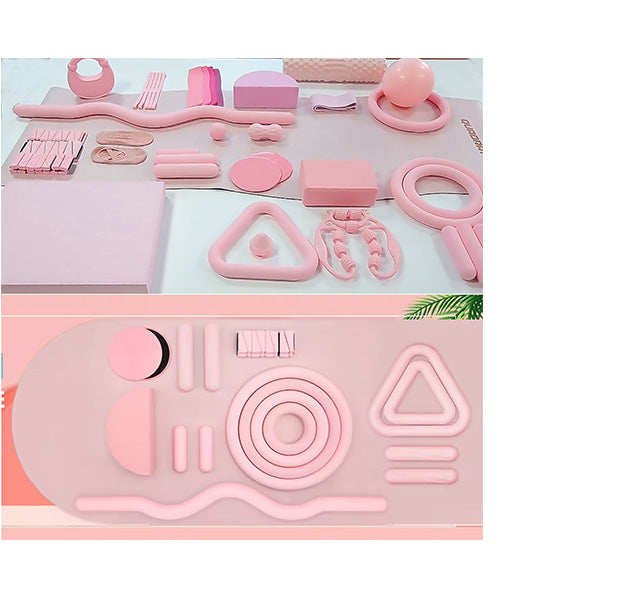
Achieving safe and effective core recovery using soft balls and bands provides the perfect balance of gentle support and adjustable resistance. These budget-friendly tools meet your body exactly where it is today, allowing you to rebuild from the inside out without risking injury.
Image Source:https://tinyurl.com/yvkhf9z7
The Science: Why "Soft and Stretchy" Beats "Heavy and Rigid"
When we talk about core recovery, we aren’t chasing a six-pack. We are targeting the deep corset of the body: the transverse abdominis (TrA), the multifidus (tiny muscles stabilizing the spine), and the pelvic floor.
Traditional gym routines often skip these deep stabilizers, forcing the superficial rectus abdominis to take over. This misfiring can worsen structural issues like abdominal separation.
[Traditional Crunches]  --> High Intra-Abdominal Pressure --> Worsens Diastasis Recti / Strain
[Soft Ball + Band Work] --> Deep TrA Activation + Feedback   --> Safe & Structural Healing
Using a mini Pilates ball creates a dynamic, unstable surface that forces your stabilizing muscles to fire automatically just to keep you balanced. Meanwhile, resistance bands offer progressive axial loading—meaning the resistance increases smoothly throughout the movement, protecting your joints from sudden, jerky forces.
Why it works: A soft ball provides tactile feedback. Squeezing it tells your nervous system to engage your inner thighs and pelvic floor simultaneously, creating a synergistic contraction that stabilizes the pelvis safely.
The Core Problem: How to Heal Diastasis Recti Safely
For many individuals, the journey toward core restoration is sparked by Diastasis Recti (the separation of the left and right abdominal muscles). If you are looking for how to heal diastasis recti safely, your primary goal is closing the gap and strengthening the underlying fascia (linea alba).
If you do a sit-up with severe diastasis recti, you will often notice a "coning" or "doming" shape along your midline. This is a clear sign that your core cannot handle the internal pressure.
Soft balls and resistance bands allow you to scale down the intensity. By keeping your spine in a neutral position on the floor and using a ball behind your lower back or a loop band around your knees, you can build intra-abdominal coordination without pushing the stomach wall outward.
Step-by-Step Guide: The Home Recovery Routine
Here is a highly effective, low-impact core strengthening exercises routine you can perform 3–4 times a week. All you need is a 7–9 inch mini Pilates ball and a medium-light loop or therapy band.
Lie on your back with knees bent, feet flat on the floor. Place the soft ball under your lower back (sacrum) or hold it between your knees. Inhale deeply into your ribcage, allowing your belly to rise. As you exhale smoothly, gently squeeze the ball. Think about zipping up a tight pair of jeans. This simple action wakes up the dormant transverse abdominis.
Place the mini ball securely between your knees and raise your legs into a 90-degree tabletop position. Rest your hands flat on the floor. Inhale to prepare; as you exhale, squeeze the ball gently while lowering your right toe to tap the floor. Bring it back up and alternate. The ball ensures your adductors (inner thighs) stay engaged, which automatically triggers lower abdominal support. Do 10 controlled reps per side.
Loop a light resistance band around your feet. Raise your arms straight up toward the ceiling and bring your legs into a tabletop position. Keeping your lower back pressed firmly into the floor, slowly extend your right leg straight out while driving your left knee slightly toward your chest to keep the band taut. Return to center and switch sides. Perform 3 sets of 8 reps.
Place the loop band just above your knees, and place the soft ball between your knees. Lie on your back and drive through your heels to lift your hips into a bridge position. At the top of the bridge, gently press outward against the band, then give the ball two small, controlled pulses inward. Lower your hips slowly. This dual-action exercise balances the outer glutes and inner thighs, creating a stable pelvic foundation. Do 12-15 reps.
Lie on your back with knees bent, feet flat on the floor. Place the soft ball under your lower back (sacrum) or hold it between your knees. Inhale deeply into your ribcage, allowing your belly to rise. As you exhale smoothly, gently squeeze the ball. Think about zipping up a tight pair of jeans. This simple action wakes up the dormant transverse abdominis.
Place the mini ball securely between your knees and raise your legs into a 90-degree tabletop position. Rest your hands flat on the floor. Inhale to prepare; as you exhale, squeeze the ball gently while lowering your right toe to tap the floor. Bring it back up and alternate. The ball ensures your adductors (inner thighs) stay engaged, which automatically triggers lower abdominal support. Do 10 controlled reps per side.
Loop a light resistance band around your feet. Raise your arms straight up toward the ceiling and bring your legs into a tabletop position. Keeping your lower back pressed firmly into the floor, slowly extend your right leg straight out while driving your left knee slightly toward your chest to keep the band taut. Return to center and switch sides. Perform 3 sets of 8 reps.
Place the loop band just above your knees, and place the soft ball between your knees. Lie on your back and drive through your heels to lift your hips into a bridge position. At the top of the bridge, gently press outward against the band, then give the ball two small, controlled pulses inward. Lower your hips slowly. This dual-action exercise balances the outer glutes and inner thighs, creating a stable pelvic foundation. Do 12-15 reps.
Common Mistakes to Avoid During Your Recovery Journey
When recovering your core strength, how you move matters infinitely more than how many repetitions you complete. Keep an eye out for these subtle warning signs:
-
Holding Your Breath: Many people hold their breath when an exercise gets tough. This creates massive downward pressure on your pelvic floor. If you cannot breathe smoothly through a movement, scale it back.
-
Arching the Lower Back: If your lower back leaves the floor during toe taps or deadbugs, your deep core has stopped working, and your hip flexors and spine are taking the brunt of the load. Fix this by reducing your range of motion.
-
Over-inflating the Ball: Your mini Pilates ball should be soft and slightly squishy (inflated to about 70-80%). A rock-hard ball is uncomfortable and reduces the tactile surface area needed for stabilizing feedback.
Tracking Your Progress Safely
Core recovery is a slow, compounding process. Do not measure your success by sweat or muscle soreness. Instead, look for these functional milestones over a 4-to-6 week period:
| Phase | What Success Looks Like | Next Step |
| Weeks 1–2 | Improved mind-muscle connection; less lower back fatigue during daily tasks like standing or lifting groceries. | Maintain consistency; focus on slow, controlled breathing. |
| Weeks 3–4 | The ability to complete a tabletop tap routine without your back arching or stomach doming. | Gradually increase resistance band tension or add a 2-second hold at the end of movements. |
| Weeks 5+ | Noticeable closure of abdominal gaps, elimination of morning back stiffness, and improved postural stamina. | Transition toward standing functional banded exercises. |
Ultimately, safe and effective core recovery using soft balls and bands isn't about rushing back to advanced workouts—it’s about laying an unbreakable structural foundation. By committing to these low-impact, highly intentional routines, you give your body the exact support it needs to rebuild a resilient, pain-free core from the comfort of your home.