

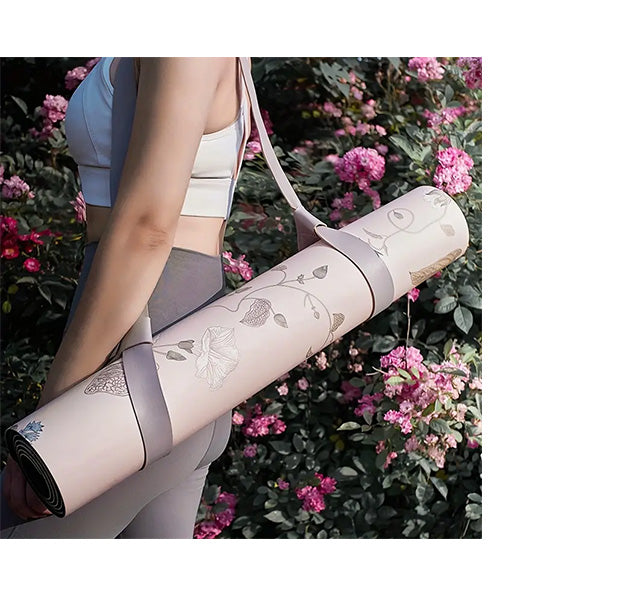

If you're on a journey to better health, rolling out a yoga mat is one of the best first steps you can take. It’s your personal sanctuary, your workout space, and your support system. But have you ever stopped to consider the health impact of the mat itself? Not all yoga mats are created equal, and the term "healthy" extends beyond the physical practice. A truly healthy yoga mat supports your body, protects the planet, and is free from harmful substances.

Let's dive into what makes a yoga mat a genuine partner in your wellness journey.
The Foundation of Your Practice: Why Your Mat Matters
A high-quality, healthy yoga mat is not just a piece of equipment; it's an investment in your practice and your well-being. Here’s why the right mat makes all the difference:
Joint Cushioning: A mat with adequate thickness and density provides a protective layer between your body and the floor. This is crucial for cushioning sensitive joints like your knees, wrists, and spine in poses like Tabletop or Child’s Pose, preventing pain and potential injury.
Stability and Grip (Traction): There’s nothing more disruptive to a peaceful flow than a slipping hand or foot. A good grip, both dry and wet, is essential for safety. It allows you to hold poses with confidence, deepen your stretches, and focus on your breath instead of fearing a fall.
Hygiene and Cleanliness: Your mat can harbor bacteria, fungi, and sweat from practice. A mat with a closed-cell surface (where the pores are sealed) prevents moisture and sweat from seeping in, making it easier to clean and keeping your practice space hygienic.
Decoding the "Health" in a Yoga Mat: Materials Matter
This is the core of choosing a healthy mat. The materials used can have implications for both your personal health and the environment.
1. The Common Culprits: PVC (Polyvinyl Chloride)
The most common and affordable mats are often made from PVC. While they can be durable and offer excellent grip, the problem lies in their production and lifecycle. PVC is a plastic that requires potentially harmful chemical additives called phthalates to make it flexible. It is also not biodegradable and can release volatile organic compounds (VOCs), which you might notice as that strong "new mat smell." For a practice centered on purity and well-being, starting on a mat that off-gasses toxic chemicals is counterintuitive.
2. Healthier and Eco-Conscious Alternatives:
TPE (Thermoplastic Elastomer): A fantastic step up from PVC. TPE mats are often lightweight, cushioned, and provide good grip. Crucially, they are a closed-cell material and are generally free from chlorine and phthalates. They are also recyclable, making them a more sustainable choice.
Natural Rubber: For many serious yogis, natural rubber is the gold standard for a healthy, high-performance mat. Sourced from rubber trees, it offers an unparalleled natural, non-slip grip—even in the sweatiest hot yoga sessions. It’s biodegradable at the end of its life. A few considerations: it has a distinct, earthy smell (that fades) and is not suitable for those with latex allergies.
Cork: A rapidly growing favorite, cork is a marvel of sustainability. It’s harvested from the bark of cork oak trees without harming the tree. Cork is naturally antimicrobial, moisture-wicking, and provides an excellent grip that improves as your hands get sweatier. It’s often paired with a natural rubber base for cushioning and stability.
Your Checklist for Choosing a Healthy Mat
When you're ready to buy, ask yourself these questions:
1. What is my primary style of yoga?
Hot or Vigorous Flow: Prioritize grip above all else. Natural rubber and PER are your best bets.
Gentle, Restorative, or Iyengar: Focus on cushioning and thickness. A thicker TPE or cushioned rubber mat (5-6mm) will be kind to your joints.
Everyday All-Rounder: A standard-thickness (4-5mm) TPE or a durable natural rubber mat will serve you well.
2. How thick should it be?
3-4mm: Standard thickness, good for most practices if you don't have joint issues.
5-6mm: Extra cushioning, ideal for restorative yoga or sensitive joints.
>6mm: Can be too squishy and unstable for standing balance poses.
3. What is it made of? Look beyond the marketing. Check the product specifications for the material type (e.g., TPE, Natural Rubber, PER). Avoid mats that are vague or only list "PVC" without any mention of being phthalate-free.
4. How do I maintain it? A healthy mat is a clean mat. Most non-PVC mats can be cleaned with a simple solution of water and a few drops of gentle dish soap or tea tree oil. Always check the manufacturer's instructions.
The Final Pose: A Mat for Body and Planet
Choosing a healthy yoga mat is a conscious act that aligns your equipment with the principles of your practice. It’s about respecting your body with safe materials and supporting its physical needs, while also respecting the planet with a sustainable choice.
Your mat is the foundation upon which you build strength, flexibility, and peace. Make that foundation a healthy one. Invest in a mat that supports not just your asanas, but your overall commitment to a healthier life.