


In the crevices of urban life, a yoga mat measuring 1.6 meters by 0.6 meters is quietly undergoing a revolutionary transformation. It has evolved from a mere accessory in gyms into a spiritual totem for urban dwellers, transitioning from a simple anti-slip tool to an energy field that carries the vitality of life. Behind this metamorphosis lies a collective shift among modern people—from "survival anxiety" to "existential awakening."

I. From Utilitarianism to Cultural Symbol: The Evolution of the Yoga Mat
In the 1960s, when the first Western practitioners cut foam carpets into practice mats, they probably never imagined that this temporary substitute would initiate a half-century-long material revolution. From the early, easily damaged foam to today's composite materials integrating TPE plant-based components, 3D honeycomb structures, and intelligent temperature-sensing technologies, each iteration of the yoga mat precisely corresponds to the escalating needs of urbanites. When gym memberships became a middle-class staple, anti-slip mats with a coefficient of 0.8 made home practice feasible. As the 996 work schedule eroded health, 6mm thick mats with built-in memory foam became a "lifesaver" for those with lumbar disc herniation. When Generation Z sought personalized expression, black technologies like mandala patterns, crystal frequency resonance, and 432Hz sound waves turned mats into wearable art.
This evolution is particularly evident in the data: behind the 300% surge in yoga mat sales in 2022, 80% of users attributed a 5% reduction in body fat and improved cardiopulmonary function to their "time on the mat." As traditional gyms were abandoned by young people due to high costs and crowded environments, videos of "yoga mat challenges" on Douyin (Chinese TikTok) garnered over 1 billion views, proving that this small space is reshaping urbanites' exercise ethics—shifting from "ostentatious fitness" to "pragmatic spiritual practice."
II. Spatial Reconstruction: From Physical Boundaries to Psychological Realms
The magic of the yoga mat lies in its creation of a "third space": neither the oppressive environment of the office nor the mundane routine of home, but a mental buffer zone in between. When urbanites unroll their mats, they simultaneously undergo three spatial transformations:
-
Physical Dimension: A 2mm thin mat provides precise feedback on muscle engagement points, turning practitioners into "human biomechanics laboratories"; a 6mm thick mat, with its 200kg load-bearing capacity, builds a safe haven, enabling challenging poses like handstands. This physical support directly translates into psychological security, as one yoga enthusiast put it: "When I'm in a handstand, the thickness of the mat determines whether I dare to let go of my hands."
-
Sensory Dimension: High-end mats embedded with piezoelectric ceramic chips release 432Hz sound waves when pressed by the palms—a frequency scientifically verified as the "universal frequency" that activates the parasympathetic nervous system. The plant scents and tactile sensations of natural rubber mats turn each breath into a dialogue with nature. These designs transform the mat from a passive tool into an active healer.
-
Energy Dimension: Feng shui principles are incorporated into mat surface designs—those deficient in fire element choose orange surfaces to enhance action-oriented energy, while those lacking water opt for blue to boost creativity; crystal matrix mats adjust biomagnetic fields through crystal frequency resonance, increasing meditation depth by 37%. When technology and metaphysics converge on the mat, this ordinary fabric acquires the properties of an energy converter.
III. Spiritual Awakening: From Physical Training to Existential Calibration
The ultimate evolution of the yoga mat lies in its role as an experimental field for urbanites to explore their existence. Within the 9-grid breathing matrix marked on the mat, practitioners move through nasal alternate breathing, humming breath, and other cycles, upgrading traditional yoga's "posture practice" into "existential calibration." When gravity perception training displays real-time data on center-of-gravity shifts through pressure-sensitive zones, practitioners gain not just balance but also a quantified awareness of their existential state.
This awakening is particularly pronounced among young people. Generation Z practitioners view combinations like "plank + abdominal crunches" as "rituals of dialogue with the body." They no longer pursue quantifiable results like calories burned but instead experience incremental challenges (from 10-second planks to 5-minute holds) as growth in willpower. As one yoga instructor observed: "Today's young people care more about the 'epiphany moments' on the mat—when they suddenly breakthrough a pose, the light in their eyes resembles that of a meditator achieving enlightenment."
IV. Future Vision: When the Yoga Mat Becomes a Spiritual Anchor for "Digital Nomads"
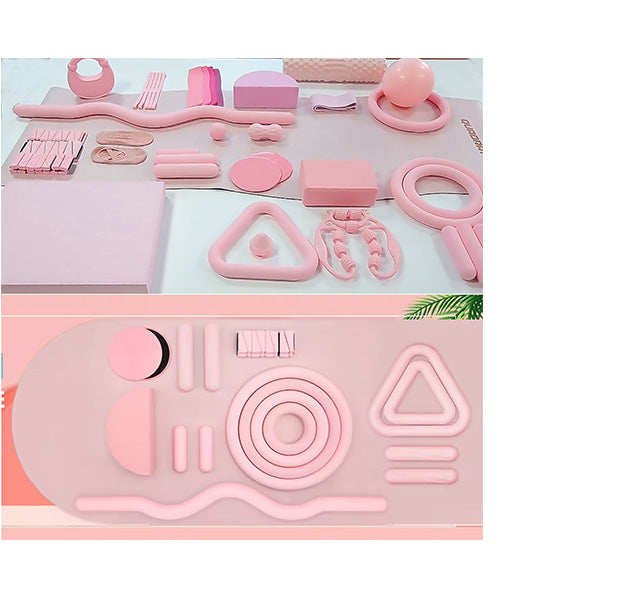
With the rise of remote work and digital nomadism, yoga mats are transcending physical space constraints. Foldable smart mats record practice data via apps, generating "energy maps"; AR technology enables practitioners to sync with global instructors from home; some designers even propose "modular yoga mats"—by assembling different functional modules (meditation zones, strength training areas, recovery sections), personalized spiritual spaces can be constructed.
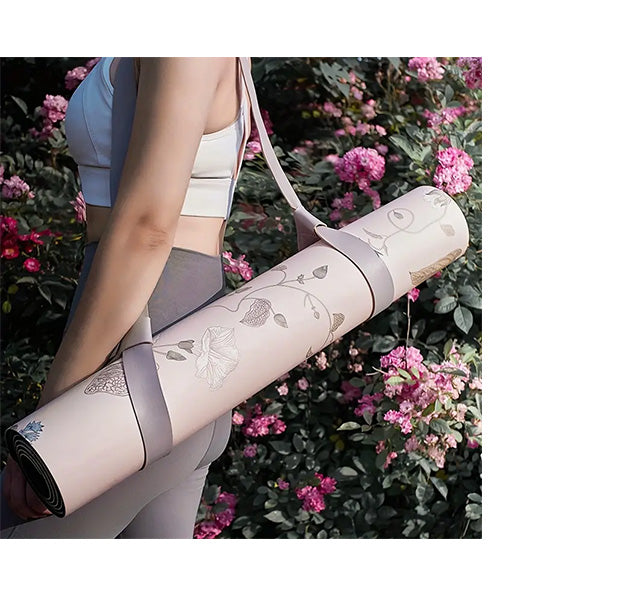
This evolution echoes the trajectory of human civilization: from primitive tribal bonfire circles to medieval monasteries, and now to modern yoga mats, humans have consistently sought containers for spiritual activities. When urbanites roll up their mats and carry them on their shoulders, they're not just toting a fitness tool but a portable micro-temple—where the body is the temple, breath is the chant, and each pose is a pilgrimage inward.
Conclusion
From foam carpet to intelligent energy field, the evolution of the yoga mat is a microcosm of urban spiritual history. It witnesses humanity's journey from conquering nature to returning inward, documenting spiritual hunger in an era of material abundance. As we complete our final Downward-Facing Dog pose on the mat, we may suddenly realize: true yoga isn't on the mat but in the moment we unroll it—that instant when we declare to the world: I need a spiritual realm of my own, even if it's just 1.6 meters square.