


Have you ever watched a yoga instructor effortlessly float into Urdhva Dhanurasana (Upward Bow Pose) and wondered, "How do they do that?" This iconic backbend, resembling a radiant full moon, is more than a physical feat—it’s a gateway to unlocking your body’s hidden strength and emotional resilience. Today, we’ll dissect this pose from an anatomical, philosophical, and practical perspective, guiding you safely from tentative attempts to confident mastery.

1. The Name, The Myth, The Magic: Why "Upward Bow"?
"Urdhva" means upward, "Dhanu" translates to bow, and "Asana" signifies pose. Together, they paint a vivid picture: your body arches like a celestial bow, the spine reaching toward the sky while the chest and pelvis form a bold curve.
In yoga philosophy, backbends symbolize "opening the heart." Urdhva Dhanurasana stretches the front body, strengthens the back, and releases stored emotions, activating the Solar Plexus Chakra (Manipura)—the seat of confidence and personal power.
2. Why Bother? 5 Transformative Benefits
① Full-Body Strength Amplifier
- Engages arms, shoulders, back, core, and legs in a symphony of stability.
- Builds wrist and ankle resilience, reducing injury risk in daily life.
② Spinal Rejuvenation
- Stretches intervertebral discs, counteracting stiffness from prolonged sitting.
- Improves posture by combating rounded shoulders and hunchback.
③ Breath & Energy Revival
- Expands the ribcage, deepening diaphragmatic breathing and oxygen intake.
- Stimulates the thyroid gland, boosting metabolism and vitality.
④ Emotional Liberation
- Releases endorphins through front-body stretching, easing anxiety and depression.
- Symbolically "opens the heart," fostering acceptance and courage.
⑤ Women’s Health Ally
- Strengthens pelvic floor muscles, alleviating menstrual discomfort.
- Enhances abdominal circulation, aiding digestion and reducing lower belly fat.
3. Safe Progression Guide: From Prep to Perfection
Step 1: Warm-Up – Awaken Your Muscles
- Dynamic Flow: Alternate Cat-Cow, Child’s Pose, and Downward Dog to lubricate the spine.
-
Shoulder & Hip Openers:
- Cow Face Pose (Gomukhasana) to relieve shoulder tension.
- Butterfly Pose (Baddha Konasana) to stretch hip flexors.
- Core Activation: Boat Pose (Navasana) or Plank to fire up the abdominals.
Step 2: Enter the Pose – Stage by Stage
Beginner-Friendly (With Props):
- Lie on your back, bend knees, and place feet hip-width apart.
- Position hands beside ears, palms down, fingers pointing toward shoulders.
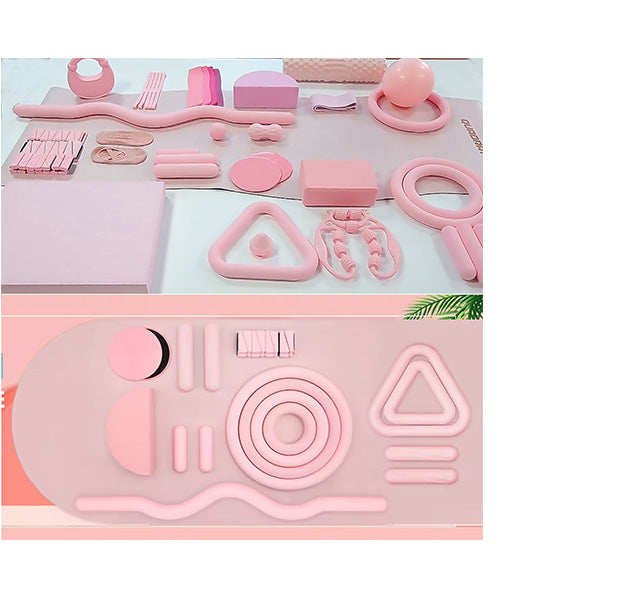
- Lift hips and place a yoga block under your shoulder blades for support.
- Gradually straighten arms, feeling the chest expand.
Intermediate (No Props):
- Transition from Bridge Pose (Setu Bandhasana), hands shoulder-width apart.
- Inhale, press into hands to straighten arms while lowering crown to the floor (transitional step).
- Exhale, lift head and fully extend the spine, holding for 5–8 breaths.
Advanced (Dynamic Variations):
- Try "Flying Wheel" with one leg lifted, or combine with Wild Thing (Camatkarasana) for dynamic control.
Step 3: Key Alignment – Avoid Common Pitfalls
-
Error #1: Overarching the Lower Back
- Fix: Imagine lengthening the tailbone toward the knees to protect the lumbar spine.
-
Error #2: Collapsing Shoulders Inward
- Fix: Externally rotate the upper arms and draw shoulder blades toward the midline.
-
Error #3: Holding Your Breath
-
Fix: Maintain Ujjayi breath—expand the chest on inhalation, deepen the backbend on exhalation.

-
Fix: Maintain Ujjayi breath—expand the chest on inhalation, deepen the backbend on exhalation.
4. Contraindications & Safety Tips
-
Avoid If:
- You have lumbar disc issues, cervical spine conditions, hypertension, or are pregnant (seek professional guidance).
- Recent wrist or shoulder injuries—use props or modify.
-
Best Time to Practice:
- Morning or afternoon when energy levels are high; avoid post-meals.
-
Exiting the Pose:
- Slowly bend knees, lower hips to the floor, and rest in Child’s Pose to prevent dizziness.
5. Philosophy Deep Dive: The Backbend as a Metaphor for Surrender
Urdhva Dhanurasana is more than a physical challenge—it’s a spiritual practice in disguise. As you push upward, you learn to let go of perfectionism: it’s okay if your hands don’t touch the floor, or if your spine’s curve isn’t "ideal." As B.K.S. Iyengar said, "Yoga is 99% practice and 1% theory." Each attempt is a step toward self-acceptance.
Final Thoughts
This pose mirrors life’s journey: we must first bend to rise, soften to become strong, and trust the process even when progress feels slow. The next time you prepare to lift into Urdhva Dhanurasana, whisper to yourself: "I am enough. I deserve this expansion."
Image Source: https://tinyurl.com/4ajpy933、https://tinyurl.com/3wmbt5s4