

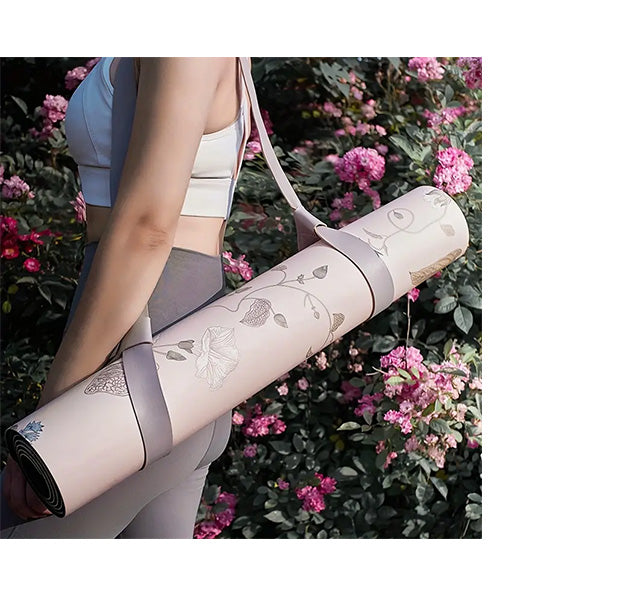

In recent years, yoga has become an important daily exercise choice for many people. The yoga mat is our closest companion during practice, but you might not know that this partner could be quietly releasing harmful substances, endangering your health.
Long-term exposure to these substances may lead to skin allergies, endocrine disorders, and even an increased risk of cancer. This article provides a comprehensive analysis of the safety of PVC yoga mats and compares the toxicity levels of different material yoga mats to help you make an informed choice.
PVC Yoga Mats: The Cost Behind the Low Price
Polyvinyl chloride (PVC) is a synthetic plastic polymer that is low-cost and durable, making it the most common yoga mat material. Many disposable items in daily life are made from PVC.
The advantages of PVC yoga mats are mainly their affordability and elasticity, making them a relatively easy choice for beginners who are unsure whether they will practice yoga long-term.
However, PVC materials pose several health risks:
- Release of toxic substances: PVC is a plastic product that emits a plastic odor when first used. More seriously, it is not advisable to take PVC yoga mats to hot outdoor environments or use them for hot yoga, as they may release toxic substances, causing harm to both human health and the natural environment.
- Carcinogen classification: The World Health Organization's International Agency for Research on Cancer has listed polyvinyl chloride (PVC) as a Group 3 carcinogen.
- Excessive plasticizers: Test reports show that PVC mats can release plasticizers at levels three times higher than the safety standard.
- Environmental impact: PVC yoga mats are extremely unfriendly to the environment. They may not fully decompose even after hundreds of years in landfills, and the compounds produced during degradation are highly toxic.
Toxin Comparison of Different Material Yoga Mats
To help you better understand the safety of various yoga mat materials, here is a comparative analysis of the main materials:
| Material Type | Safety | Eco-Friendliness | Durability | Price | Target Users |
| PVC | Contains potentially toxic substances; high risk in high temperatures | Not recyclable; difficult to decompose | Durable but prone to deformation | Lowest | Beginners on a budget |
| TPE | Relatively safe; non-toxic and odorless | Recyclable | Good elasticity and rebound | Medium | Beginners to intermediate practitioners |
| Natural Rubber | Non-toxic and odorless; natural and eco-friendly | 100% recyclable and biodegradable | Durable with strong grip | Highest | Intermediate to advanced practitioners; non-allergic users |
| NBR | Synthetic material; moderate safety | Not recyclable | Too soft; poor stability | Low | Not suitable for professional yoga practice |
TPE (Thermoplastic Elastomer): A Balance Between Safety and Budget
TPE is an eco-friendly, non-toxic thermoplastic elastomer that is increasingly being used in yoga mats. TPE material properties fall between rubber and plastic, offering good extensibility and rebound elasticity at room temperature.
Advantages of TPE yoga mats include:
- Safe and non-toxic: TPE does not require vulcanization or the introduction of heavy metals during processing, making it a safe and non-toxic yoga mat option.
- Eco-friendly and recyclable: TPE is an environmentally friendly, non-toxic thermoplastic elastomer that can be recycled and reused.
- Lightweight and portable: TPE material is lightweight, making it easy to carry around.
However, TPE also has some drawbacks: its anti-slip effect is average, and it does not lay flat easily on the ground. It is important to note that TPE is still a type of plastic product and, like PVC, is not recommended for use in high-temperature environments.
Natural Rubber: A High-End Eco-Friendly Option
NR natural rubber is a material derived from nature, making it a 100% recyclable, non-toxic, and odorless yoga mat option. Natural rubber itself has inherent adhesiveness, requiring no artificial glue during manufacturing. After processing, it offers excellent rebound elasticity, water resistance, and plasticity.
Advantages of natural rubber yoga mats:
- Exceptional performance: Its anti-slip and stability properties far exceed those of PVC and TPE.
- Natural and eco-friendly: Made from the sap of rubber trees, it is natural, eco-friendly, biodegradable, and recyclable.
- No harmful additives: Requires no artificial glue for bonding.
However, it also has significant drawbacks: it is usually more expensive (starting at least at NT$5,000), heavier and less portable, and unsuitable for those with latex allergies.
How to Choose a Safe Yoga Mat?
When faced with a wide array of yoga mat products on the market, you can follow these recommendations to choose a safe product:
1.Check for certification labels: Choose products with authoritative certification labels such as OEKO-TEX®. These products undergo strict testing from raw materials to finished products to ensure they contain no harmful substances.
2. Smell the odor: Choose products without a pungent smell. Newly purchased yoga mats should be unpacked and placed in a well-ventilated area for several days to reduce the content of volatile organic compounds during use.
3. Choose the right material: TPE material is generally safer than PVC. If you are on a budget, TPE yoga mats are safer and non-toxic compared to PVC, while also being more affordable than natural rubber.
4. Replace regularly: It is generally recommended to replace your yoga mat every 6-12 months. Even after six months of use, the release of harmful substances remains at relatively high levels.
5. Clean properly: Before each use, wipe the surface of the yoga mat with disinfectant alcohol and clean your hands and feet. If there are obvious stains, soak them in warm water with a small amount of detergent for a few minutes, rinse thoroughly, and air dry naturally.
Conclusion
Choosing a safe yoga mat is not only about the effectiveness of your practice but also about long-term health. Although PVC yoga mats are inexpensive, they may pose a risk of releasing toxic substances, especially in high-temperature environments.
If you are a beginner on a limited budget, TPE material is a safer choice than PVC. If you have some practice experience and a sufficient budget, natural rubber yoga mats provide better performance and safety.
Health should not be compromised. Start by choosing a non-toxic yoga mat to ensure every deep breath is truly pure and every pose is completed in a safe environment. This may be one of the best investments you can make for your health.
Choosing a safe yoga mat is an important investment in your health, so if you're looking for a certified non-toxic and eco-friendly yoga mat, come to Mowin - we offer a wide range of high-quality yoga mats made of safe materials that will give you peace of mind every time you practice!