


Among yoga’s many poses, Malasana (Garland Pose) stands out as a powerful antidote to modern sedentary lifestyles. Known as the "yoga squat," this ancient posture is now scientifically validated as a natural therapy for multiple health concerns.
Execution: Stand with feet slightly wider than shoulders, toes angled outward at 45°. Slowly squat until hips sink toward the floor. Keep spine straight, hands pressed together at chest, elbows pushing knees outward to open hips. This deceptively simple pose activates muscles and joints system-wide.
7-Step Mastery Guide
-
Foot Placement
Stand on mat, feet ~1.5x shoulder-width, toes at 45°. Avoid narrow stance (knee strain) or excessive width (reduced hip stretch). -
Controlled Descent
Inhale while squatting, imagining hips sinking toward floor (not leaning back). Center weight over midfoot. -
Heel Support
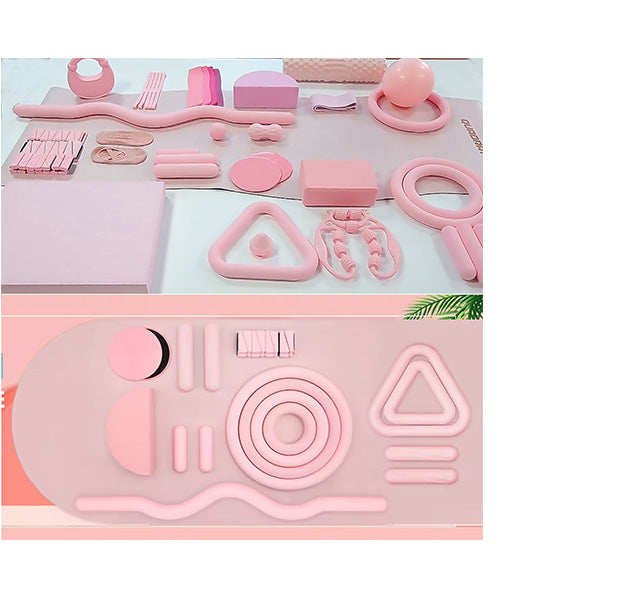
Place folded towel/yoga block under heels if they lift (common with tight Achilles). Never force heels down. -
Knee Alignment
Knees track over toes. Use elbows to gently press knees outward. Prevents knee valgus (inward collapse). -
Spinal Elongation
Tuck tailbone down, lift crown up. Maintain natural lumbar curve. No rounding or overarching. -
Breath Synergy
Inhale to lengthen spine, exhale to deepen hip sink. Use each exhale to refine posture. -
Duration
Beginners: 30 seconds → Advance to 1-2 minutes. Optimal: 3x daily.
Pro tip: Practice against wall—sacrum lightly touches surface. Ensures weight stays on heels.

Common Mistakes & Corrections
1. Heels Lift + Foot Arch Collapse
· Signs: Weight shifts forward, toes lift, inner foot caves
· Cause: Tight Achilles (stiff soleus) / limited calf flexibility
· Fix:
(1)Place blocks/towels under heels
(2)Roll calves daily (foam roller)
2. Knees Caving In
· Signs: Knees collapse inward, misaligned with toes
· Cause: Weak gluteus medius + tight inner thighs
· Fix:
(1)Push knees outward with elbows
(2)Wall-assisted half squats to strengthen outer thighs
3. Hunched Back
· Signs: Upper back rounded, lumbar curved, neck strained
· Cause: Weak core + stiff thoracic spine
· Fix:
(1)Wall practice: Sacrum/shoulder blades/head touching wall
(2)Hold fixed object (e.g., doorknob) to open chest
4. Body Asymmetry
· Signs: Uneven pelvis, knees at different heights
· Cause: Hip flexibility imbalance / past injury compensation
· Fix:
(1)Practice before mirror to align knees
(2)Single-side piriformis stretches (e.g., Pigeon Pose)
Malasana Practice Frequency & Duration Recommendations
Progressive plans tailored to different skill levels:
| Level | Duration per Session | Daily Frequency | Progression Goal | Target Practitioners | Support Tools |
| Beginner | 20-30 seconds | 3-5 sessions | Heels grounded, core stabilized | Heels lift, poor balance | Heels on towel/block |
| Intermediate | 1-2 minutes | 2-3 sessions | Spine elongation, deeper hip opening | Can squat fully but back arches | Yoga block under hips |
| Advanced | 3-5 minutes | 1-2 sessions | Unassisted squat + breath control | Flexible joints, stable core | None (try variations) |
| Pregnant | ≤30 seconds | 1-2 sessions | Pelvic stability | Post 1st trimester w/ supervision | Heels elevated + wall support |
Medical approval required
Key Notes:
· Max 10 mins daily to prevent joint strain
· Optimal time: Morning empty stomach or 2-4 hrs post-meal (boosts digestion)
· Stop immediately if knee/lumbar sharp pain occurs
Core Principles for Safe Practice
- Gradual Progression: Start with 20-sec sessions, slowly increase duration
- Alignment Check: Use mirror to verify ankle/knee/spine neutrality
- Breath Control: Inhale to lengthen spine, exhale to sink hips (never hold breath)
- Function Over Form: Prioritize pain-free joints over forcing heels down
6 Evidence-Based Benefits
-
Leg Reshaping
Activates glutes, quads, and inner thighs. Reduces "inner thigh sag" and false hip dips through improved muscle balance. -
Hip Liberation
Opens hips >120°, stretches hip flexors/adductors. Counters sitting-induced stiffness—daily practice = "joint lubrication." -
Gut Activation
Abdominal compression + pressure shifts stimulate colon motility. Study: 5-min morning practice ↑ bowel sensitivity by 30%. -
Pelvic Wellness
↑ Pelvic blood flow by 40% (eases period pain). Supports fertility/pregancy (With props/pro guidance; strengthens pelvic floor). -
Spinal Decompression
Creates axial space, relieves L4-L5 disc pressure. Aids herniated disc recovery. -
Anxiety Relief
Triggers parasympathetic response. Clinical data: 3-min hold ↓ heart rate by 15%.
Safety Precautions
- Knee/ankle injuries: Avoid or use chair support under hips
- Pregnancy: Post 1st trimester only; heels elevated + professional supervision
- Hypertension: Limit holds to ≤30 seconds
- Acute herniated disc: Strictly prohibited
Stop immediately if: Knee stabbing pain, sharp lumbar discomfort, or dizziness.
Beginner’s 3-Stage Progression
- Stage 1: Heels elevated 2-3cm, hands on wall → Focus on hip opening
- Stage 2: Yoga block under hips → Reduces knee load; lower block height gradually
- Stage 3: Dynamic reps (inhale squat → exhale stand) ×10 → Builds joint adaptability
3 Advanced Variations
- Twisted Malasana
Right hand down, left arm lifts → ↑ Thoracic mobility (ideal for stiff spines). - Bound Malasana
Thread arm under thigh, clasp hands behind back → Opens shoulders/corrects slouching. - Stabilized Malasana
Hold fixed object (e.g., door handle) → ↑ Balance + Achilles stretch (for elevated heels).
Malasana is more than a pose—it’s nature’s reset button for desk-bound bodies. When heels root down and spine unfolds like bamboo toward the sky, you reclaim your primal freedom.
Picture Source:https://yogajala.com/garland-pose-malasana/